
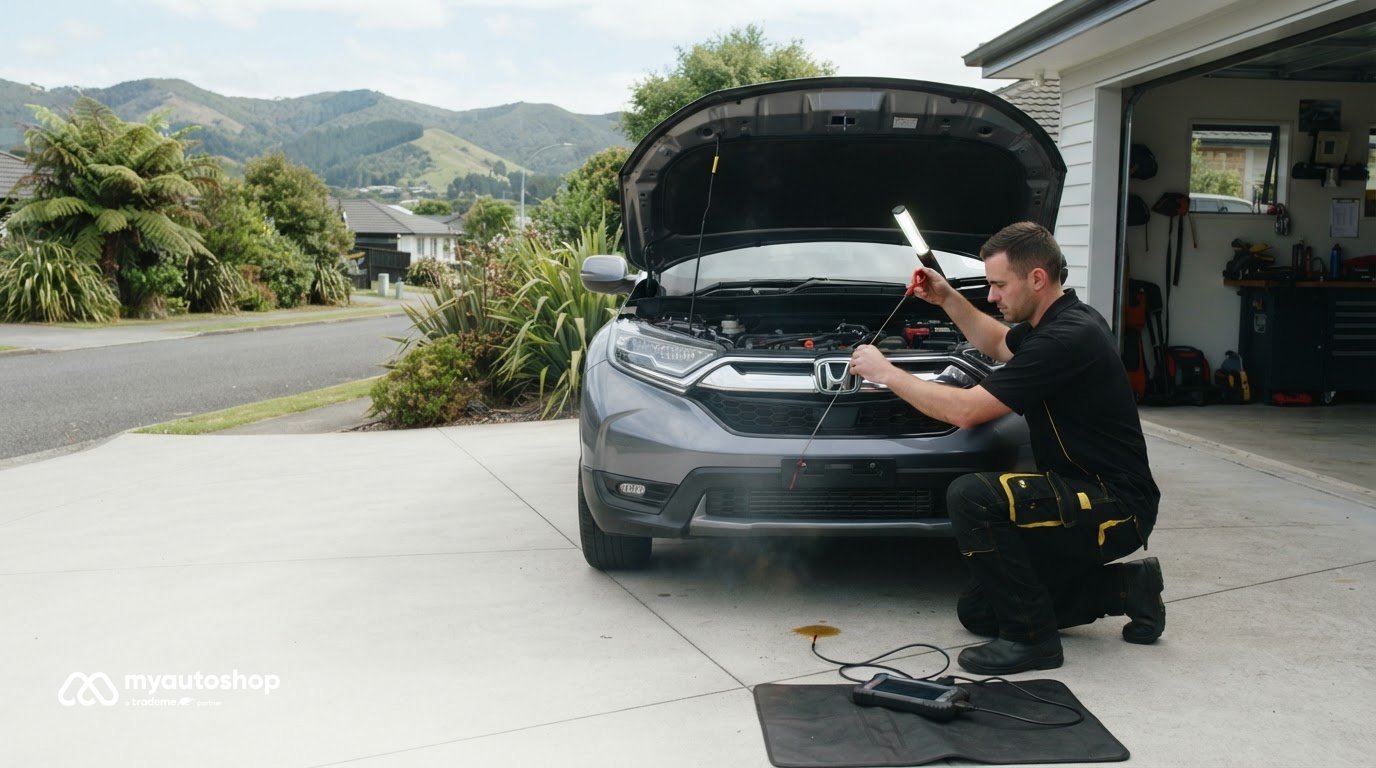
Low transmission fluid can cause slipping gears, delayed or jerky shifts, overheating and serious transmission damage. If you’re wondering what happens if you drive with low transmission fluid, the short answer is that continued driving can make the damage worse. If you know the level is low, don’t keep driving.
Unusual noises, a burning smell or a delay when shifting into drive can also signal a problem. These symptoms can be worrying, especially when you’re unsure whether it’s safe to continue.
This article covers the symptoms to watch for, how leaks or missed maintenance can leave fluid low, and why the transmission may sound or shift differently. You’ll also learn what fluid does inside an automatic transmission and why addressing a suspected problem promptly can help prevent further damage.
Key Takeaways
- Low transmission fluid can reduce lubrication and cooling, leading to slipping, delayed shifts, overheating and serious damage.
- A low level often points to a leak or another fault in the transmission’s closed system, so simply topping it up may not address the cause.
- Grinding, shaking, unusual noises or a burning smell can signal trouble. Stop driving if you suspect the transmission is running low on fluid.
- Follow your vehicle’s manual for fluid checks and maintenance, as requirements vary by vehicle.
- A pre-purchase inspection through My Auto Shop can help assess a used car’s condition before you buy, including concerns you notice during a test drive.
Effects of low or absent transmission fluid in automatic transmissions
In an automatic transmission, fluid lubricates and cools components and helps gears shift smoothly. If the level gets too low, pressure and protection can drop, affecting how the vehicle moves.
Transmission Performance Changes
Low fluid can disrupt lubrication, cooling and hydraulic pressure, affecting transmission performance. Automatic transmissions rely on fluid to operate internal clutches and help the torque converter transfer power from the engine.
With too little fluid, shifts may become rough or jerky, and the transmission can overheat. A burning smell may be a sign of overheating. Continued driving can cause serious damage, potentially requiring major repairs or complete transmission replacement if the problem isn’t addressed.
To check the fluid safely, park on level ground and follow the vehicle owner’s manual. The procedure varies by vehicle, including whether the engine should be running and whether you use a dipstick or electronic display. Follow the manual and keep clear of hot components.
To top up, use only the fluid type specified in the owner’s manual, and follow its instructions for the filling point and correct level. Don’t guess the fluid type or add fluid without following the required procedure. The wrong fluid or an incorrect level can cause further problems.
Driving Distance and Duration
There’s no reliable safe distance or duration for driving with low transmission fluid. Some mechanics claim a car can travel as far as 10 miles, but that doesn’t make the trip safe or prevent damage.
The risk depends on the fluid level, the transmission’s condition and how it behaves under load. Even a short trip can worsen a fault, especially if the transmission is already overheating or struggling to shift. If you know the level is low, don’t drive to test how far the car will go.
An automatic transmission with no fluid can suffer further damage as its pump and internal parts lose fluid protection. The car may become stuck in neutral and unable to move. Adding fluid may not reverse damage that has already occurred.
When to Stop and Call for Help
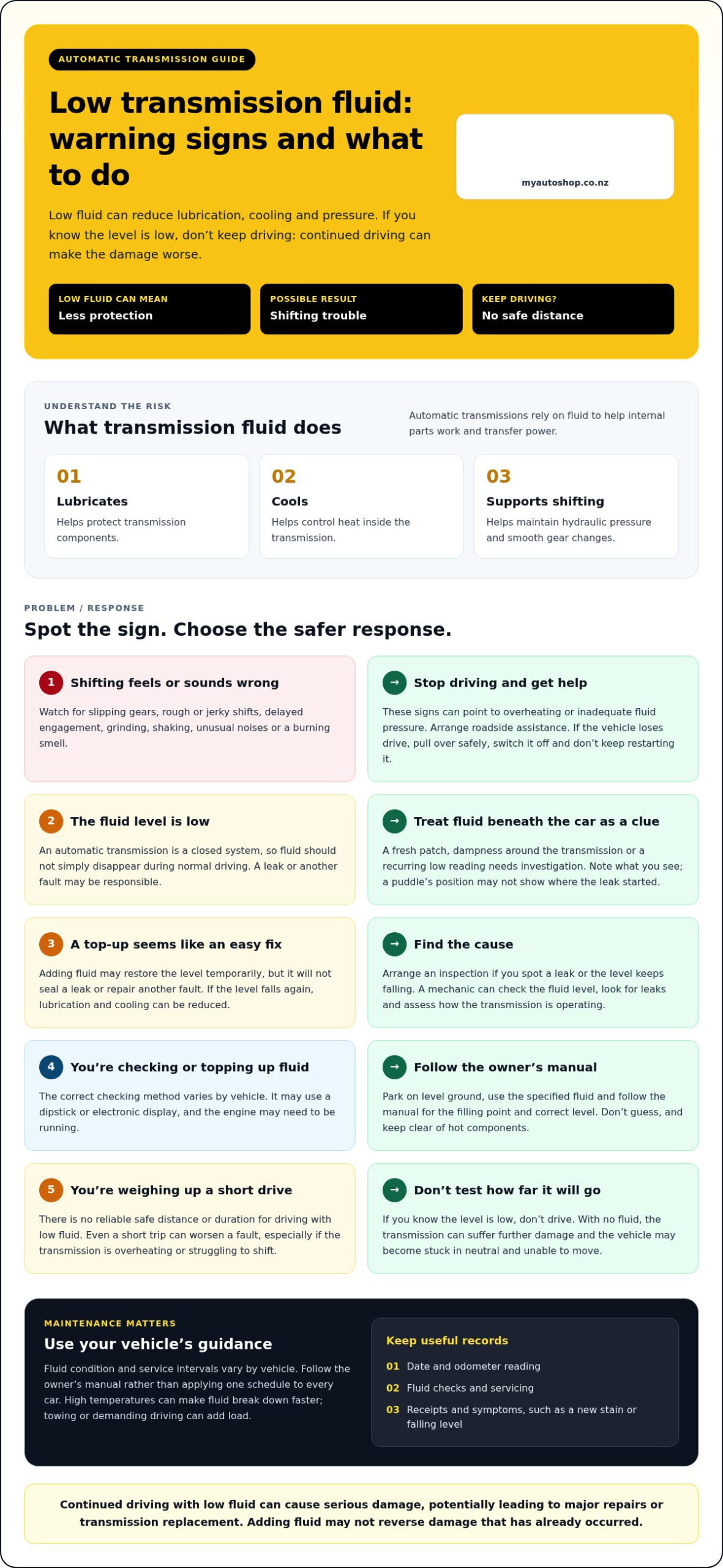
Stop driving and arrange roadside assistance if the transmission slips, shifts roughly, takes time to engage, smells burnt or leaves the vehicle unable to move. These signs can indicate overheating or inadequate fluid pressure, and continuing to drive risks making the damage worse.
If the car loses drive, pull over somewhere safe and switch it off. Don’t keep restarting it or try to drive with a known low fluid level. If you see fluid beneath the vehicle, treat it as a possible leak rather than assuming a top-up will fix the cause.
A mechanic can inspect the fluid level, look for leaks and assess transmission operation. This matters because a low level may point to a leak or another fault, while transmission damage may require more than replenishing fluid.
If the fluid is low, don’t drive when you know the level is low. Neglecting the problem can mean repairs costing thousands of dollars. No fluid can cause overheating, a burning smell, severe damage and costly repairs.
Fluid leaks and poor maintenance
An automatic transmission is a closed system, so its fluid shouldn’t simply disappear during normal driving. If the level is low, a leak or another fault may be responsible. A fresh patch beneath a parked car, dampness around the transmission or a recurring low reading can indicate a problem that needs investigation.
Transmission fluid can escape through damaged seals, connections or other components. The leak’s location depends on the vehicle, and fluid can travel along nearby surfaces before dripping. A puddle’s position on the driveway may not show where the leak began. Note where you see fluid and tell the mechanic what you observed.
Don’t treat topping up as a complete repair. Adding fluid may temporarily restore the level, but it won’t seal a leak or fix another fault. If the level drops again, continued driving can leave the transmission short of lubrication and cooling. Finding the cause helps prevent repeated fluid loss and further damage.
Maintenance matters because fluid condition and service intervals vary between vehicles. The recommended interval can depend on the make and model, so use the owner’s manual rather than applying one schedule to every car. Some guidance recommends checking transmission fluid every 30,000 to 60,000 miles, depending on the vehicle’s make and model. Follow your own manual’s instructions for its specified interval and fluid level.
High temperatures can make transmission fluid break down faster than usual. Repeated heat can reduce how well it protects and cools internal parts. Towing or demanding driving can place extra load on a transmission, but the vehicle manufacturer’s guidance remains the reference for suitable use and maintenance.
For a useful maintenance record, note the date, odometer reading and any fluid checks or servicing. Keep receipts and record symptoms, such as a new stain or a falling fluid level. These details can help a mechanic distinguish routine maintenance needs from a developing leak.
Use the owner’s manual to find the correct checking method and specified fluid level. Some vehicles have a dipstick, while others require a different procedure. Check only as directed, and don’t assume every automatic transmission can be checked the same way. The manual also identifies the required fluid type, and using the wrong specification can cause additional problems.
If you spot a leak or the level keeps falling, arrange an inspection instead of relying on repeated top-ups. A mechanic can find the source of the fluid loss and assess the transmission. Addressing the cause early is more useful than waiting for shifting problems to appear.
Because the transmission is a closed system, a transmission with no fluid has a leak or another issue. An empty reading isn’t something to dismiss or manage with repeated top-ups. Have the underlying cause investigated, and share how you checked the fluid and what you observed so the mechanic can focus on the fluid loss or other fault.
Grinding, shaking, and unusual transmission noises
A new grinding sound, vibration or change in transmission noise deserves attention, especially during a gear change. Low fluid can disrupt transmission operation, but a sound alone can’t identify the cause.
Grinding During Gear Changes
In a manual car, driving without transmission fluid can cause grinding when changing gears because clutch parts lack lubrication. Grinding while selecting a gear differs from a brief sound over a rough road. Note whether it happens during a particular shift, such as moving from second gear into third.
Automatic transmissions can also shift roughly or jerk when fluid is low. The sound may occur alongside a delayed shift or a change in how the car responds to the accelerator. Those details help describe the issue, but they don’t prove that fluid is the only cause.
Shaking and Other Changes
Record any shudder that occurs as an automatic transmission changes gear. Note the conditions, such as whether it happens while accelerating from a stop or at a steady speed. A vibration felt through the seat differs from a noise heard near the engine, so describe where you notice it.
Note when the sound begins and ends. For example, record whether it occurs only during gear changes, while reversing or while the car is stationary. Don’t repeatedly recreate the noise if the car is struggling to move or shifting unpredictably.
What to Do When You Notice a Noise
If grinding, shaking or a new transmission sound starts, reduce driving and assess the symptoms. If the car also slips out of gear, fails to engage or smells burnt, pull over safely and stop driving. Continuing with signs of a transmission fault can worsen existing damage.
When parked, note the selected gear, road conditions and any dashboard warning lights. Check the owner’s manual before checking the fluid, because the procedure varies between vehicles. Don’t crawl under a car supported only by its jack or touch hot transmission components.
A mechanic can inspect the transmission and check whether fluid loss, wear or another fault explains the noise. Share your notes, such as “grinding only when selecting reverse.” A clear description helps focus the diagnosis without assuming every unusual sound comes from low fluid.
Slipping gears and delayed engagement
Low transmission fluid can reduce the hydraulic pressure an automatic transmission needs to operate its gears smoothly. If pressure is insufficient, gears may slip instead of staying engaged as expected. You might notice the car briefly losing drive while accelerating or responding differently during a shift.
Delayed engagement is another possible sign. After selecting drive from park, for example, the car may take a few seconds to respond. Low fluid can contribute to this delay by affecting the pressure that engages the transmission’s internal clutches. Don’t dismiss a delay as harmless simply because the car eventually moves.
Pay attention to when the symptom appears. Note whether it happens when selecting drive, changing gear, reversing or accelerating from a stop. A brief record of the gear selected and the car’s response gives a mechanic more useful information than describing every shift as simply “rough”.
Manual cars can show different symptoms. A manual car with low transmission fluid may take 2-3 seconds to engage the selected gear after a gear change. If driven without fluid, it may suddenly slip out of gear into neutral. That loss of drive can happen while moving, so don’t continue driving to test whether it happens again.
Distinguish a single awkward shift from a repeated pattern. If the car hesitates every time you select drive, for instance, record that consistent behaviour. If slipping occurs only while accelerating uphill, note the road condition and whether the engine response changes. These details describe the fault without assuming fluid is the only possible cause.
Low fluid can also make gear changes feel rough or jerky. The problem may be more noticeable during a particular transition, such as moving from a lower gear to a higher one. Record exactly what you feel rather than trying to reproduce it repeatedly. Repeated testing can keep a struggling transmission under load.
If the car slips out of gear, loses drive or repeatedly delays engaging, stop somewhere safe. Continuing may worsen transmission damage, especially if fluid pressure is already inadequate. Arrange an inspection instead of relying on the car to engage again after a pause.
When describing the problem, give a clear example: “It hesitated after I selected drive, then engaged.” Include whether the vehicle was cold or had already been driven, and whether the symptom happened once or repeatedly. A mechanic can use those details and an inspection to assess the transmission and identify the cause.
Can low transmission fluid cause a car to lose drive or stall?
Yes, low transmission fluid can contribute to loss of drive, particularly in an automatic car. The fluid helps create hydraulic pressure, which operates internal clutches and supports gear changes. If pressure drops, the transmission may struggle to engage or keep a gear engaged. The engine can keep running while the car stops moving.
A car that won’t move after you select drive may have a transmission fault, including insufficient fluid. With no fluid, an automatic transmission’s hydraulic pump may wear, and the transmission may become stuck in neutral. The car may be unable to move under its own power, even if the engine starts normally.
Stalling differs from losing drive. Low fluid can cause transmission overheating, and the vehicle may enter limp mode, which limits its operation to help protect components. If the engine itself cuts out, don’t assume transmission fluid is the only cause. Note whether the engine stopped running or kept running while the car lost movement.
Watch for a sequence of symptoms. The car might first shift roughly, then hesitate when you select drive, and later fail to move. A burning smell or rising transmission temperature adds urgency. Don’t keep accelerating to force the vehicle forward, as extra load can worsen a struggling transmission.
If you lose drive on a New Zealand road, first focus on reaching a safe place without making sudden manoeuvres. Once stopped safely, switch the vehicle off and arrange roadside assistance. Don’t continue driving if the car won’t engage, slips out of gear or shows signs of overheating. Restarting won’t fix the cause.
Before calling for help, make a clear note of what happened. Record whether the engine kept running, which gear you selected and whether the vehicle moved. Include any warning lights, burning smell or visible fluid beneath the car. These details help distinguish a transmission that has lost drive from an engine stall or another fault.
A mechanic can inspect the transmission, check for fluid loss and assess whether internal damage has occurred. A low level may result from a leak or another fault, so simply adding fluid might not solve the problem. For a vehicle that still moves but shifts abnormally, Turners Service & Repairs provides a mobile mechanic inspection through the My Auto Shop website.
My Auto Shop: Pre-purchase Inspection
My Auto Shop offers a Pre-purchase Inspection for anyone considering a used car, particularly if a test drive reveals delayed shifts, slipping or unusual transmission sounds. An inspection helps you understand the vehicle’s condition before deciding whether to buy and can highlight concerns that may need further attention.
If you already own the car and notice these symptoms, arrange an assessment rather than relying on a pre-purchase check. A Basic Service or Comprehensive Service can support routine maintenance. For a used vehicle, note when the symptoms occur and share those details during the inspection.
To arrange a Pre-purchase Inspection, visit My Auto Shop.
Choose your next step with confidence
Knowing what happens if you drive with low transmission fluid can help you act before a shifting problem becomes a breakdown. Note what your car is doing and use those details to arrange the next step. If it has lost drive or shows signs of overheating, stop driving and organise assistance.
For help deciding what to do next, contact My Auto Shop. Take the next step with clear information and greater confidence.
Frequently Asked Questions
What are the symptoms of low transmission fluid?
Symptoms can vary between vehicles, so record the exact change rather than relying on a general description. Note whether the issue happens in drive, reverse or during a particular gear change, and whether it occurs consistently. Also record any dashboard warning. These details can help distinguish a transmission concern from a similar-feeling engine or driveline issue.
Will my car drive better if I change the gearbox fluid?
The transmission may shift more smoothly if the fluid’s level or condition is contributing to the problem. A fluid change won’t necessarily fix a fault elsewhere in the gearbox. Use the fluid specification and service schedule in your vehicle manual, and describe any symptoms before work begins. If the behaviour continues afterwards, further diagnosis can identify what remains unresolved.
What are the symptoms of low transmission fluid while driving?
Compare the engine’s response with the car’s movement. The engine may rev without the expected increase in speed, for example, or the vehicle may hesitate during a gear change. Note whether this happens while accelerating, cruising or reversing. Don’t deliberately recreate a concerning symptom in traffic; record what you notice during normal driving.
How does low transmission fluid damage an automatic transmission?
Transmission fluid supports lubrication, cooling and hydraulic operation. With too little fluid, internal parts may not receive enough protection, and the transmission can struggle to operate its clutches correctly. Heat and friction can then contribute to wear. The precise damage depends on the transmission design and how it has been operating, which is why an inspection matters.
What happens if you keep driving with low transmission fluid?
Continuing to drive can worsen the transmission fault and may eventually leave the vehicle unable to move. There’s no dependable distance that can be considered safe: the outcome depends on the remaining fluid and the transmission’s condition. If shifting changes or drive becomes unreliable, stop somewhere safe instead of continuing to test the car.
What causes transmission fluid to become low or leak?
A leak or another transmission fault can cause the fluid level to drop. If you see fluid on the ground, note its location and appearance, but don’t identify the source from the puddle alone. Transmission fluid is often red or pink when checked, though colour alone can’t confirm its condition or pinpoint a leak. The vehicle manual gives the correct checking procedure.
Disclaimer
This article provides general information only and should not be relied on as professional mechanical, safety or legal advice. Vehicle requirements and circumstances vary. If you are unsure about your vehicle, have it inspected by a qualified automotive professional.