

A car problem feels more manageable when you know what to do next. If you’re feeling overwhelmed by car problems, pull over somewhere safe if the car breaks down, switch on your hazard lights and contact roadside assistance or your insurer. For a repair, note any unusual noises, sensations or dashboard warning lights so you can explain what’s happening clearly.
It’s understandable to worry about being stranded, running late or facing an unexpected repair bill. This guide will help you sort the immediate safety steps from the next decisions, and explain who to contact for roadside help, towing or mechanical advice. You’ll also learn how to describe the issue and what information to have ready, including your vehicle’s age, mileage and known problems. With a clear plan, you can focus on one practical step at a time instead of trying to solve everything at once.
Key Takeaways
- Notice when a noise or warning light appears and what the car is doing at the time. These details can help a mechanic investigate the issue.
- If anxiety rises, pause and take a few slow breaths before deciding on your next step.
- Review your roadside assistance terms so you understand towing limits and how often you can use the service.
- Keep your roadside assistance and insurance contact details easy to find, so you can access them during a breakdown.
- Considering a used car? A My Auto Shop Pre-purchase Inspection can help you assess the vehicle before you buy.
Anxiety about unusual car noises and warning lights
A new rattle, squeal or dashboard light can make an ordinary trip feel uncertain. If you’re feeling overwhelmed by car problems, focus on one task: note what you hear or see, when it happens and how the car responds. Those details give a mechanic a clearer starting point than “it doesn’t sound right”.
Common warning signs include a slow engine start or battery warning light, squealing brakes, a tyre-pressure warning or a temperature warning. Notice whether a noise changes when you brake, turn or accelerate. Don’t ignore a warning just because the car still moves.
To better understand the decision about keeping or replacing an older car, watch this video:
Start with a simple record. Write down the warning light’s colour and symbol, the road conditions and whether the car felt different. If it’s safe, record the sound while parked. Don’t use your phone while driving, and don’t keep driving just to reproduce a noise.
A WoF checks a vehicle against inspection requirements at the time of inspection; it isn’t an assessment of a fault that develops later. Vehicle licensing is separate from diagnosing a mechanical problem, so valid licensing doesn’t establish that a car with a new safety concern is safe to drive. If the fault affects control, braking or visibility, stop somewhere safe and seek help.
Anxiety can also affect how driving feels. Restlessness, tense muscles, headaches, tiredness or changes in sleep can make a short journey seem harder. Some drivers avoid motorways, night driving or particular routes after a frightening experience. Avoidance may shrink everyday options, so note which situations trigger the response rather than forcing yourself into traffic.
OCD, PTSD and specific phobias can shape someone’s response to car trouble, but a noise or worry alone doesn’t identify a mental health condition. For example, a driver with checking compulsions may repeatedly inspect a dashboard light, while another person may feel distressed by a sound linked to a past crash. Acknowledge the feeling without treating it as proof of mechanical danger.
After a crash, a sudden bang or flashing light can bring back fear, even if the current situation is different. Pause somewhere safe, name what you notice and take a few slow breaths before deciding what to do. If driving anxiety persists or limits daily travel, talk with a health professional; mechanical checks and emotional support address different needs.
When you contact a mechanic, describe the sound or sensation and any warning lights, plus the vehicle’s age, mileage and known problems. A guide to common car symptoms can help you find plain-language terms for what you’ve noticed. Clear observations make it easier to explain the issue without needing to diagnose it yourself.
Worry about breakdowns, repair costs and lateness
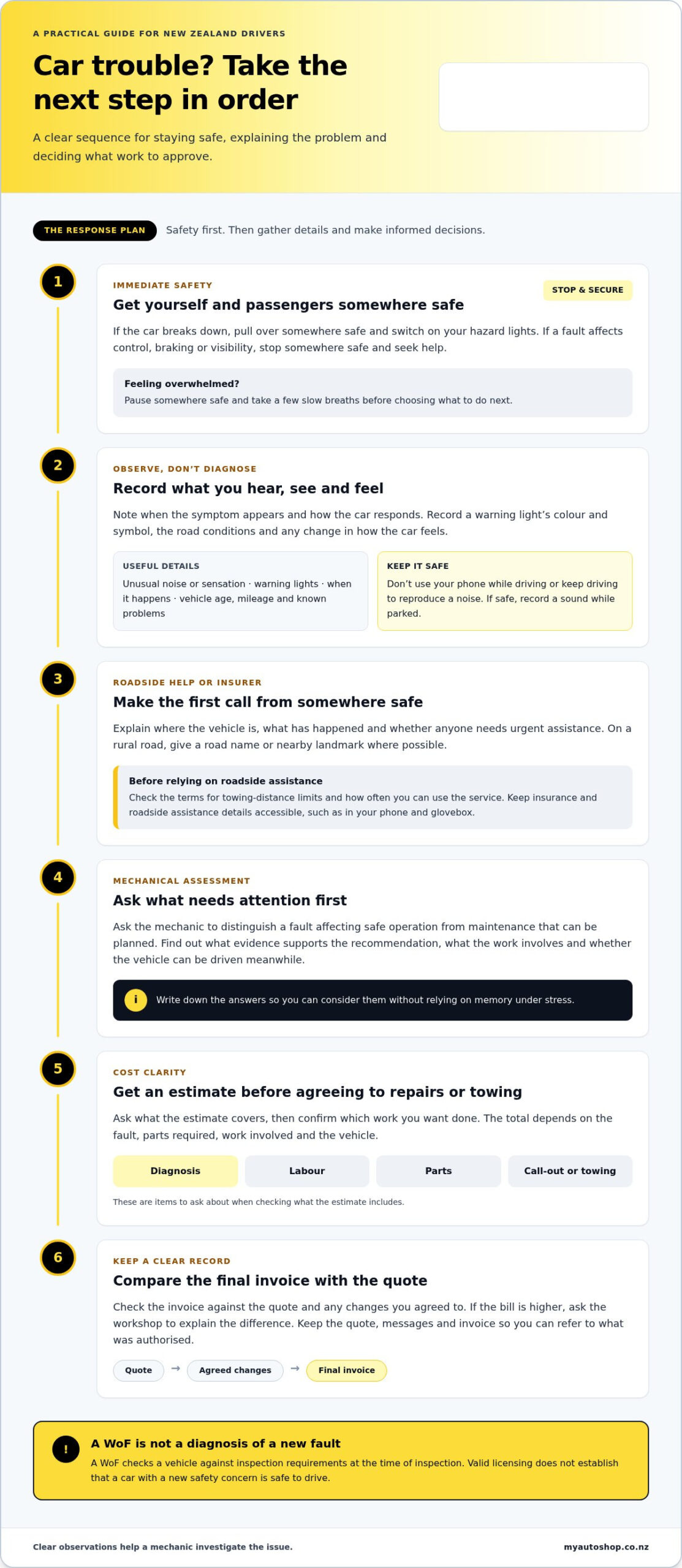
A breakdown can disrupt your plans and leave you worrying about the repair bill. Take decisions in order: get yourself and your passengers to a safe place, contact roadside assistance or your insurer, then arrange a repair assessment. If you’re running late, send a brief message once you’re safely stopped. You don’t need to solve the travel problem and the mechanical problem at the same time.
Before agreeing to work, ask what the mechanic has found and which repairs need attention first. For example, ask them to distinguish a fault affecting safe operation from maintenance that can be planned. If they recommend a repair, ask what evidence supports it, what the work involves and whether the vehicle can be driven meanwhile. Write down the answer so you can consider it without relying on memory under stress.
Get an estimate before agreeing to a repair or tow. Ask what it covers, including diagnosis, labour, parts and any call-out or towing component. The total depends on the fault, the parts required, the work involved and the vehicle. A clear estimate helps you compare the proposed work with your budget and decide what to approve.
Keep your insurance and roadside assistance details accessible, such as in your phone and glovebox. Some car insurance policies include towing or vehicle rental reimbursement. Roadside assistance may also set limits on towing distance or service use, so understand the terms before a breakdown leaves you arranging transport.
In New Zealand, compare the final invoice with the quote and any changes you agreed to. If the bill is higher, ask the workshop to explain the difference and keep the quote, messages and invoice. If you believe the work was poor or charges weren’t agreed, raise your concern with the workshop and request a clear response. These records help clarify the issue and what was authorised.
Unexpected costs can make it harder to plan other household spending. If you can, build a repair buffer into your budget and keep a record of servicing and repairs. When a mechanic identifies work that can be scheduled, ask what affects its urgency and plan around your next income or essential expenses. An estimate isn’t approval, so confirm which work you want done.
For help understanding how repair costs are presented, read this guide to fair repair pricing. A written estimate, a clear list of approved work and saved records give you practical control when plans change.
3. Contacting mechanics and towing services
Make the first call from somewhere safe, not while driving. Tell the roadside provider where the vehicle is, what has happened and whether anyone needs urgent assistance. A clear description helps them understand the problem and arrange an appropriate response. If you’re on a rural road, give a nearby landmark or road name where possible.
Before relying on roadside assistance, read your policy or membership details. Cover can limit how far a vehicle is towed and how often you can use the service. Check the provider’s response times, service areas, pricing and available services before you need help. Keep the contact number and policy details in your phone and glovebox.
When you call a mechanic, share specific information rather than guessing at the cause. Describe the vehicle’s age, mileage and known problems, along with what happened just before the fault. For example, explain whether the engine stopped after starting or a warning light appeared during a trip. Mention unusual sounds or changes in handling.
In New Zealand, compare mechanics by how clearly they explain the next steps, not by the lowest quote alone. Ask for a written estimate that separates diagnosis, labour, parts and any towing costs. Check that the quotes cover the same work. A quote for replacing a part isn’t directly comparable with one that includes diagnostic testing and related repairs.
Ask how the mechanic will communicate if an inspection reveals additional work. Agree on how changes will be discussed before work proceeds, and keep the estimate and messages. A clear explanation should connect the reported symptom to the proposed repair. If all you hear is “the car needs work,” ask which fault they found and what it affects.
Use a short call checklist to steady your reaction and avoid missing useful details:
- Vehicle make, model, age and mileage.
- Your location and whether the car can move safely.
- Warning lights, sounds, smells or changes you noticed.
- Known mechanical issues and recent repairs.
- What the estimate includes, and how updates will be approved.
If the car won’t start at home or work, Turners Service & Repairs provides mobile servicing and mechanical repairs. Learn what to expect from a mobile mechanic so you can decide whether an on-site visit suits the situation. For a vehicle that needs towing, give the operator the destination and ask how the towing charge is calculated before agreeing.
When arranging help, confirm the vehicle’s age and mileage rather than estimating, if you can check them. Describe known problems plainly, and separate what you’ve observed from what you only suspect. If a detail is uncertain, say so instead of presenting a guess as fact. This gives the person responding a clearer account and keeps the discussion focused on the vehicle and its history. Being precise also makes it easier to correct or add information during the call.
Drivers’ concerns about roadside breakdowns
A roadside breakdown can leave drivers feeling exposed, especially on a busy road or in an unfamiliar area. A sudden loss of control can bring feelings of helplessness and vulnerability. Focus first on your surroundings: if the vehicle can be moved safely, pull over away from moving traffic and switch on the hazard lights. Then take a moment to assess where you and your passengers are.
Choose your next step based on the situation, not pressure to get moving quickly. If you’re stopped somewhere unsafe, prioritise getting people away from traffic when it’s safe to do so. Keep children close and avoid standing behind or beside the vehicle, where passing traffic could pose a risk. Call roadside assistance or your insurer once you’re in a safer position.
A simple breakdown kit can make an unexpected wait easier. Keep useful items together so you can find them without searching through the boot:
- A torch, blanket and first-aid kit.
- Non-perishable food and drinking water.
- A spare tyre and suitable tools for a minor tyre problem.
- Your roadside assistance and insurance contact details.
Before a long drive, such as a trip through rural parts of New Zealand, check that your phone is charged and you know where your roadside assistance details are stored. If you’re travelling alone, tell a friend or family member your route. If the car stops, share your location and describe the roadside setting, such as a rest area or a named road.
Stress can make it harder to organise details or make a call. Try one small action at a time: sit somewhere safe, take a few slow breaths, then contact the appropriate support. If speaking feels difficult, ask a passenger or friend to make the call while you provide the vehicle details. Acknowledging that you’re shaken can help you respond more clearly than trying to suppress the feeling.
Use the wait to keep people informed, not to diagnose the fault beside moving traffic. Send a short message saying you’ve broken down, where you are and whether you’re waiting for a tow. If your plans change, update the person expecting you. This can ease the pressure of being late while the mechanical problem is handled.
Preparation can also reduce uncertainty before your next trip. Save assistance numbers in your phone, keep the kit in a consistent place and check that the torch works. These practical steps won’t prevent every breakdown, but they give you a clear sequence to follow when an unexpected stop disrupts your day.
5. How can I tell whether a car problem is safe to drive with or needs immediate attention?
Start by noticing whether the car’s behaviour has changed, rather than guessing what caused it. A new vibration, reduced braking response, suddenly different steering or smoke needs prompt attention. If a dashboard warning relates to brakes, oil pressure or engine temperature, don’t try to diagnose it while driving. Pull over somewhere safe, switch on your hazard lights and contact roadside assistance or a mechanic for instructions.
Some faults may not stop a car moving, but that doesn’t prove it’s safe to continue. For example, a tyre-pressure light calls for a tyre check, not an assumption that the warning can wait. A battery warning light or slow starting can point to a charging or starting issue. Note the symbol and any change in performance, then use the vehicle handbook to identify the warning and arrange advice.
Use these clues to decide what to do next:
- Stop and seek help: the car is difficult to control, braking feels different, smoke appears, or a warning accompanies a sudden change in performance.
- Don’t dismiss it: a new warning light, unusual noise, fluid leak, or repeated difficulty starting needs assessment, even if the car still moves.
- Record the details: note the warning symbol, when it appeared, and whether the issue changes during braking, turning, or acceleration.
A warning light’s meaning can vary by vehicle, so check the handbook for the exact symbol and recommended action. Don’t rely on a WoF as proof that a new problem is harmless. A WoF records the vehicle’s condition when it was inspected; a fault can appear later. If you’re unsure whether driving could make the situation worse, ask a mechanic before setting off.
For example, if a temperature warning appears during a trip, pull over safely rather than continuing to your destination. If the car starts making a new grinding noise when braking, don’t dismiss it as ordinary road noise. Explain the symptom and when it occurs to the mechanic. Clear observations help them judge what assessment is needed.
Feeling anxious can make every noise seem urgent, while worry about being late can tempt you to keep driving. Separate the feeling from the evidence: identify the specific change, check the relevant handbook guidance, and choose whether to stop or call for advice. A guide to common vehicle symptoms can help you describe what you’ve noticed in familiar terms. Don’t continue simply because the car can still move.
Surveys and automotive research consistently show that a significant majority of drivers worry about being stranded with a broken-down vehicle. A breakdown can disrupt a driver’s sense of control and cause feelings of helplessness and vulnerability. Recognise and accept those feelings during a breakdown rather than repressing them, since repression may increase stress.
Humour can help people cope with stress, anxiety and fear related to car trouble. Replacing auto anxiety with auto awareness can cut the risk of breaking down or getting stranded in half. Drivers in New Zealand regularly travel thousands of kilometres across a variety of terrains, making proactive vehicle maintenance essential for safe travel.
My Auto Shop: Pre-purchase Inspection
My Auto Shop offers a Pre-purchase Inspection to help you assess a used car before deciding whether to buy it. This can be useful if repair concerns make it difficult to judge a vehicle’s condition or likely next steps. An inspection gives you information to consider alongside the seller’s description and your plans for the car.
If you’re dealing with a problem in a car you already own, a Basic Service or Comprehensive Service may be a relevant next step, depending on what the vehicle needs. For mobile servicing and repairs, Turners Service & Repairs brings the service to you. Use the findings to make a practical plan.
Contact My Auto Shop or visit myautoshop.co.nz to get started.
Take the next step at your pace
Set a time to revisit the decision rather than carrying every possibility in your head. Review the information you’ve gathered, note what remains unclear and decide what needs attention next. If someone else relies on the car, agree on a practical backup plan for getting to work or appointments while you decide.
Feeling overwhelmed by car problems can make each choice seem bigger than it is. Break the process into manageable actions: keep your notes together, consider the advice you’ve received and choose the next step that suits your circumstances. You don’t need to settle every future repair question today.
If you’d like help with your next automotive step, contact My Auto Shop. Move forward with the information you have, one decision at a time.
Frequently Asked Questions
What should I do first if car problems feel overwhelming?
Pause briefly before making decisions. If you’re parked, write down what’s worrying you in a quick stream of thoughts, without trying to organise it perfectly. Then circle one concern you can act on now and leave the rest for later. For example, you might note that the repair decision can wait until you’ve had time to think clearly.
How can I prioritise repairs when I cannot afford to fix everything at once?
Keep a simple record of repair and maintenance spending, including dates, odometer readings and receipts. This can reveal recurring faults and help you plan for upcoming maintenance alongside household expenses. Check the vehicle handbook for its maintenance schedule, then discuss how planned maintenance fits with the current repair. That gives you a clearer view of future costs without relying on memory.
Disclaimer
This article provides general information only and should not be relied on as professional mechanical, safety or legal advice. Vehicle requirements and circumstances vary. If you are unsure about your vehicle, have it inspected by a qualified automotive professional.