
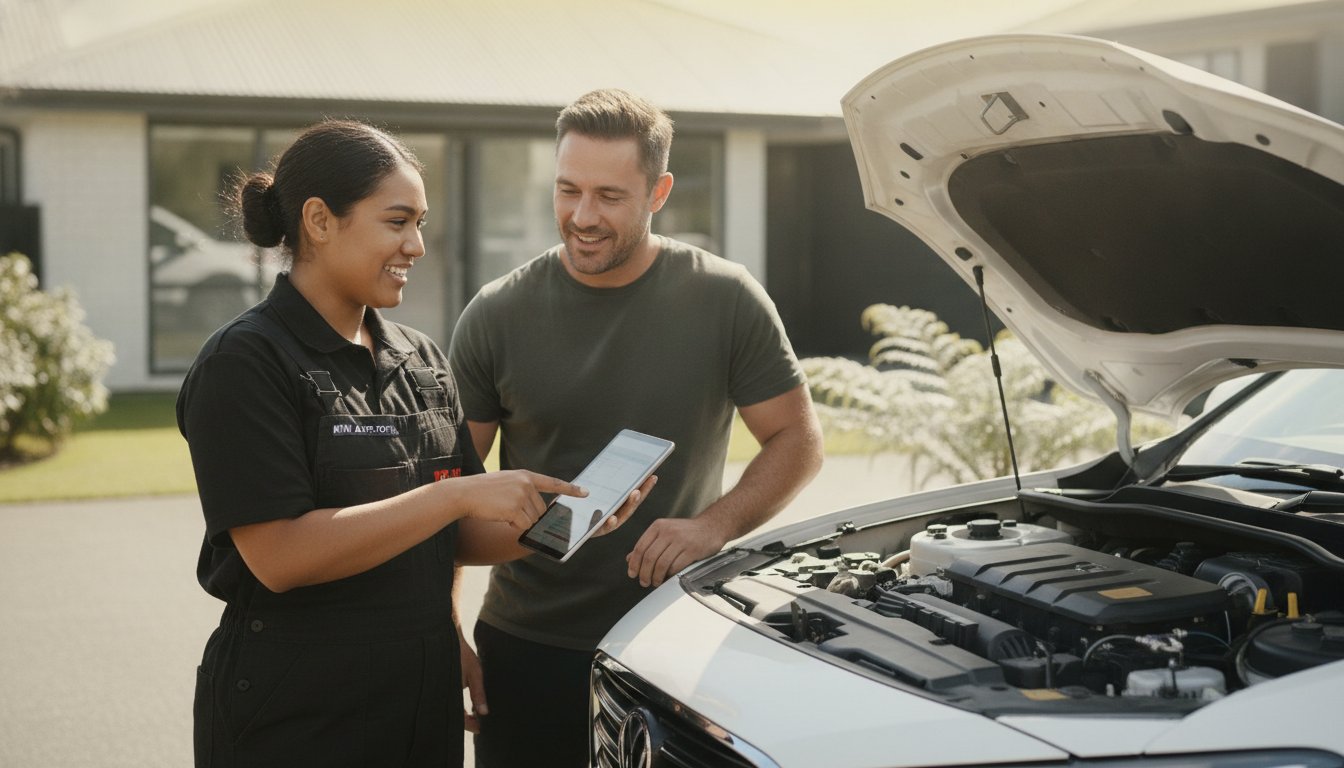
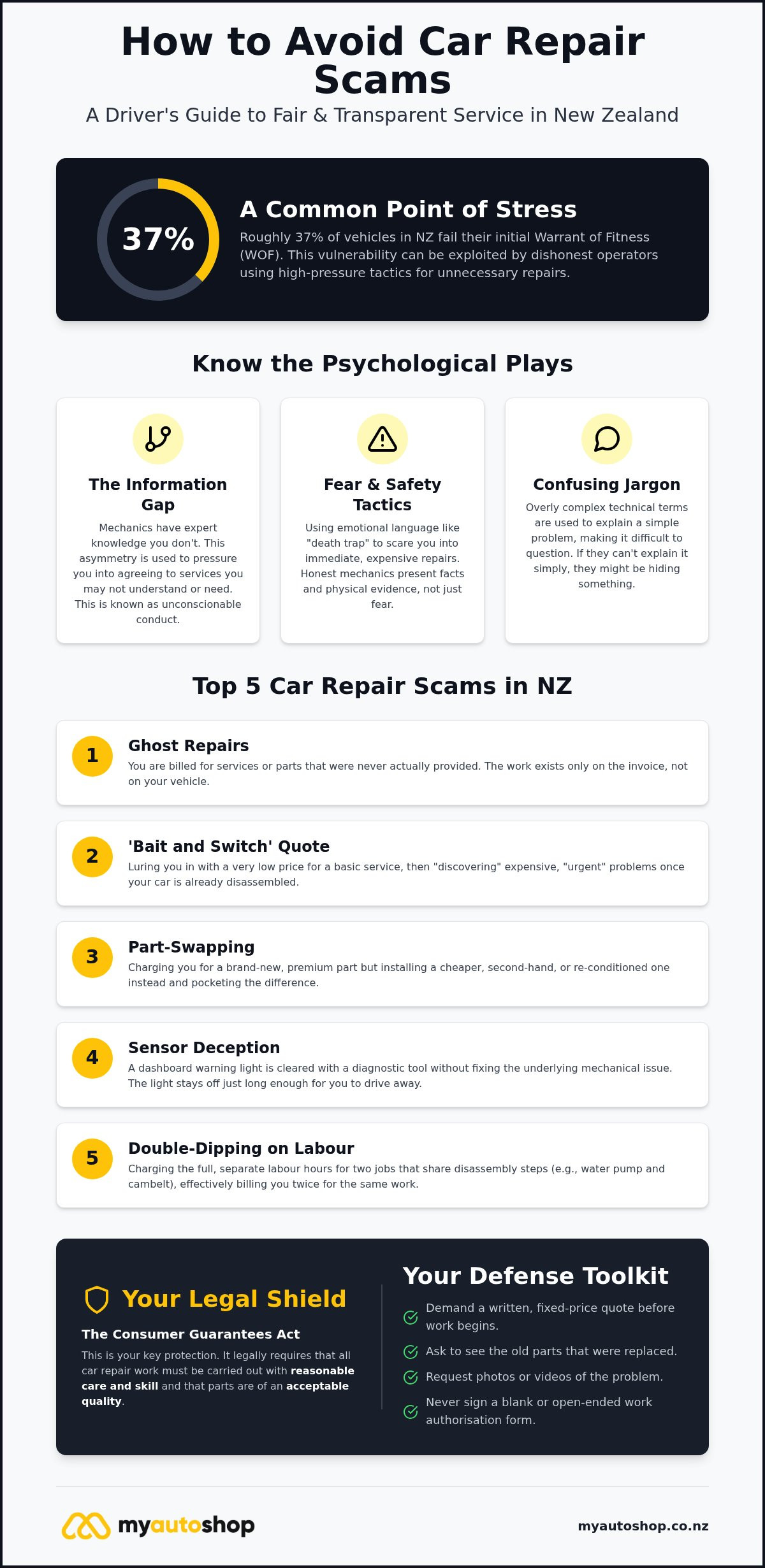
You’re standing in a local garage, staring at a list of “urgent” repairs for a car that felt perfectly fine yesterday. With roughly 37% of Kiwi vehicles failing their Warrant of Fitness in the first three months of 2026, it’s easy to feel like a target for unexpected add-ons. If you’ve ever felt overwhelmed by technical jargon or worried about hidden costs, you aren’t alone. Mastering the art of avoiding car repair scams nz is about reclaiming control over your vehicle’s maintenance and your bank account.
We know that most Kiwis just want a fair deal and a car that’s safe for the family. You deserve total transparency before a single bolt is turned. This guide promises to arm you with the right questions to ask, a clear understanding of your rights under the Consumer Guarantees Act, and the confidence to say no to repairs your car doesn’t need. We’ll walk through how to spot a dishonest quote, how to decode mechanic-speak, and how to find a vetted partner who values your time as much as your safety.
Key Takeaways
- Spot the red flags of common industry tricks like ghost repairs and bait-and-switch quotes before you hand over your keys.
- Use the Consumer Guarantees Act as your personal legal shield when avoiding car repair scams nz to ensure every job meets professional standards.
- Learn why demanding a fixed-price quote is your best defense against the surprise bills that often follow a standard service.
- Explore how digital booking platforms and mobile mechanics bring the repair process out of the shadows for total transparency.
- Gain the confidence to handle high-pressure safety-shaming tactics and ensure you only pay for repairs your car actually needs.
The Psychology of the Car Repair Scam: Why Drivers Get Caught
Most people walk into a garage feeling like they’re at a disadvantage. It’s a classic case of information asymmetry. The mechanic knows exactly how your engine works, and you just want to get to work on time. This power gap is exactly what dishonest operators exploit. When a professional uses their superior knowledge to pressure you into unfair terms, they may be engaging in unconscionable conduct. Recognizing this dynamic is the first step in avoiding car repair scams nz.
Safety-shaming is another common psychological tool. A mechanic might tell you your car is a “death trap” or suggest it will definitely fail its next WOF without an immediate, expensive fix. They use fear to bypass your budget. If a shop uses high-pressure emotional language instead of showing you clear physical evidence, take a breath. Honest mechanics rely on facts, not fear. They’ll show you the problem and explain why it matters without the theatrics.
Then there is the jargon-bomb. This happens when a technician uses overly complex terms to explain a simple problem. If they can’t explain the repair in plain English, they might be hiding the fact that the work is unnecessary. In New Zealand’s tight-knit community, your trust is a mechanic’s most valuable asset. Reliable shops know that one dishonest job isn’t worth losing a lifelong customer. They value their reputation because word travels fast in the Kiwi market.
Common Red Flags in the Initial Quote
Watch for vague descriptions on your initial quote. Terms like “engine tuning” or “miscellaneous shop supplies” without a price breakdown are immediate red flags. Demand a written estimate before any tools touch your car. If a shop refuses to put their prices in writing, walk away. Never sign an open-ended authorization form. This gives the garage a blank check to spend your money without your consent.
The ‘Urgent’ Add-on Repair
The “urgent” phone call mid-service is a major stress point for many drivers. If a mechanic says they found a new issue while performing a basic service, don’t panic. Ask for a photo or video of the failed part. Most modern workshops use digital inspections to show you exactly what they see. Be wary of the “while we’re in there” trap. While some preventative maintenance is smart, other add-ons are just profit boosters. Always ask if the repair is required for safety right now or if it can wait until your next scheduled visit.
Top 5 Car Repair Scams Operating in New Zealand Today
Kiwi drivers often face a handful of recurring tricks that inflate bills without adding value. While the majority of local mechanics are reliable, being aware of these tactics is a vital part of avoiding car repair scams nz. These methods often target the lack of transparency in traditional workshops. By knowing what to look for, you can protect your vehicle and your bank account from unnecessary costs.
- Ghost Repairs: This is the simplest scam. You’re billed for parts or labour that never actually occurred. It might be a spark plug change or a fluid flush that stays strictly on the invoice and off the car.
- The ‘Bait and Switch’ Quote: A shop advertises an impossibly low price for a basic service. Once your car is on the hoist and the oil is drained, they “discover” critical faults that must be fixed immediately.
- Part-Swapping: You pay for a brand-new component, but the mechanic installs a “re-conditioned” or second-hand part from a wrecker. They pocket the price difference while you’re left with a part that has a shorter lifespan.
- Sensor Deception: Modern car computers are complex. A dishonest shop might simply clear a fault code using a diagnostic tool without fixing the underlying mechanical failure. The light stays off until you’ve driven a few kilometres away.
- Double-dipping on Labour: Many repairs share the same disassembly steps. For example, if you need a Cambelt / Timing Belt Replacement and a water pump, the mechanic is already “in there.” Charging full labour hours for both separate jobs is a common way to pad the bill.
If you feel pressured or confused by these tactics, remember your rights under the Consumer Guarantees Act for car repairs. It protects you from work that isn’t performed with reasonable care and skill. It’s always okay to ask for a second opinion if a quote feels inflated or the work seems premature.
How to Spot ‘Ghost’ Parts
Always use the “Show Me the Old Part” rule. Ask the mechanic to put your old components in a box for you to inspect before you pay. It’s a simple request that keeps everyone honest. You can also look for “fresh” hardware yourself. If you just paid for a new radiator, the bolts and gaskets should look clean and free of road grime. Understanding the difference between OEM (Original Equipment Manufacturer) and aftermarket parts is also key. Aftermarket parts are often high-quality, but you shouldn’t be charged OEM prices for them.
Over-servicing and Early Replacements
Over-servicing is a subtle way to drain your wallet. A mechanic might tell you your brake pads are “getting low” when they still have 40% of their life left. While it’s important to stay safe, replacing parts too early is unnecessary. Don’t fall for the “Dirty Fluid” trick either. Slightly dark oil or coolant doesn’t always require an immediate, expensive flush. Always cross-reference the mechanic’s advice with your vehicle manufacturer’s service schedule. If the manual says the fluid lasts 100,000km and the mechanic wants to change it at 40,000km, ask for a clear explanation of why.
Your Legal Shield: The Consumer Guarantees Act and Beyond
Your legal rights are the most effective tool for avoiding car repair scams nz. In New Zealand, the Consumer Guarantees Act (CGA) ensures that every mechanical service must be performed with “reasonable care and skill.” This isn’t just a suggestion; it’s a legal requirement. If a mechanic fails to meet this standard, they are legally obligated to fix the issue at no extra cost. For serious faults where the work is fundamentally different from what was agreed, you have the right to reject the service and demand a full refund.
The Fair Trading Act provides additional protection against misleading or deceptive conduct. This applies if a shop advertises a “special” price they never intend to honour or claims a part is brand new when it’s actually second-hand. If you find yourself in a stalemate with a garage, you can turn to the Motor Vehicle Disputes Tribunal (MVDT). The MVDT can hear claims for amounts up to $100,000. It’s a cost-effective way to get justice, with a filing fee of approximately $87. You don’t need a lawyer to represent you, making it an accessible option for every Kiwi driver.
The Power of the Written Quote
Understanding the difference between an “estimate” and a “quote” is vital for your financial safety. A quote is a binding offer. Once you accept it, the price is set. An estimate is a professional guess and is not legally binding. However, industry standards generally dictate that a mechanic should contact you if the final bill will exceed an estimate by more than 10%. Demand a written document that breaks down the cost of parts, labour hours, and GST. Clear documentation prevents “price creep” and ensures you aren’t paying for phantom repairs.
What to Do If You’ve Been Scammed
If you suspect a scam after the work is done, don’t just refuse to pay. In New Zealand, mechanics have a “lien” over your car, meaning they can legally keep it until the bill is settled. Instead, pay the bill “under protest” and write this clearly on the invoice. This protects your right to take legal action later while ensuring you get your car back. Gather evidence immediately. Take photos of the parts replaced and get a second opinion from an independent, MTA-approved mechanic. Finally, send a formal “Notice of Dispute” letter to the garage manager. This creates a paper trail that is essential if you eventually need to file an MVDT claim.
Modern Solutions: Digital Platforms and Mobile Mechanics
The traditional garage model often feels like a black box. You drop your keys, walk away, and hope for the best. Digital platforms and mobile services are changing this outdated dynamic. These modern tools are built for transparency. They help you in avoiding car repair scams nz by keeping you informed at every step. Instead of wondering what’s happening under the hood, you get real-time updates and clear data. This shift in power puts you back in the driver’s seat of your own maintenance schedule.
Fixed-price booking is a game-changer for financial clarity. It removes the anxiety of the “open-ended” bill discussed earlier. When you book through a digital platform, you see the total cost upfront. This includes parts, labour, and GST. There are no hidden fees or “miscellaneous” charges added at the last minute. This model forces honesty because the price is locked before the work even begins. It eliminates the incentive for a shop to pad the invoice with unnecessary extras.
Using a platform with a vetted network adds another layer of security. Independent mechanics on these platforms are rated by other Kiwi drivers. If a mechanic is dishonest or does poor work, they don’t stay in the network. This collective accountability protects you. You aren’t just picking a name out of a phone book. You’re choosing a professional who has already proven their reliability to the community. This system rewards honesty and high-quality work, making it much easier for you to find a long-term mechanical partner.
Why Mobile Mechanics Are Harder to Scam With
Mobile mechanics offer a level of visibility that a traditional shop simply can’t match. There is no hidden workshop behind a closed door. You can watch the parts being taken out of the box and installed in your own driveway. This physical presence makes it nearly impossible for a technician to charge for “ghost repairs.” You also deal directly with the person doing the work. There is no service advisor acting as a middleman. This direct line of communication ensures nothing gets lost in translation. Mobile operators also have lower overhead costs. They don’t have to pay for a massive building or a front-desk team. This means they are under much less pressure to “upsell” you on unnecessary work just to meet a daily revenue target.
The Pre-purchase Inspection Shield
Buying a used car in New Zealand is often where drivers are most vulnerable to scams. Many people assume a fresh Warrant of Fitness means the car is in perfect health. This is a dangerous mistake. A WOF is a basic safety check, not a mechanical health report. Scammers often hide major engine or transmission issues that a WOF won’t catch. A comprehensive pre-purchase inspection is your best defense. It reveals hidden faults like head gasket leaks, worn clutches, or electronic failures. A detailed report gives you a “get out of jail free” card before you hand over thousands of dollars. You can use the findings to negotiate a lower price or simply walk away from a bad deal. Protect your next investment by booking a Mobile Mechanic to check the vehicle before you buy.
My Auto Shop: Removing the Mystery from Car Repairs
We believe car maintenance shouldn’t feel like a gamble. My Auto Shop acts as the bridge between you and the workshop, ensuring that every interaction is built on honesty and clarity. By using our platform, you’re choosing a partner dedicated to avoiding car repair scams nz. We take the guesswork out of the equation by providing fixed-price quotes before you even drop off your keys. This means the price you see on your screen is the price you pay at the end of the day. No surprises. No hidden fees. Just professional work at a fair price.
Our vetted network is the backbone of our service. We don’t just work with anyone. Every garage and technician on our platform must meet high standards for both technical skill and ethical conduct. We monitor customer feedback constantly to ensure these standards never slip. Whether you’re booking mobile mechanics to visit your home or choosing a local workshop, you can rest easy knowing they’ve been pre-screened for reliability. If a dispute ever arises, the My Auto Shop Guarantee means we step in to mediate. We ensure the work meets professional standards and the pricing remains fair, giving you a level of protection you won’t find at a traditional “walk-in” garage.
Transparent Servicing for Every Budget
Choosing the right level of care for your car is simple with our jargon-free approach. You can easily compare Basic vs. Comprehensive servicing to see exactly what’s included in each package. A basic service covers the essentials like oil and filter changes, while a comprehensive service adds deeper safety checks and fluid replacements. If a mechanic identifies a genuine issue during the service, they must submit an “additional work” request through our portal. You’ll receive a notification with a clear price and an explanation of why the work is needed. You have the total power to approve or decline the work from your phone. Plus, every job is recorded in your car’s digital service history, making it easy to track your vehicle’s health over time.
Ready for an Honest Service?
Booking your first transparent car service takes less than two minutes. Just enter your registration, select your service, and choose a time that fits your busy life. We have a national reach that covers the main centers and beyond, so you can find quality you trust anywhere in New Zealand. We’ve streamlined the entire process to respect your time and your budget. Stop worrying about jargon-bombing or unexpected add-ons and start experiencing car care the way it should be. Book your fixed-price car service or inspection now.
Drive with Confidence and Clarity
Mastering the process of avoiding car repair scams nz comes down to two things: knowledge of your legal rights and choosing the right partners. You now have the tools to spot red flags and the confidence to demand a written quote before any work begins. Remember that the Consumer Guarantees Act is your ultimate safety net. It ensures that every service you pay for meets a professional standard of care and skill.
My Auto Shop was founded in 2020 as a proud NZ-owned and operated business to solve these exact frustrations. With over 2,500 verified customer reviews, we’ve built a reputation for stripping away the mystery of mechanical work. Our fixed-price guarantee on all standard services means you never have to worry about hidden fees or “price creep” again. We prioritize your time and your safety by connecting you with a vetted network of honest, highly competent professionals.
Stop the guesswork. Book a fixed-price car service with My Auto Shop today.
You deserve a vehicle that runs smoothly and a mechanical partner you can actually trust. Take the first step toward stress-free maintenance today.
Frequently Asked Questions
Can a mechanic charge me more than the original quote?
A binding quote is a fixed price, and a mechanic cannot charge you more once you accept it. If you were given an estimate instead, it is a professional guess rather than a set price. However, industry standards generally dictate that they should contact you before the final bill exceeds that estimate by more than 10%. Always confirm whether you are receiving a quote or an estimate before any work starts.
Is it a scam if a mechanic says I need new brake pads during a WOF?
This isn’t always a scam, but it is a common area for over-servicing. Brake pads only fail a Warrant of Fitness if the friction material is less than 1.5mm thick. If a mechanic insists on a replacement, ask them to show you the measurement with a gauge. Getting a second opinion from a dedicated testing station that doesn’t perform repairs can help you stay confident in your decision.
What should I do if a mechanic refuses to show me the old parts they replaced?
Refusing to show you the old parts is a major red flag. You have a right to inspect the components you’ve paid to replace. If a shop claims they’ve already been thrown away, it makes avoiding car repair scams nz much harder. In the future, tell the mechanic before they start that you want the old parts placed in a box for your inspection.
Are mobile mechanics as qualified as those in traditional workshops?
Mobile mechanics are fully qualified technicians who often have years of experience in traditional garage environments. They carry the same diagnostic tools and equipment needed for most service and repair jobs. The primary difference is the transparency they offer, as you can see the work being performed in your own driveway rather than behind a closed workshop door.
Does the Consumer Guarantees Act cover second-hand car repairs?
Yes, the Consumer Guarantees Act applies to all repairs performed by a business, regardless of the vehicle’s age. The work must be completed with reasonable care and skill. If a repair fails to fix the problem or is done poorly, the garage is legally required to remedy the issue at no extra cost to you, even if your car is an older model.
How can I tell if a mechanic is using genuine or knock-off parts?
Request to see the packaging of the parts before they are installed. Genuine or OEM parts will feature the vehicle manufacturer’s branding and a specific part number. High-quality aftermarket parts are a great alternative, but they should be clearly listed on your invoice. Be wary of unbranded parts that arrive without professional packaging, as these may be low-quality “knock-offs.”
What is the difference between a WOF and a pre-purchase inspection?
A Warrant of Fitness is a high-level safety check required by law to ensure a car is roadworthy. A pre-purchase inspection is a much more comprehensive mechanical audit. It identifies hidden engine issues, transmission wear, and electronic faults that a WOF doesn’t cover. Never rely on a fresh WOF alone when buying a used car; always get a full mechanical inspection.
Can I get a refund if the repair didn’t actually fix the problem?
You have the right to a remedy if a repair fails to fix the issue you paid for. Under New Zealand law, the mechanic must fix the fault within a reasonable timeframe at no extra cost. If the failure is significant and they cannot fix it, you can reject the service and demand a full or partial refund of your money.
Disclaimer
This article provides general information only and should not be relied on as professional mechanical, safety or legal advice. Vehicle requirements and circumstances vary. If you are unsure about your vehicle, have it inspected by a qualified automotive professional.