
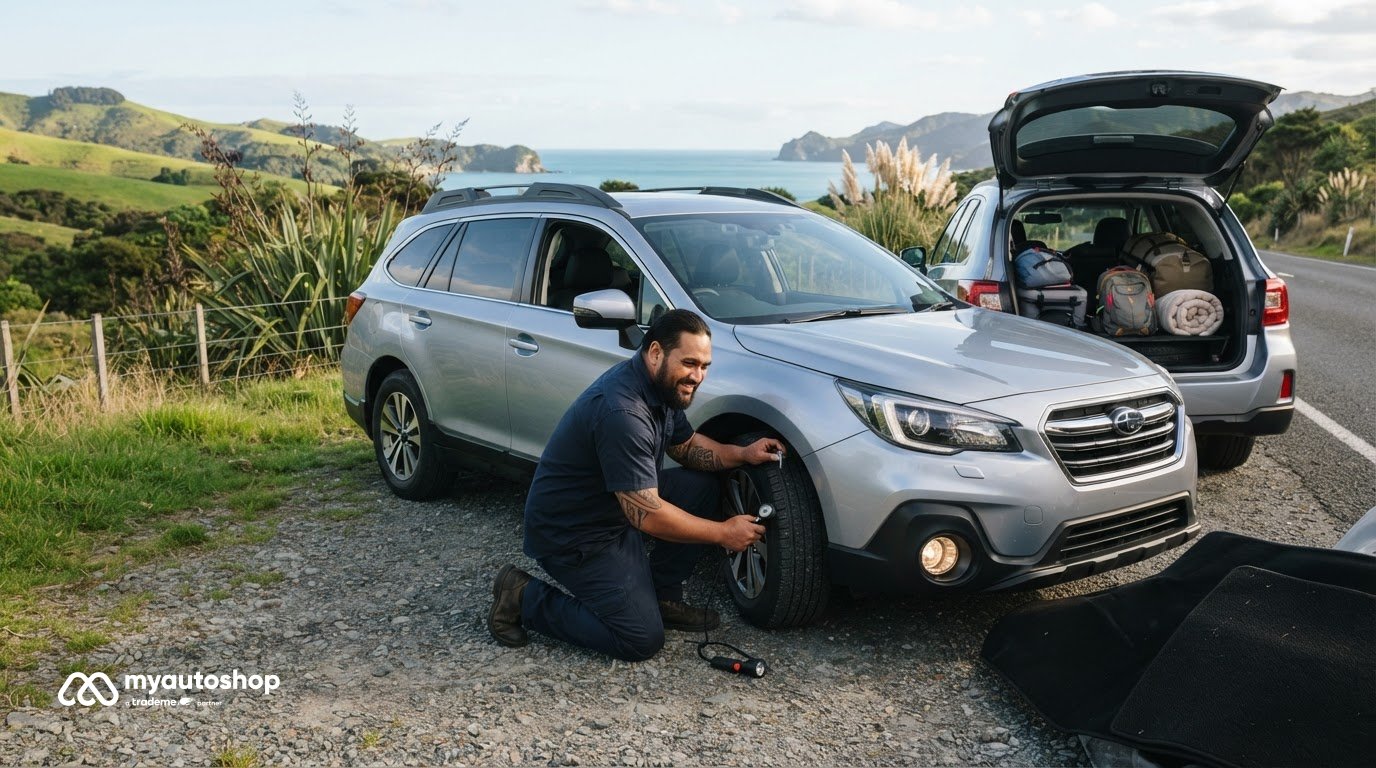
A current WoF doesn’t necessarily mean your car is ready for a holiday drive. A Warrant of Fitness checks whether a vehicle meets required safety standards on the day of inspection. It isn’t a full assessment of its mechanical condition or how it will cope with extra passengers, luggage and kilometres. A peace of mind vehicle check before a long holiday starts with understanding that difference.
It’s sensible to take a closer look before setting off, particularly if you’re carrying a full load or haven’t driven far recently. Practical checks can help you spot obvious issues and decide whether your car needs a mechanic’s assessment before departure.
Use this checklist to check your tyres, spare, lights, wipers and fluid levels, and look for signs of battery, brake or engine trouble. You’ll also find guidance on when a professional assessment may be useful and what to do if you notice a problem, so you can make a plan before the trip begins.
Key Takeaways
- A current WoF and a check of your car’s condition for the planned journey serve different purposes. Neither can rule out every fault.
- Use your vehicle handbook or tyre placard for model-specific guidance, and investigate warning lights or unusual behaviour.
- A visual check can help you spot obvious concerns, but it can’t diagnose concealed or intermittent mechanical problems.
- Follow a clear sequence: review your paperwork, inspect the car, address concerns, then complete final checks before departure.
- A peace of mind vehicle check before a long holiday can help you decide whether your own checks are enough or a professional assessment is warranted.
Peace of Mind Vehicle Check Before a Long Holiday: What a WoF Does, and Does Not, Tell You
For a more confident long-distance drive, pair a current WoF with checks of your vehicle’s condition and maintenance needs. A WoF is a legal safety inspection, not a promise that every part is fault-free or will stay that way. A tyre, battery or other component can wear or develop a problem after the inspection.
Keep three things in mind: legal compliance, routine maintenance and readiness for the journey you’re planning. They overlap, but they answer different questions. A peace of mind vehicle check before a long holiday considers all three, rather than treating a WoF as an all-clear for every possible issue.
Is a current WoF enough for a long holiday drive?
A WoF assesses whether a vehicle meets required safety standards at the time it is inspected. It doesn’t predict future faults, replace maintenance or establish that every system will cope with a long drive carrying passengers and luggage. Check your WoF status and current requirements using Waka Kotahi guidance. For background on the system, see Warrant of Fitness (WoF) in New Zealand.
Trip readiness also depends on the car’s condition and how you plan to use it. If you mostly drive short distances, check whether maintenance is due before a longer journey. Extra load, steep roads or changing weather can make existing tyre wear or a cooling concern more important to address. A current WoF is useful, but it can’t tell you what has changed since the inspection or how a fault might develop.
What kind of vehicle check matches your situation?
Start with what you can safely see and hear. A visual check may reveal a visibly low tyre, a light that isn’t working, a fluid leak or a dashboard warning. It can’t reliably identify a hidden fault, confirm the cause of a warning or rule out an intermittent problem.
A scheduled service covers planned maintenance, with work based on the vehicle’s requirements and service history. It isn’t automatically a journey-specific assessment. A mechanic’s assessment can help investigate a particular concern or check relevant systems, but the scope depends on the issue and the work requested.
- A short, familiar trip and no warning signs: Start with driver checks and make sure routine maintenance is up to date.
- A long or heavily loaded journey: Pay close attention to visible wear and anything that could affect reliability under sustained use.
- A warning light, unusual noise, vibration or change in handling: Don’t rely on a visual check alone. Arrange a mechanic’s assessment to investigate the symptom before setting off.
Choose a check that addresses the concern you actually have. If you’re unsure whether something needs attention, note when it occurs and describe it clearly. That gives a mechanic a useful starting point without assuming a current WoF or routine service has already ruled it out.
What to Check on Your Car Before a Long Holiday
Set aside time to check the basics before loading the car. A pre-trip check reviews your vehicle’s condition now; it can’t predict that nothing will go wrong on the road. Look for changes, follow your vehicle handbook and tyre placard, and get help with anything you can’t assess safely.
Tyres, brakes and visibility: checks you can make safely
Park on level ground and inspect each tyre, including the spare if your vehicle carries one. Look for cuts, bulges, embedded objects and uneven wear. Use a reliable gauge to check pressure, following the handbook or tyre placard. If you’ll be carrying extra passengers or luggage, check whether the vehicle gives separate pressure guidance for a heavier load. Don’t guess or rely on appearance alone.
Pay attention to how the car brakes and handles during ordinary driving. A change in braking response, pulling to one side, vibration or an unusual sound deserves attention. Don’t attempt repairs or crawl under the vehicle to inspect components. If braking feels unsafe, stop driving and arrange an assessment.
- Lights: Check the headlights, brake lights, indicators and hazard lights. Ask someone to help confirm the rear lights work.
- Windscreen and wipers: Make sure your view isn’t obstructed by dirt, cracks or damage. Check that the wipers clear the screen properly and that washer fluid is available.
- Windows and mirrors: Clean them and adjust the mirrors before setting off, especially if another driver has used the car.
Rain, glare and low light can make poor visibility more of a problem on unfamiliar roads. Check these items before departure, not at the roadside after an issue appears. For vehicle-specific maintenance instructions, use the handbook; for WoF requirements, refer to official NZTA Warrant of Fitness information.
Fluids, battery and signs that need attention
Check accessible fluid levels as your handbook directs, with the vehicle parked safely and the engine in the specified condition. Never open a radiator cap or other hot cooling-system component. If a level is low, you see a leak or you’re unsure what a reservoir is for, don’t guess at a fix.
Notice how the vehicle behaves before you leave. Slow starting, a dashboard warning, an unfamiliar smell, a fresh patch under the car or a new noise can be useful clues, but they don’t identify the cause by themselves. Persistent or recurring signs warrant a mechanic’s assessment before a long drive.
Note what you noticed and when it happens. This helps you explain the concern clearly and can guide the next step. If your checks point to maintenance, explore service options through My Auto Shop’s mechanic marketplace.
DIY Vehicle Check or Professional Assessment: Which Gives More Peace of Mind?
Choose based on what you need to find out. A driver’s check is useful for visible changes and basic condition; a mechanic’s assessment can investigate concerns that aren’t easy to confirm by sight. For a peace of mind vehicle check before a long holiday, combine your own observations with professional help if symptoms, overdue maintenance or uncertainty leave questions unanswered.
What a driver can check, and what they cannot confirm
You can look for tyre damage, check lights and wipers, notice leaks, and pay attention to unfamiliar sounds or changes in how the car steers or brakes. These checks don’t require taking components apart. A dashboard without warning lights is reassuring, but it doesn’t confirm the condition of every mechanical system or rule out an intermittent fault.
If something seems different, note what you noticed, when it happens and whether it repeats. For example, record if a noise occurs only while turning or if starting feels slower than usual. Share those observations with a mechanic rather than trying to diagnose the cause yourself.
| Check | What it can reasonably reveal |
|---|---|
| Driver’s visual check | Visible damage, a light that isn’t working, a leak, warning lights or an obvious change in vehicle behaviour. |
| Professional assessment | A closer investigation of a reported symptom or maintenance concern, within the scope of the assessment. |
| Neither on its own | A guarantee that a fault won’t develop or appear later during the journey. |
When is a mechanic’s assessment worth considering?
Arrange professional attention before setting off if a warning light remains on, you find a leak, or the car makes an unusual noise or handles differently. Take particular note of symptoms that recur, worsen or affect braking, steering or starting. Don’t assume a warning has cleared just because it disappears temporarily.
Overdue maintenance or an unclear service history is another reason to review the vehicle before a demanding trip. Follow the handbook’s maintenance schedule and explain any gaps or recent changes. A mechanic can assess the concern, but the work and findings depend on the vehicle and the issue being investigated.
Routine care matters between holidays too. Use a regular maintenance checklist alongside this trip-specific decision. No visual check or assessment can promise a breakdown-free drive; the aim is to spot concerns and make an informed plan before departure.
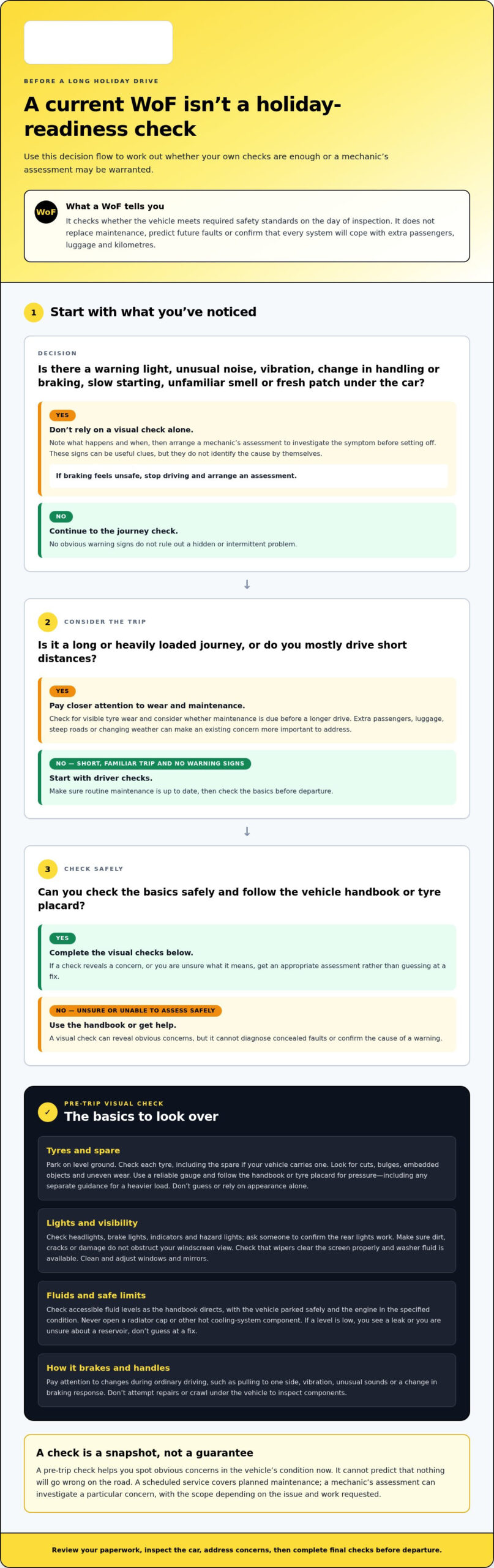
Pre-Holiday Vehicle Checklist: First Check to Departure
Work through the checks in order: confirm the paperwork, inspect the vehicle, address anything concerning, then do a final walk-around before leaving. This gives you a clear point to pause if a warning or maintenance issue needs attention. Leave time to act on concerns rather than waiting until departure morning.
Before loading: paperwork, maintenance and planned conditions
Check your service information for maintenance that’s due or overdue, and verify your WoF and driver licence details using current Waka Kotahi information. The NZTA WoF guidance explains the inspection’s role. Consider the route, expected weather, road surfaces, passengers and luggage too. A full load or steep, winding roads can make existing wear or a cooling concern more important to address.
- Review the records. Check when the vehicle was last serviced and note any maintenance advised or postponed. Make sure the WoF is current, and check that your licence is appropriate for the vehicle you’ll drive. Keep relevant vehicle and assistance details accessible.
- Inspect visible items. Use the handbook or tyre placard for model-specific instructions. Look over the tyres, including the spare if there is one, and check the lights, windows, mirrors and wipers. Check accessible fluid levels only as the handbook directs.
- Address concerns before packing. Don’t dismiss a warning light, leak, unusual noise, temperature warning or change in steering or braking. Note what happens and when. If you’re concerned about engine temperature or cooling, use the car overheating guide to understand possible causes, and arrange an assessment if the issue persists.
- Make a final check. Once the vehicle is loaded, make sure luggage is secure and doesn’t obstruct your view. Recheck the tyres, lights and visibility, and look for new warning signs or leaks. If a serious warning or unsafe condition remains unresolved, don’t start the trip until it has been assessed.
Before setting off: final checks and a plan for concerns
Road and weather conditions can change, so plan for the drive you’re actually taking, not just the distance. Keep insurance and roadside assistance details handy if you have those services, and decide what you’ll do if a concern appears en route. If the engine temperature warning comes on, don’t ignore it or continue as though the car is operating normally; follow the vehicle handbook’s guidance.
If your checks raise a maintenance question or you’d like a mechanic to assess a concern, view servicing options through My Auto Shop. Its marketplace connects motorists with service and repair providers. For inspection and service options, see My Auto Shop’s listed services.
When a Professional Vehicle Check Makes Sense Before Your Holiday
Arrange professional attention if a warning light remains on, the vehicle is leaking fluid, or you’ve noticed unusual noises, slow starting, vibration or changes in steering or braking. These signs don’t prove a particular fault, but they’re worth investigating before you commit to a long drive. The same applies if scheduled maintenance is overdue or you’re unsure about the vehicle’s recent service history.
A professional assessment can help investigate a specific concern or review the vehicle’s condition. It can’t guarantee that no fault will appear later, so use it to understand what needs attention and make an informed decision about travelling. A peace of mind vehicle check before a long holiday is most useful when it answers a concern you can’t settle through your own observations.
What information should you share when arranging vehicle attention?
Give a clear account of the trip and the symptoms. Mention the journey length, whether the car will be heavily loaded, when the problem started and what seems to trigger it. Include any dashboard warning, recent maintenance, work already carried out or change in how the vehicle feels. Stick to what you’ve observed rather than guessing at a mechanical cause.
- Describe the symptom: Say what you heard, saw or felt, and whether it happens consistently or only in certain conditions.
- Share timing: Note when it began and whether it has become more frequent or severe.
- Bring useful history: Have service information and details of recent repairs or warning messages available.
Specific observations give the service provider a useful starting point. For example, “a squeal when braking at low speed” is more helpful than a guess about which part needs replacing. If a warning appears only occasionally, note when it shows up and whether anything else changes at the same time.
How to turn the check into a confident next step
If an assessment identifies a concern, ask for the findings and available options to be explained clearly. Keep that discussion separate from the original checklist: a check helps identify or investigate issues, while the next decision is whether work is needed and whether it should be completed before departure. If a safety-related concern remains unresolved, postpone the drive until you know it’s safe to proceed.
My Auto Shop’s website lists inspections and servicing, and connects motorists with providers through a mechanic marketplace. Marketplace mechanics aren’t necessarily My Auto Shop employees. The marketplace gives you a way to explore listed options when your own checks raise questions or scheduled maintenance needs attention.
To take the next step, explore car servicing and inspection options that fit the concern you want addressed.
Make Time for the Next Step Before You Travel
Leave yourself time to act on anything your checks uncover. It’s easier to address a concern when you can describe it clearly, understand the available options and decide what should happen before departure, rather than making a rushed decision just before you go.
A peace of mind vehicle check before a long holiday isn’t about expecting trouble. It’s about making a considered plan for your car and the journey ahead. My Auto Shop lists car repair, servicing, inspections and WoF, with transparent upfront pricing through a nationwide network of vetted mechanics.
Explore My Auto Shop’s car servicing and inspection options and give yourself time to prepare before you travel.
Frequently Asked Questions
How far in advance should I arrange a vehicle check before a long holiday?
Arrange it once your travel plans are firm, especially if you’ve noticed a symptom or maintenance is due. That leaves time to investigate an issue and decide what to do before departure, rather than making a rushed decision. If your trip is close, explain your timing when arranging an assessment, but don’t assume a concern can be resolved immediately.
Can I take a long trip if a dashboard warning light is on?
Don’t set off until you know what the warning means and whether it’s safe to drive. Check the vehicle handbook for the specific light and follow its instructions. If the warning is accompanied by a loss of power, unusual smell, smoke or a change in braking or steering, stop somewhere safe and seek assistance rather than continuing to your destination.
Should I get my car checked if it seems to be driving normally?
Not necessarily, if maintenance is up to date and you have no concerns. A professional assessment may still be sensible if the vehicle has been sitting unused, its service history is unclear or the trip will be much more demanding than your usual driving. A peace of mind vehicle check before a long holiday should reflect your car’s condition and planned use, not just the trip itself.
Can a car overheat on a long drive even if it has not overheated before?
Yes. A problem can appear on any journey, and sustained driving, slow traffic, steep climbs or a heavy load may place different demands on the car than your usual trips. If the temperature warning appears or the gauge rises beyond its normal range, stop safely and follow the handbook. Don’t continue driving to see whether the warning clears.
What should I do if a mechanic identifies a problem before my holiday?
Ask the mechanic to explain what they found, how it affects safe use and which options need attention before the trip. If the issue could affect braking, steering, engine temperature or reliable operation, postpone departure until you understand the risk and have a plan. You can then weigh the recommended work against your travel plans without guessing at the fault yourself.
Does a recent service mean my car does not need any other checks before a trip?
No. A service records maintenance carried out at that time, but the car may have been driven, loaded or exposed to new conditions since. Check for anything that has changed, such as a new warning, damaged tyre or wiper that no longer clears the screen well. Also confirm that the service covered the maintenance due under your vehicle’s schedule.
Disclaimer
This article provides general information only and should not be relied on as professional mechanical, safety or legal advice. Vehicle requirements and circumstances vary. If you are unsure about your vehicle, have it inspected by a qualified automotive professional.