
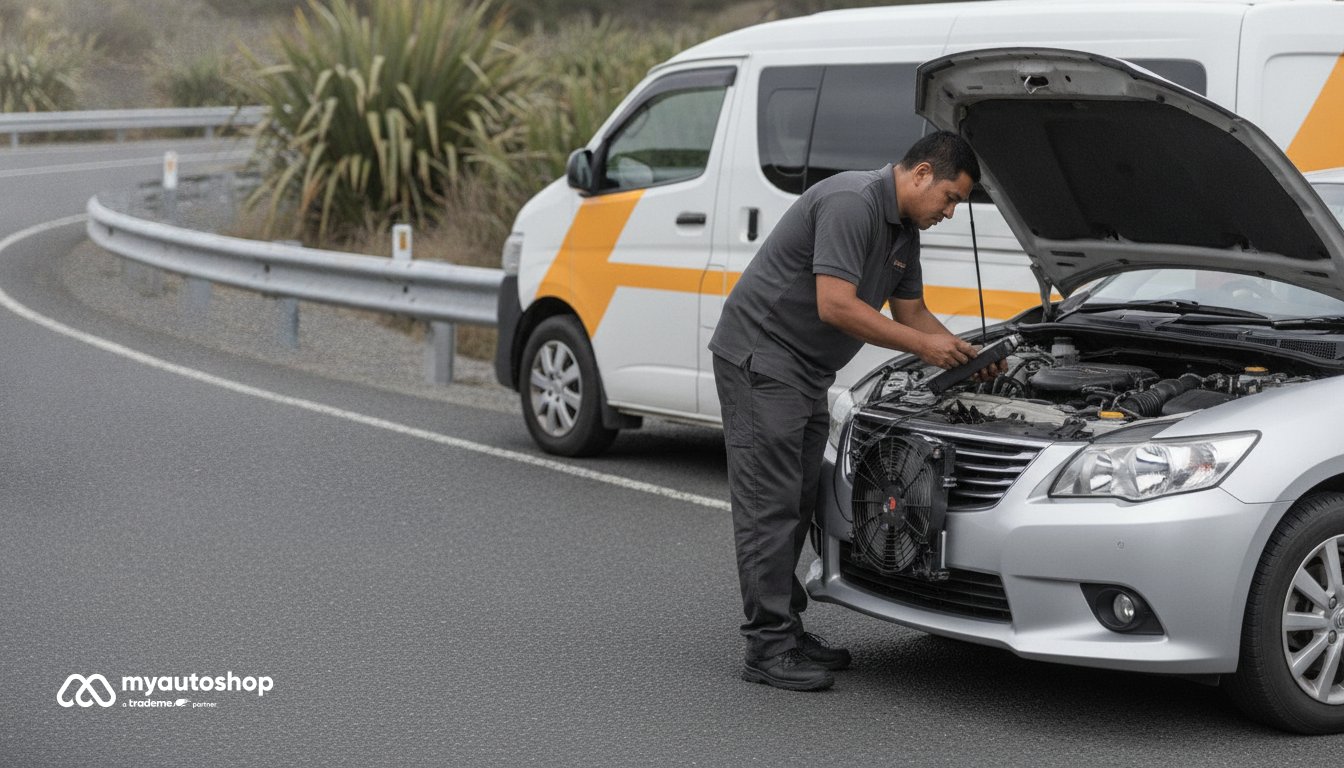
You are stuck in a crawl on Auckland’s Southern Motorway, watching the temperature needle creep steadily toward the red zone. Just minutes ago, cruising at 100 km/h, everything seemed perfect. Finding your car overheating in traffic but fine on motorway stretches is a common but stressful experience for many New Zealand motorists. It leaves you wondering if you are one traffic jam away from a blown head gasket and a massive repair bill, which can average around $5,900 according to recent industry data. With the average Kiwi vehicle now nearly 15 years old, these cooling system quirks are becoming increasingly frequent.
We understand the anxiety that comes with inconsistent symptoms that are hard to explain to a mechanic. The good news is that this specific pattern usually points to a few distinct culprits rather than a total engine failure. In this guide, you will discover the mechanical reasons why your engine temperature spikes at a standstill. We will explain the “ram-air” effect that keeps you cool at speed and why your cooling system might be struggling when stationary. You will learn how to diagnose the issue, from faulty fan relays to aging radiators, so you can decide if it is safe to keep driving. We will also look at how mobile diagnostics from Turners Service & Repairs can help you solve the problem without risking a trip to the workshop in a hot car.
Key Takeaways
- Understand the difference between “ram-air” cooling at 100 km/h and why your engine relies entirely on an electric fan when you are stationary.
- Identify why your car overheating in traffic but fine on motorway driving is usually a sign of a failed cooling fan, a blown fuse, or a faulty relay.
- Learn why low coolant levels or a worn water pump might still function at high RPMs but fail to keep temperatures down while you are idling.
- Get a step-by-step safety guide for checking your cooling system at home without risking burns or permanent engine damage.
- Discover how mobile diagnostics from Turners Service & Repairs can pinpoint electrical faults or pressure leaks at your home or workplace.
Why Your Car Overheats When Stopped but Cools Down at Speed
If your temperature needle stays steady on the open road but climbs toward the red zone the moment you hit a queue, you are dealing with an airflow problem. This specific pattern of your car overheating in traffic but fine on motorway runs is a classic indicator that your engine’s cooling system is losing its battle when it can’t rely on the wind. It’s a frustrating puzzle, but the logic is simple: your car has two ways to stay cool.
To better understand why your engine behaves differently at a standstill, watch this helpful video:
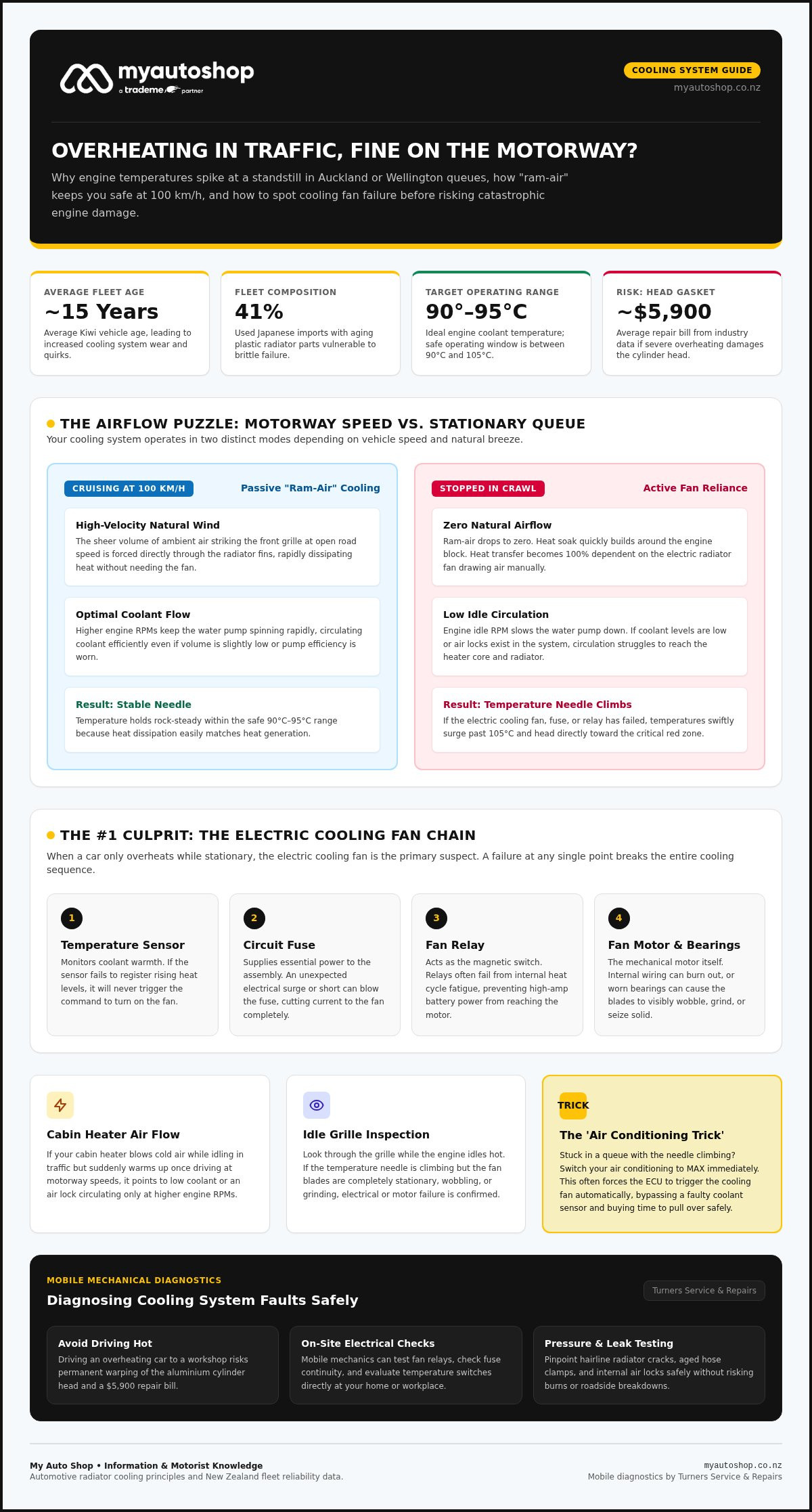
When you are cruising at 100 km/h, the engine relies on passive cooling. The sheer volume of air hitting the front of your car is enough to dissipate heat. However, in stationary traffic, that natural breeze vanishes. This is where the electric cooling fan must take over, physically pulling air through the radiator fins to keep the coolant temperature between the ideal 90°C and 95°C. If you notice the temperature dropping almost immediately once you speed up, it’s a clear sign that your cooling fan or the sensors controlling it aren’t doing their job.
The Role of the Radiator in New Zealand Conditions
Your radiator is the heart of the automotive radiator cooling mechanism, designed to swap engine heat for cooler outside air. In New Zealand, our high humidity and warm summer days make this heat exchange more difficult. Stop-start traffic in cities like Auckland or Wellington is the ultimate stress test. Without constant movement, heat soak builds up quickly around the engine block. Because 41% of our fleet consists of used Japanese imports, many Kiwi cars have aging plastic radiator components that can become brittle and less efficient at handling these sudden temperature swings.
Identifying the ‘Traffic-Only’ Symptom
A tell-tale sign of this issue is a temperature gauge that fluctuates wildly. You might also notice that the heater inside your cabin suddenly stops blowing hot air while you are idling but starts again once you move. This often suggests an air lock or low coolant levels that only circulate properly at higher engine RPMs. If you are seeing these symptoms, a mobile diagnostic check from Turners Service & Repairs can identify if a fan relay or sensor is the culprit. Ram air is the natural airflow generated by vehicle movement.
The #1 Culprit: Cooling Fan Failure and Electrical Issues
When your engine temperature only spikes at a standstill, the electric cooling fan is the first place to look. This fan acts as a substitute for the natural wind you get at 100 km/h. It relies on a chain of electrical components to work: a fuse for power, a relay to switch it on, and a sensor to tell it when the engine is getting too hot. If any link in this chain breaks, your engine will quickly exceed its safe operating range of 90 to 105 Celsius.
According to this AAA guide on causes of engine overheating, fan failure is a leading cause of roadside breakdowns. You can often spot a problem before it becomes a crisis. If you are stuck in a queue and the needle starts to climb, try the ‘Air Conditioning Trick’. Turn your AC to the max. This often forces the cooling fan to engage immediately, regardless of what the engine temperature sensor says. It is a temporary fix that might buy you enough time to reach a safe place to pull over.
Visual signs of a failing fan are usually obvious. If you are noticing your car overheating in traffic but fine on motorway stretches, look through the grille while the car is idling. If the fan is perfectly still while the temperature needle is rising, the electrical circuit has failed. You might also see the fan “wobble” or hear a grinding noise, which suggests the bearings inside the motor are seized.
Testing the Fan at Home Safely
You don’t need to be a mechanic to perform a basic check. Park the car, keep the engine idling, and open the bonnet. Listen for a loud whirring sound. If the engine is hot but the fan remains still, you likely have a dead motor or a blown fuse. Check your owner’s manual to locate the cooling fan fuse; a visible break in the metal wire inside the plastic fuse housing means it needs replacing. Sometimes a fan motor is on its way out and will spin slowly. If it isn’t moving enough air to be felt from a distance, the motor brushes are likely worn out.
Thermal Switches and Coolant Temperature Sensors
Sometimes the fan is perfectly healthy, but the ‘brain’ of the car is confused. The Coolant Temperature Sensor (CTS) monitors the heat and sends data to the dashboard and the fan controller. If this sensor fails, your gauge might behave erratically or stay at a normal level while the engine actually overheats. You can find more details on interpreting these dashboard warnings in our Turners Symptoms Guide. If your car shows these inconsistent signs, booking a mobile diagnostic through Turners Service & Repairs is the safest way to find the fault without driving a car that might boil over. A technician can come to your home or workplace to test the electrical circuits and sensors directly.
Secondary Causes: Low Coolant and Water Pump Efficiency
Beyond airflow issues, the efficiency of your coolant circulation plays a massive role in temperature control. If you find your car overheating in traffic but fine on motorway runs, you might have just enough coolant to survive at high speeds but not enough to buffer the heat soak at a red light. Low coolant levels often hide during motorway cruising because the engine’s water pump is spinning fast, forcing every available drop of fluid through the block. When you slow down, that pressure drops. Any air pockets in the system can then settle, preventing heat from reaching the radiator and causing the needle to climb. If you are regularly topping up your reservoir, it is worth understanding what happens if you drive with a coolant leak, as even a slow drip can leave you critically low at the worst possible moment.
Water Pump Wear in the NZ Fleet
In New Zealand, where the average vehicle is nearly 15 years old, water pump wear is a frequent headache. Many of our used Japanese imports suffer from internal impeller erosion. Unlike a leak, which is easy to spot, an eroded impeller looks perfect from the outside but has “shaved” blades inside. These worn blades might move enough fluid at 2,500 RPM to keep things cool, but they become useless at an 800 RPM idle. This creates a confusing symptom where the car only gets hot when stopped. For more on managing these aging vehicle issues, check out our Car Repair NZ guide.
Radiator Fin Obstructions
Airflow can be blocked by more than just a dead fan. External debris like leaves, road grime, or even bent fins from stone chips can significantly reduce your radiator’s efficiency. While the ram-air effect at speed can punch through a dirty radiator, a stationary car needs every millimetre of surface area to dissipate heat. It’s also vital to use the correct NZ-spec coolant. Using plain tap water leads to internal scale buildup, which acts like insulation, trapping heat inside the engine core. Following the NHTSA vehicle cooling system inspection guidelines by checking your hoses and fluid levels regularly can prevent these “invisible” failures from causing a breakdown.
Sometimes, air pockets trapped in the system mimic a major mechanical failure. This often happens after a minor repair or a coolant top-up. These air locks block the flow of coolant entirely at low speeds, making it look like your pump has failed when it actually just needs a professional “bleed” of the system. If you’re unsure why your levels are dropping or your car is running hot, Turners Service & Repairs can perform a mobile diagnostic at your home or workplace to pressure test the system and find any hidden leaks.
5 Steps to Diagnose Your Overheating Car Safely
Diagnosing a car overheating in traffic but fine on motorway speeds requires a cautious, step-by-step approach. Before you touch anything under the bonnet, remember that safety is paramount. Never attempt to open a radiator cap while the engine is hot or even warm. The cooling system is under immense pressure, and opening it prematurely can result in a geyser of boiling coolant that causes severe burns. Wait at least 30 to 60 minutes until the engine is stone cold to the touch.
- Step 1: Check the expansion tank. Look at the plastic reservoir while the engine is cold. The fluid should be between the ‘Min’ and ‘Max’ markers. If it is empty, you likely have a leak or an air lock.
- Step 2: Inspect the radiator core. Use a torch to look through the front grille. Check for a buildup of leaves, dead insects, or road grime that might be blocking the fins. Straighten any bent fins carefully with a flat blade if they are obstructing airflow.
- Step 3: Test the fan at idle. Start the car and let it reach operating temperature while parked. The electric fan should kick in automatically. If the needle climbs but the fan stays silent, you’ve found your culprit.
- Step 4: Search for ‘weeping’ leaks. Look around the water pump and hose joins for a white or green crusty residue. This dried coolant indicates a slow coolant leak that might be sucking air into the system.
- Step 5: Inspect the oil. Pull the dipstick and check the oil’s appearance. If it looks like a milky brown ‘milkshake’ rather than clear amber or black, coolant is mixing with the oil, which is a definitive sign of head gasket failure.
What to Do if You Overheat in Traffic Right Now
If you see the temperature needle climbing while stuck in a queue, don’t panic. Turn your cabin heater to the highest temperature and the fan to full speed. This might feel uncomfortable in a Kiwi summer, but it uses the heater core as a secondary radiator to pull vital heat away from the engine block. Find a safe place to pull over and shut the engine down immediately. Avoid the temptation to pour cold water into a boiling radiator, as the sudden thermal shock can crack the metal engine block or cylinder head.
When to Call a Mobile Mechanic
If your basic checks don’t reveal an obvious fix like a blown fuse or a loose hose, it’s time for professional intervention. Driving a car that is prone to overheating is a massive risk; every minute spent in the red zone brings you closer to a permanent engine write-off. For motorists in selected regions, booking Turners Service & Repairs for a mobile diagnostic is the most convenient solution. A technician can come to your home or workplace with specialised pressure testers and electrical scanners to pinpoint the fault without you needing to risk a “hot” drive to a workshop.
Professional Solutions and Preventing Engine Damage
While DIY checks are a great starting point, modern cooling systems are complex electrical networks. If you are experiencing your car overheating in traffic but fine on motorway speeds, a professional diagnostic scan is the most efficient way to find the root cause. A technician uses specialised tools to communicate with the car’s computer, instantly identifying if a coolant temperature sensor is sending faulty data or if a fan relay has failed. These electrical faults often leave no physical trace, making them impossible to find without a scanner.
One of the most valuable professional tools is the cooling system pressure test. This involves pressurising the radiator and hoses to simulate the heat of a traffic jam without actually running the engine. It reveals ‘invisible’ leaks that only appear under load, such as a hairline crack in a plastic header tank or a pinhole in a hose. Finding these early is a massive win for your wallet. Often, a $20 relay or a $35 radiator cap is the only part needed to save a $500 radiator or a multi-thousand-dollar head gasket replacement.
Preventative maintenance is your best defence against heat damage. We recommend a full cooling system flush and a thermostat replacement every two to three years. This removes internal scale buildup and ensures the mechanical valves that regulate flow don’t seize during a hot Kiwi summer. If you want to understand how a failing thermostat can contribute to erratic engine temperatures, our guide on the symptoms of a stuck thermostat explains exactly what to look for. Keeping your coolant fresh also protects the internal seals of your water pump, extending the life of the entire system. While you are checking under the bonnet, it is also worth noting that worn suspension components can make stop-start traffic even more stressful on your vehicle — if you have been hearing a clunking noise from front suspension over bumps, that is another mechanical warning sign that deserves attention before your next WoF inspection. Similarly, if you notice a pulsing sensation through the brake pedal during stop-start traffic, it is worth knowing how to tell if you need new brake rotors, as worn or warped rotors are another common fault that can go undetected until your next WoF check.
Booking a Cooling System Check
Turners Service & Repairs technicians provide mobile diagnostics at your home or workplace, saving you the risk of driving a car that might boil over. Our process is built on transparency, backed by Turners Fair Pricing so you know the costs upfront. Booking a professional check is especially important before a long NZ summer road trip. A minor traffic delay on the Napier-Taupo road or a crawl through the Karangahake Gorge can quickly turn into a roadside nightmare if your car overheating in traffic but fine on motorway stretches isn’t resolved first.
Buying a Used Car? Check the Cooling System First
Overheating in traffic is a common hidden fault in used vehicles because it doesn’t always show up during a quick five-minute test drive on the open road. Sellers might not even be aware of a failing fan motor or an eroded water pump impeller. A My Auto Shop Pre-Purchase Inspection includes a thorough assessment of the cooling system to catch these red flags before you sign the papers. A PPI is the best way to avoid ‘buying someone else’s radiator problems’. It ensures your new purchase is ready for both the daily commute and the weekend getaway.
Keep Your Engine Cool in Every Traffic Jam
Understanding that your car depends entirely on its electric fan when stationary is the first step to avoiding a blown head gasket. Whether the issue is a simple blown fuse or an aging water pump impeller, identifying the cause early saves you from the stress of a roadside breakdown. Finding your car overheating in traffic but fine on motorway stretches is a clear signal that your cooling system needs professional attention before the next summer heatwave hits our roads.
Don’t let an inconsistent temperature gauge ruin your commute or your next holiday. If you are unsure about your engine’s health, book a diagnostic check with Turners Service & Repairs today. We bring expert mobile diagnostics straight to your driveway with fair, transparent pricing for all NZ motorists. For more significant radiator or mechanical repairs, the My Auto Shop marketplace connects you to a trusted network of top-rated local workshops. Take the guesswork out of your maintenance and get back to enjoying the drive with total peace of mind.
Frequently Asked Questions
Is it safe to drive my car if it only overheats in traffic?
It is not safe to continue driving a car that shows signs of overheating, even if it only happens when you stop. While the engine might stay cool at 100 km/h due to passive airflow, the underlying fault is still there. If you get caught in an unexpected bottleneck, the temperature can spike into the red zone within seconds. This risks warping the cylinder head or causing permanent engine failure.
Why does turning the heater on help stop the car from overheating?
Turning your heater to full heat and maximum fan speed acts like a secondary radiator. Hot coolant is diverted through the heater core inside your dashboard, where the cabin fan pulls heat away from the fluid and into the car. While it makes the cabin uncomfortable for you, it provides a vital emergency cooling boost for the engine block. It is a temporary measure to help you reach a safe place to pull over.
How much does it cost to fix a car that overheats in traffic in NZ?
The cost depends entirely on the component that has failed. A simple fix like a blown fuse or a new radiator cap is relatively inexpensive. However, ignoring the problem can lead to a blown head gasket, which AA New Zealand data suggests can cost an average of $5,900 NZD to repair. Turners Service & Repairs provides transparent mobile diagnostics to identify the specific fault before you commit to any major workshop repairs.
Can a bad thermostat cause overheating only at low speeds?
Typically, a thermostat that is stuck closed will cause the engine to overheat regardless of your speed. If you find your car overheating in traffic but fine on motorway runs, the issue is almost always related to airflow or the electric cooling fan rather than the thermostat. However, it is still worth understanding the full range of symptoms of a stuck thermostat to rule it out completely. A thermostat failure usually results in a rapid temperature spike as soon as the engine reaches operating temperature, even when driving at high speeds.
Why is my car temperature gauge going up and down while I drive?
Fluctuating temperature readings usually indicate a struggle between heat generation and cooling efficiency. When you slow down, the temperature rises because the fan isn’t pulling enough air. When you speed up, the “ram-air” effect cools the radiator down again. This up and down movement is a classic warning sign of a failing cooling fan, a worn water pump impeller, or an air lock trapped within the cooling system’s hoses.
Does a low coolant level always mean I have a leak?
In a healthy, sealed system, coolant levels should remain constant. If you are constantly topping up your reservoir, you likely have a leak. This could be an external leak from a perished hose or a “weeping” water pump. It could also be an internal leak, such as a failing head gasket. Occasionally, a faulty radiator cap allows coolant to escape as steam, which won’t leave a visible puddle on your driveway.
What happens if I keep driving an overheating car?
Continuing to drive while the engine is too hot leads to catastrophic damage. Excessive heat causes the metal components of your engine to expand beyond their design limits. This often results in a warped cylinder head or a blown head gasket. According to AA New Zealand claims data from December 2025, a head gasket replacement is one of the most expensive common repairs, often exceeding $5,900 NZD. It can eventually lead to total engine seizure.
Can a faulty radiator cap cause the car to boil over in traffic?
Yes, the radiator cap is a critical pressure valve. It keeps the cooling system under pressure, which raises the boiling point of the coolant to approximately 125 Celsius. If the seal on the cap is perished, the system stays at atmospheric pressure and the coolant will boil at just 100 Celsius. This creates steam pockets that prevent the liquid from cooling the engine properly, especially when there is no natural airflow during a traffic jam.
Disclaimer
This article provides general information only and should not be relied on as professional mechanical, safety or legal advice. Vehicle requirements and circumstances vary. If you are unsure about your vehicle, have it inspected by a qualified automotive professional.