

You’re cruising along a busy State Highway when your engine suddenly stutters, losing power just as you’re trying to maintain speed on an incline. It feels like your car is gasping for air, or perhaps you’ve simply run out of petrol, despite the gauge showing half a tank. Recognizing the early symptoms of a failing car fuel pump is the only way to avoid this gut-sinking moment before you’re left stranded on the roadside.
We know how frustrating it is to deal with an unreliable vehicle, especially when you can’t tell if you’re facing a simple battery tweak or a major mechanical failure. It is stressful to worry about unexpected repair costs or being stuck far from home with a car that won’t start. Taking action as soon as you notice a change in performance prevents a small hiccup from turning into a costly emergency tow.
In this guide, we will help you confirm the fault by listing the most common warning signs seen on New Zealand roads. You will learn how to distinguish pump issues from other engine gremlins and understand your options for getting back on the road safely. We’ll also explain how booking a mobile diagnostic through Turners Service & Repairs can get your car sorted right in your own driveway, saving you time and giving you total financial clarity.
Key Takeaways
- Identify the specific symptoms of a failing car fuel pump, including engine hesitation when climbing hills or sputtering at high speeds.
- Learn why keeping your tank topped up is vital for pump longevity and how common New Zealand driving habits can impact your fuel system’s health.
- Distinguish between fuel delivery issues and spark plug or ignition coil failure to ensure you’re fixing the right problem the first time.
- Discover the convenience of booking Turners Service & Repairs for a mobile diagnostic to confirm a fault without the stress of an expensive tow.
- Understand the full repair process and how to use the My Auto Shop marketplace to find a reliable local workshop for complex fuel system work.
Understanding the Fuel Pump: The Heart of Your Vehicle
Think of the fuel pump as your car’s heart. Its primary job is to deliver petrol from the tank to the engine at a very specific high pressure. While older vehicles used mechanical pumps driven directly by the engine, almost every modern car on New Zealand roads relies on an electric pump. This component is usually submerged inside the fuel tank itself. This design isn’t just about saving space; the petrol surrounding the pump actually acts as a coolant for the electric motor. When the pump begins to struggle, the engine doesn’t receive the correct volume of fuel, which disrupts the precise air-fuel ratio needed for combustion. This imbalance is what creates the most common symptoms of a failing car fuel pump.
How the Fuel System Operates in Modern Cars
Modern Electronic Fuel Injection (EFI) systems require incredible precision to run efficiently. The process begins in the tank, where the electric pump pushes fuel through the fuel lines and a filter until it reaches the fuel rail. A fuel pressure regulator acts as a gatekeeper, ensuring the pressure remains constant whether you’re idling at a red light or overtaking on a highway. If this pressure fluctuates, the injectors cannot spray the fine mist required for a clean burn. This sensitivity is why even a slight drop in pump performance can lead to noticeable engine hesitation and poor fuel economy.
Why Fuel Pumps Fail in New Zealand Conditions
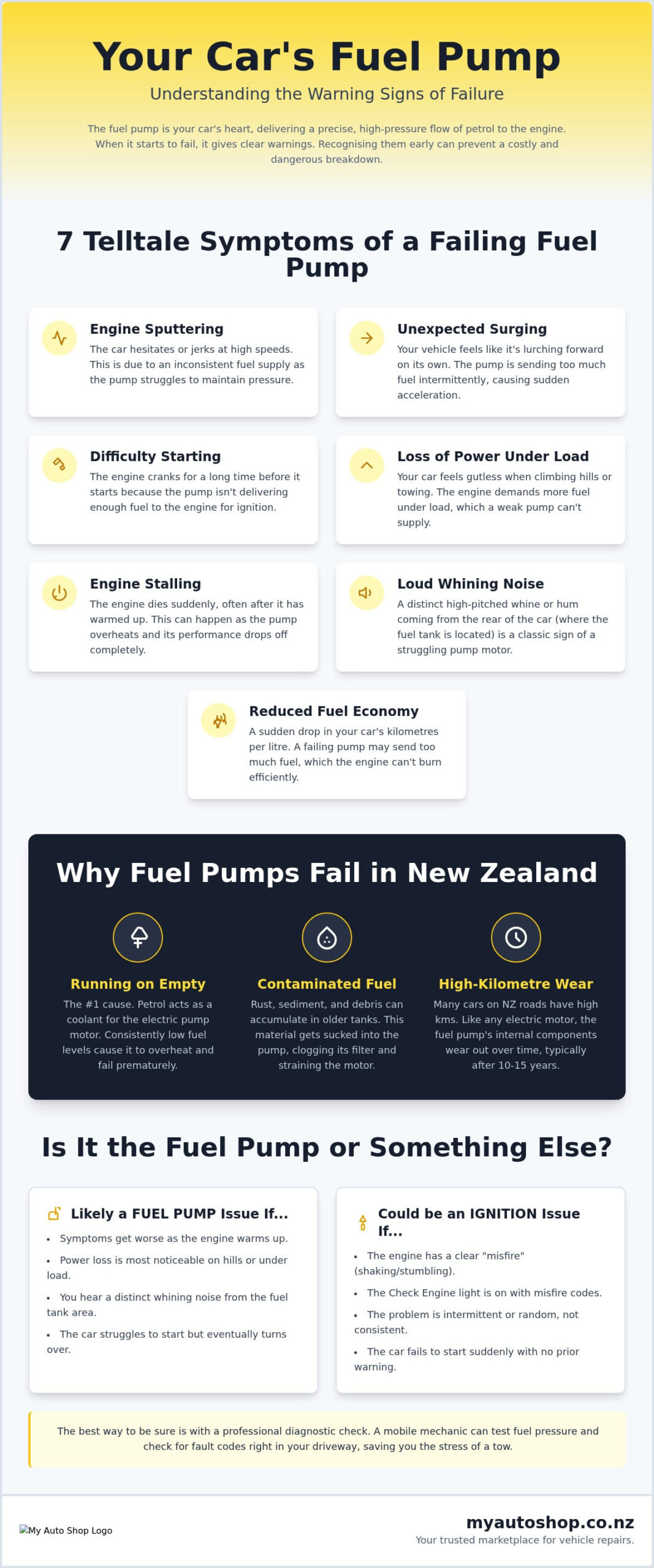
New Zealand’s vehicle fleet is unique, featuring a high volume of used imports that often arrive with significant kilometres already on the clock. While these cars are generally robust, the fuel pump is a wear item that typically has a lifespan of about 10 to 15 years. Several local factors can accelerate this wear:
- Running on empty: This is the most common cause of failure. Since the pump relies on petrol for cooling, consistently driving with a low tank allows the motor to overheat.
- Contaminated fuel: Older fuel tanks can accumulate sediment or rust over time. If you often run your tank very low, the pump’s strainer can suck up this debris, causing clogs and motor strain.
- High-kilometre wear: Many Kiwi drivers keep their cars for a long time. As the internal brushes and commutators of the pump motor wear down, the pump draws more current and provides less pressure.
If you’re considering a used vehicle, it’s a smart move to book a pre-purchase inspection through My Auto Shop. Their experts can check for stored fault codes or performance issues that might suggest the fuel system has been neglected by a previous owner.
7 Telltale Symptoms of a Failing Car Fuel Pump
A fuel pump rarely fails without a fight. Before it leaves you stranded, your vehicle will likely display a specific sequence of “performance red flags.” Identifying these symptoms of a failing car fuel pump early can save you from a dangerous breakdown on a remote stretch of road. While some signs are subtle, others are impossible to ignore once you know what to listen for.
Watch for these primary warning signs:
- Engine sputtering: Frequent hesitation at high speeds or while cruising.
- Surging: The car feels like it’s lurching forward without you pressing the accelerator.
- Difficulty starting: Long cranking times or needing multiple turns of the key.
- Power loss: The car feels “gutless” when you’re tackling steep hills.
- Stalling: The engine dies suddenly once it has reached operating temperature.
- Loud whining: A high-pitched noise coming from the rear of the vehicle.
- Reduced fuel economy: A sudden, unexplained increase in petrol consumption.
Engine Surging and Sputtering
Does your car feel like it’s “jerking” while you maintain a steady speed? This happens because the pump is struggling to provide a consistent flow of petrol to the injectors. You might notice this most after driving for 20 or 30 minutes. As the pump’s internal motor heats up, its electrical resistance increases and its efficiency drops. This is particularly dangerous when overtaking on two-lane State Highways, where you need reliable, immediate power to clear the other lane safely.
Loss of Power Under Heavy Load
Many Kiwi drivers only notice fuel pump issues when they ask the car to work harder. If you’re towing a boat or a trailer, or tackling a steep incline, your engine demands a significantly higher volume of fuel. A weakened pump might manage a flat suburban commute but will fail to maintain the high pressure needed for these heavy-duty tasks. In some modern vehicles, this pressure drop may even trigger “limp mode,” where the car’s computer limits your speed to prevent lean-run engine damage.
The Infamous Fuel Tank Whine
Your fuel pump should make a low, barely audible hum. If you hear a loud whine or a “scream” coming from the rear seat area, the pump is likely on its last legs. You can test this yourself. Turn your ignition to the “ON” position without actually starting the engine. Listen carefully for the pump to prime for about two seconds. If it’s excessively loud, or if there is total silence, you may be facing a mechanical failure or an electrical fault.
If these signs feel familiar, it’s worth booking a mobile mechanic through Turners Service & Repairs. They can come to your home or workplace to run a diagnostic, ensuring you aren’t left guessing about your car’s reliability before your next long trip.
Diagnosis: Is it the Fuel Pump or Something Else?
Because your engine relies on a perfect mix of air, fuel, and spark, a problem in one area often looks exactly like a problem in another. Many drivers assume they have a dead pump when the culprit is actually an electrical gremlin or a simple maintenance item. Identifying the specific symptoms of a failing car fuel pump requires a bit of detective work before you start pulling the back seat out.
Modern cars are quite smart. If your fuel pressure drops below a certain threshold, the computer will likely trigger the “Check Engine Light.” Using an OBD-II scanner might reveal codes like P0087, which indicates low fuel rail pressure. However, don’t forget the basics. A struggling alternator or a dying battery can’t provide the stable 12 to 14 volts your electric pump needs to operate. If the voltage drops, the pump slows down. This leads to the same sputtering you’d expect from a mechanical failure.
Fuel Pump vs. Ignition System Issues
It’s easy to confuse a fuel delivery problem with a failing ignition system. A misfire feels like a jerk or a stumble, but the cause is different. Generally, if your car stumbles while idling or under light acceleration, it is often a spark issue. If the car runs fine until you’re cruising at 100km/h or climbing a steep hill, it is more likely the fuel pump failing to keep up with high demand. You can learn more about these differences in our Ignition Coil Symptoms guide. Always check your fuel pump relay and fuses first; a blown fuse costs cents to fix, while a pump replacement involves significant labour and parts costs.
The Role of the Fuel Filter
A clogged fuel filter is the primary “imposter” that mimics a failing pump. The filter’s job is to trap dirt and sediment before it reaches your engine. Over time, it becomes restricted. In New Zealand, many petrol cars have “lifetime” filters located inside the tank, but diesel vehicles often require a filter change every 30,000km to 40,000km. A blocked filter creates identical symptoms of a failing car fuel pump because it physically restricts the flow of petrol. Before committing to a full replacement, a professional pressure test is essential. This test measures exactly how much pressure the system is holding, proving whether the pump motor is actually at fault or just struggling against a clogged line.
Fuel Pump Replacement and Prevention in NZ
Once you have confirmed the symptoms of a failing car fuel pump, you need to decide between a repair or a full replacement. In New Zealand, a faulty fuel system is more than just a performance annoyance; it is a serious safety hazard. If a WoF inspector detects leaks, loose mounting, or evidence of a failing pump assembly, your vehicle will fail its inspection. NZTA regulations require the entire fuel system to be secure and leak-free to prevent fire risks and environmental damage. Getting it sorted early prevents a simple part replacement from becoming a legal headache.
What to Expect During Replacement
The replacement process always begins with depressurising the fuel lines. This is a critical safety step because modern EFI systems hold petrol under significant pressure even when the engine is off. For many common Japanese imports in the Kiwi fleet, there is a helpful shortcut. Mechanics can often reach the pump through an access hatch located directly under the rear seat. This avoids the need to remove the entire tank, saving you significant labour costs. If your car lacks this panel, the mechanic must drain and drop the entire fuel tank from the chassis. This is a heavy, labour-intensive job that requires specialised equipment. During the process, ensure your technician replaces all seals and gaskets. Reusing old rubber seals is a common cause of petrol fumes leaking into the cabin later on.
Preventing Premature Failure
While you might now recognise the symptoms of a failing car fuel pump, preventing them is always cheaper than the cure. The most effective strategy is the “Quarter Tank Rule.” Because the pump is submerged in petrol to stay cool, consistently driving with a low tank allows the motor to overheat. This heat eventually burns out the internal electrical windings. You should also aim to use reputable, high-volume fuel stations. These sites have a faster turnover of petrol, which reduces the risk of pumping old sediment or moisture into your tank. Regular maintenance is your final line of defence. Including a fuel system check as part of a Comprehensive Service ensures that your filters are clean and your pump is drawing the correct amount of current. This proactive approach keeps your car reliable for those long holiday road trips.
If you are unsure about the state of your fuel system, you can use the My Auto Shop marketplace to find a vetted local workshop. They can provide a clear quote for a replacement, ensuring you have total financial clarity before the work begins.
Professional Solutions: My Auto Shop and Turners Service & Repairs
Professional diagnosis is the only way to move from guesswork to a guaranteed fix. If you have noticed the symptoms of a failing car fuel pump, resist the urge to start replacing parts at random. This “parts cannon” approach is expensive and often fails to solve the underlying issue. Whether it is a simple relay fault or a dying pump motor, getting an expert opinion ensures your money is spent on the right repair. Taking a structured approach to diagnostics provides the financial clarity Kiwi drivers need in a traditionally opaque industry.
Mobile Diagnostics with Turners Service & Repairs
For many New Zealand motorists, the biggest barrier to a repair is the logistical nightmare of getting an unreliable car to a workshop. Turners Service & Repairs solves this by bringing the diagnostic tools directly to your driveway or workplace. A qualified mobile technician can perform a comprehensive fuel pressure test on-site, confirming if your pump is meeting the manufacturer’s pressure specifications. This service provides the convenience of a professional assessment without the stress or cost of a tow truck. Turners Service & Repairs currently operates in selected regions, offering a streamlined digital booking experience that respects your time and your budget.
Buying a Used Car? Check the Fuel System First
If you are in the market for a new vehicle, the last thing you want is an inherited mechanical bill. Because many symptoms of a failing car fuel pump only appear under specific conditions, like long hill climbs or high-speed cruising, a quick lap around the block might not reveal the fault. A Pre-Purchase Inspection through My Auto Shop is your best defence. Our inspectors use advanced diagnostic tools to scan for hidden “lean run” or “low pressure” fault codes that haven’t yet triggered a dashboard light.
During a PPI, the inspector also pays close attention to the vehicle’s behaviour during the test drive. They look for the subtle surging or hesitation that signals a fuel system on the brink of failure. This level of detail gives you the leverage to negotiate a better price or walk away from a potential lemon. Don’t leave your next purchase to chance; Book a Pre-Purchase Inspection before you sign on the dotted line. For more complex repairs, such as those requiring a full fuel tank removal, the My Auto Shop marketplace can connect you with vetted local workshops that offer transparent, fair pricing and reliable service.
Secure Your Journey with a Professional Diagnosis
Don’t let a failing fuel system turn your next road trip into an emergency. Identifying the early symptoms of a failing car fuel pump is the first step toward keeping your vehicle reliable. Follow the Quarter Tank Rule to keep your pump cool and use high-quality fuel to avoid clogs. If you’ve noticed hesitation or a strange whine from the back seat, act now. This prevents the stress of a sudden breakdown on the highway.
Getting a professional opinion is simple and transparent. Book a diagnostic check with Turners Service & Repairs to have an expert mobile technician visit you at home in select NZ regions. Our Turners Fair Pricing policy ensures you get total financial clarity without hidden surprises. For workshop-based repairs, use the My Auto Shop marketplace to find vetted local mechanics you can trust. Take charge of your car’s health today and enjoy the peace of mind that comes with a smooth-running engine.
Frequently Asked Questions
Can I drive my car with a failing fuel pump?
No, it is not recommended to drive with a struggling pump. A failing pump causes unpredictable stalling, which is dangerous on busy NZ roads. It can also cause the engine to run “lean,” potentially leading to expensive internal damage or overheating. If you notice symptoms of a failing car fuel pump, it is best to get it diagnosed immediately before you are left stranded and requiring an expensive emergency tow.
How much does it cost to replace a fuel pump in New Zealand?
Costs vary significantly based on your vehicle’s make and model. High-end European cars often require more expensive parts compared to common Japanese imports. Labour costs also depend on whether the pump is accessible via a hatch or if the entire fuel tank needs to be dropped. For an accurate price, use the My Auto Shop marketplace to get transparent quotes from vetted local workshops in your area.
Will a bad fuel pump throw a Check Engine Light code?
Yes, in most modern vehicles, a struggling pump will trigger the Check Engine Light. The car’s computer monitors fuel rail pressure; if it drops below the required threshold, it stores a fault code like P0087. A technician from Turners Service & Repairs can perform a mobile diagnostic at your location to read these codes and confirm if the pump is the genuine cause of your performance issues.
How long do car fuel pumps usually last?
Most electric fuel pumps are designed to last at least 150,000 kilometres, though many reach well over 200,000 kilometres with proper care. In the New Zealand used car market, many imports arrive with high mileage, meaning the pump may already be near the end of its service life. Regular servicing and avoiding a consistently low fuel tank are the best ways to ensure yours lasts as long as possible.
Can a fuel pump fail suddenly without any warning signs?
While most pumps give warning signs like sputtering or whining, they can fail suddenly due to electrical faults. An internal wire can break or the motor can seize without prior notice. This often happens after the car has been parked for a while; you might find the engine cranks but simply won’t fire. If this occurs, a mobile mechanic from Turners Service & Repairs can check for power at the pump.
Is it the fuel pump or the fuel filter that is blocked?
These two issues feel identical because they both restrict fuel flow. A blocked filter is a much cheaper fix and is often the first thing a mechanic will check. If your car hesitates under load but idles perfectly, it could be either. A professional pressure test is the only way to distinguish between a tired pump motor and a physical blockage in the filter or fuel lines.
Does running my car on empty really damage the fuel pump?
Yes, consistently running on empty is the most common cause of premature failure. Electric pumps are submerged in petrol, which acts as a coolant and lubricant for the motor. When the fuel level is too low, the pump draws in air and begins to overheat. Over time, this heat damages the internal components, eventually leading to the classic symptoms of a failing car fuel pump and an inevitable breakdown.
Disclaimer
This article provides general information only and should not be relied on as professional mechanical, safety or legal advice. Vehicle requirements and circumstances vary. If you are unsure about your vehicle, have it inspected by a qualified automotive professional.