

Why do so many Kiwi drivers assume a passed WOF means their engine is in peak condition? It is a common mistake that leads to avoidable $2,000 engine failures every year. Following a proper car service schedule nz is the only way to ensure your vehicle stays reliable. You likely feel that flash of relief when the inspector hands over your keys, but a safety check is not a mechanical guarantee. It’s easy to feel overwhelmed by confusing jargon or the fear of being overcharged when you finally do visit a workshop. Between juggling work and family, finding time to drop your car at a mechanic feels like another chore you don’t need.
We’re here to strip away that anxiety and put you back in control. This guide helps you master your maintenance with a timeline built specifically for our unique roads and climate. You’ll learn exactly when to book your service to avoid expensive breakdowns and protect your vehicle’s resale value. We’ll break down the essential intervals for every Kiwi car. We also explain how our transparent pricing and seamless pick up and drop off service makes keeping your car healthy easier than ever.
Key Takeaways
- Master the standard 10,000km rule and understand why the “whichever comes first” timing is the most vital part of your car maintenance.
- See how New Zealand’s hilly topography impacts your car service schedule nz, requiring a more proactive approach to protect your brakes and transmission.
- Learn to distinguish between basic and comprehensive services so you can book the right level of care for your vehicle’s current odometer reading.
- Identify the subtle noises and handling changes that signal an urgent need for professional attention before your next scheduled visit.
- Discover how to strip away the admin load with transparent, upfront pricing and a streamlined booking process designed for busy Kiwis.
The Standard Car Service Schedule in NZ: The 10,000km Rule
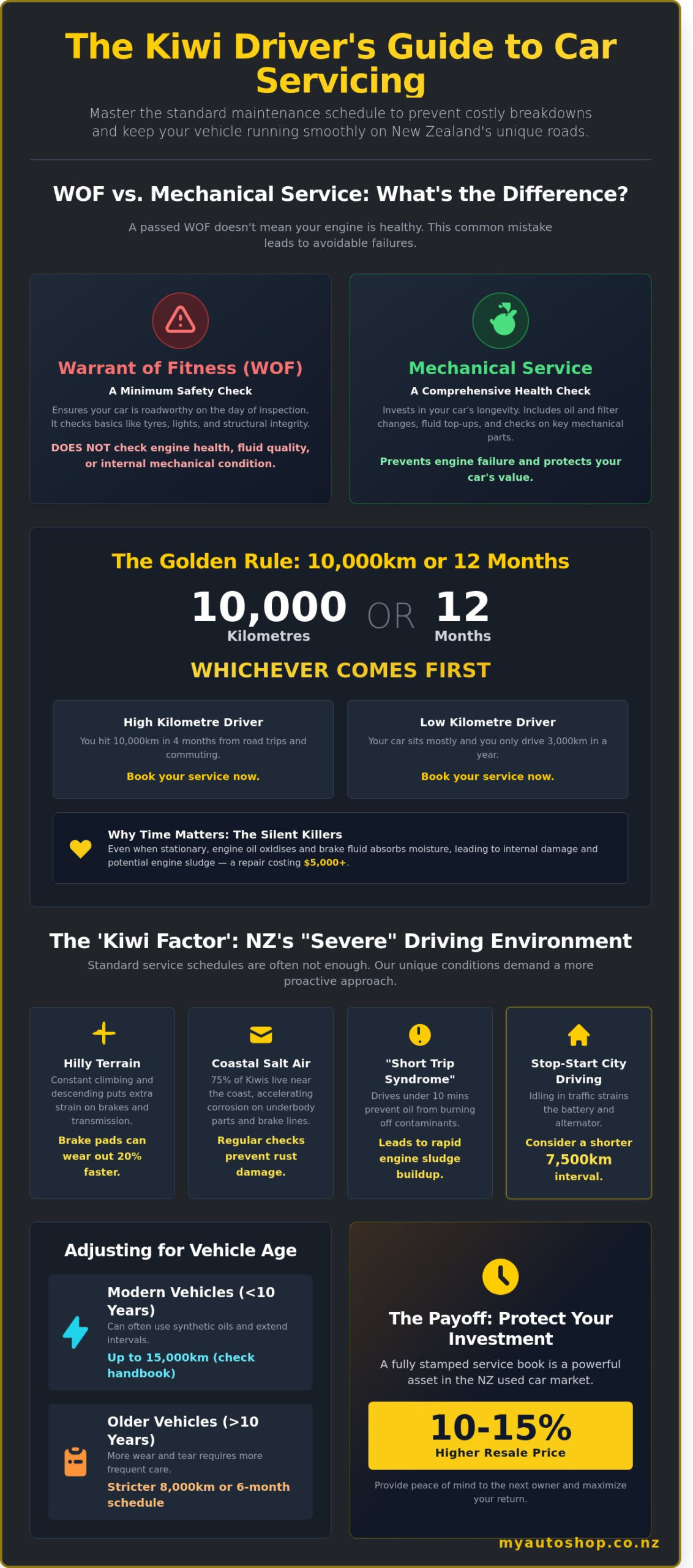
Most Kiwi drivers follow a simple guideline for vehicle health: the 10,000km or 12-month interval. This baseline ensures your engine stays lubricated and potential faults are caught before they become expensive roadside breakdowns. The Standard Car Service Schedule serves as a vital health check for your vehicle, focusing on preventative maintenance rather than just fixing what’s broken.
The phrase “whichever comes first” is the most critical part of any car service schedule nz. If you hit 10,000km in four months because of a summer road trip, book your service then. If your car sits in the driveway and you only cover 3,000km in a year, you still need that annual check-up. Neglecting this leads to engine oil breaking down into a thick, tar-like sludge. This sludge blocks oil galleries and can cause total engine failure, a repair that often costs upwards of NZ$5,000.
Don’t confuse a Warrant of Fitness (WOF) with a mechanical service. A WOF is a mandatory safety inspection to ensure your car is roadworthy; it doesn’t check the health of your engine or the quality of your fluids. A mechanical service is an investment in your car’s longevity. In the NZ used car market, a fully stamped service book is a powerful asset. Vehicles with a documented history often command a 10% to 15% higher resale price because they offer the next owner peace of mind.
Why Time Matters as Much as Kilometres
Engine oil degrades through oxidation even when your car isn’t moving. Over 12 months, oil loses its ability to neutralise acids and lubricate moving parts effectively. Moisture build-up is another hidden enemy. Brake fluid is hygroscopic, meaning it absorbs water from the air. Over a year, this moisture can lower the boiling point of your fluid and cause internal corrosion in your braking system. Even “weekend cars” need an annual professional look-over to prevent rubber seals from perishing and drying out.
Modern vs. Older Vehicle Intervals
Your car service schedule nz depends heavily on your vehicle’s age and technology. Modern vehicles using high-grade synthetic oils can often stretch their intervals to 15,000km. However, if your car is over 10 years old, it’s safer to stick to a stricter 6-month or 8,000km schedule. Older engines often have more wear and tear, making them less tolerant of old oil. Always check your manufacturer handbook for specific model quirks, as some European brands or high-performance Japanese imports have very specific requirements for fluid types and timing belt replacements.
Why NZ Driving Conditions Change Your Maintenance Timeline
Most global car manufacturers classify New Zealand as a “severe” driving environment. While our landscapes are beautiful, they are incredibly tough on mechanical components. This classification means the standard car service schedule nz drivers see in their owner’s manuals often needs to be shortened to keep a vehicle running reliably. Our hilly topography is a primary factor. Constant climbing and descending puts immense pressure on transmissions and braking systems. Brake pads in NZ often wear out 20% faster than those used on flatter continental roads due to the heat generated during long downhill stretches.
Coastal salt air is another silent killer for Kiwi cars. With approximately 75% of New Zealanders living within 5km of the coast, salt-induced corrosion is a constant threat to underbody components and brake lines. Managing Your Service Schedule helps identify this surface rust before it becomes a structural failure or a WOF nightmare. We also see many cases of “Short Trip Syndrome” in our local suburbs. If you frequently drive less than 10 minutes to the shops, your engine oil never reaches the 90°C required to evaporate moisture and fuel contaminants. This leads to rapid sludge buildup, making regular oil changes even more critical.
City Driving and Stop-Start Traffic
Idling in heavy traffic in centers like Auckland or Tauranga prevents your engine from reaching its optimal operating temperature. This puts extra strain on your battery and alternator, as they struggle to maintain electrical loads without the higher RPMs of highway cruising. For drivers stuck in the daily grind, we recommend a car service schedule nz focused on a 7,500km interval rather than the traditional 10,000km. Frequent stop-start cycles also accelerate the wear on your starter motor and engine mounts. To keep things simple, you can check your service needs online and see how urban driving affects your specific model.
Rural Roads, Dust, and Gravel
If you live rural or frequently head off the beaten track, dust and gravel are your car’s main enemies. Unsealed roads produce fine particulates that clog engine air filters up to 40% faster than city driving. A blocked filter starves the engine of oxygen, increasing fuel consumption and reducing power. Gravel roads also act like an abrasive, wearing down rubber suspension bushings and causing shock absorbers to leak prematurely. Rural drivers should follow these specific checks:
- Engine Air Filter: Inspect every 5,000km for dust saturation.
- Cabin Filter: Replace every 12 months to maintain air quality inside the car.
- Suspension Boots: Check for tears that allow grit to enter sensitive joints.
- Tyre Tread: Monitor for “chipping” caused by sharp gravel surfaces.
By adjusting your maintenance timeline to suit these local conditions, you avoid the transparently high costs of major repairs down the road. Our goal is to make sure your car stays as rugged as the Kiwi landscape it drives on.
Basic vs. Comprehensive Service: Which Schedule Do You Need?
Choosing the right maintenance level keeps your car running smoothly without overspending on unnecessary work. In New Zealand, the standard car service schedule nz follows a simple hierarchy. Most drivers alternate between a Basic service and a Comprehensive service based on their odometer reading or the time since their last workshop visit. Getting this rhythm right prevents small issues from turning into expensive roadside headaches. If you’re unsure which level suits your vehicle right now, our detailed guide on basic vs comprehensive car service breaks down exactly what each package covers and how to choose the right one for your budget.
The Basic Service: The Mid-Year Health Check
A Basic service is your car’s essential pitstop. It’s designed for vehicles every 10,000km or six months. This level focuses on the lifeblood of your engine. It typically includes a high-quality oil change, a fresh oil filter, and a top-up of essential fluids like coolant and brake fluid. For Kiwi drivers tackling high-use commutes or heavy stop-start traffic in cities like Auckland, this check-in is the minimum requirement to prevent engine sludge and premature wear.
The Comprehensive Service: A Deep Dive
A Comprehensive service is a total vehicle physical. You should schedule this every 30,000km or 24 months. It goes much deeper than a standard oil change. Mechanics perform detailed inspections of spark plugs, fuel filters, and the entire cooling system. This service level is vital because it identifies hidden safety risks that a WOF might miss. It uncovers problems like worn CV joints, leaking shock absorbers, or thinning brake pads before they fail. It’s about proactive safety, not just reactive repairs.
Your car service schedule nz must account for major milestones at 40,000km and 100,000km. These are the “Major” service points where high-wear components require replacement. Skipping these milestones is a gamble that rarely pays off. For example, many New Zealand vehicles require a cambelt replacement at the 100,000km mark. If you ignore this, a snapped belt can cause catastrophic engine failure in seconds, resulting in a repair bill that often exceeds the car’s total value. If you want to understand exactly what you should be paying at each of these milestones, our detailed car service cost NZ guide for 2026 breaks down pricing for every service level so you can budget with confidence.
- 40,000km: Often involves transmission fluid flushes and air filter replacements.
- 100,000km: The critical window for cambelts, water pumps, and coolant flushes.
- Cooling Systems: Over 20% of engine failures in NZ are linked to cooling system neglect. A comprehensive flush every two years prevents rust and blockages.
At MyAutoShop, we believe in transparent pricing and total clarity. We provide a clear breakdown of what each service level covers so you aren’t left guessing. Whether you need a quick mid-year check or a deep-dive major service, our Kiwi owned network of mechanics ensures your car stays reliable. Don’t wait for a warning light to appear. Stick to your schedule and keep your car healthy for the long haul.
Warning Signs: When to Break the Schedule
Your car doesn’t have a calendar, but it definitely has a voice. While following a standard car service schedule nz protects your engine, mechanical issues don’t always wait for the next 10,000km milestone. Trusting your gut is just as important as trusting the sticker on your windscreen. If your vehicle starts behaving differently, booking an early inspection can save you thousands in major repairs.
Auditory and Visual Red Flags
Unusual sounds are often the first cry for help. Squealing when you hit the brakes usually means your pads have worn down to the wear indicators. If you hear a rhythmic ticking from the engine or a heavy clunking over bumps, your suspension or oil levels need professional attention. These sounds rarely “fix themselves” and usually get louder and more expensive the longer you wait.
Check your driveway for fresh spots. A dark brown or black puddle is typically engine oil. A bright green, pink, or orange puddle is likely coolant, which can lead to overheating within minutes of driving. Clear, oily fluid near the wheels could be a dangerous brake fluid leak. Blue smoke from the exhaust indicates oil burning and requires an immediate mechanic visit.
Performance and Handling Changes
You know how your car should feel on Kiwi roads. If it starts pulling to the left or right on a flat stretch of road, your wheel alignment is likely out or a brake caliper is sticking. A “spongy” or soft brake pedal is a major red flag; it suggests air in the hydraulic lines or a failing master cylinder that needs an instant check.
- Fuel Efficiency: Keep an eye on your fuel gauge. A sudden 15% drop in fuel efficiency often signals clogged filters or spark plugs that are past their prime.
- Vibrations: Shaking through the steering wheel at 100km/h indicates unbalanced tyres or suspension wear that will eat through your tread.
- Power Loss: If your car feels sluggish during acceleration, the engine is likely struggling with a restricted air intake.
Don’t wait for a dashboard warning light to appear. These sensors often trigger only after a part has failed completely. By the time the oil pressure light flickers on, your engine might already be suffering from friction damage. Regular DIY checks are your first line of defense. Spend five minutes every month checking your oil dipstick and tyre pressures. It’s the simplest way to catch a small $50 fix before it turns into a $2,000 engine rebuild.
If your car is making a sound you can’t identify, book an inspection with a local mechanic to get it sorted before your next scheduled service.
Managing Your Service Schedule with My Auto Shop
Owning a vehicle in New Zealand is essential for most of us, but managing your car service schedule nz shouldn’t feel like a second job. My Auto Shop removes the admin load by acting as your digital service manager. We’ve built a platform that bridges the gap between busy Kiwis and the country’s most reliable workshops, ensuring you spend less time on the phone and more time on the road.
Transparency is the core of our service. You’ll never face a surprise bill or a vague estimate again. We provide transparent, upfront pricing before any work begins. This allows you to budget accurately for your maintenance without the stress of hidden costs. Our national network consists of hundreds of high-quality, vetted mechanics across the country. Every partner workshop is checked for quality and reliability, so you know your car is in expert hands.
If you can’t find the time to visit a garage, our mobile mechanics bring the workshop to your driveway or office. It’s professional maintenance delivered on your terms, ensuring your vehicle stays in peak condition without disrupting your day. We focus on making the process as seamless as possible, from the moment you book until the keys are back in your hand.
Modern Solutions: Pick-up and Drop-off
Our driver concierge service is the ultimate time-saver for busy professionals and families. We pick your car up from your home or workplace, take it to the workshop for its scheduled maintenance, and bring it back when the job is done. It’s a secure process managed by a trusted platform, ensuring your vehicle transport is handled with care. This service eliminates the need for complicated school run logistics or taking unpaid leave just to visit a mechanic.
Simplified Booking and Records
Forget digging through your glovebox for faded receipts or old invoices. The My Auto Shop platform tracks your entire service history digitally, providing a clear record that helps maintain your car’s resale value. You can use our site to book Basic Services or Comprehensive Services in under 60 seconds.
- Instant Bookings: Select your preferred date and time without waiting for a callback.
- Specialized Repairs: Access experts for complex jobs like cambelt replacements or new brake pads with one click.
- Automated Reminders: We’ll let you know when your next service is due so you never miss a milestone.
By digitizing the traditional logbook, we ensure your car service schedule nz stays on track year after year. Whether you drive a compact hatchback or a heavy-duty ute, our platform provides the tools you need to keep your vehicle safe, legal, and efficient.
Take the Guesswork Out of Your Car Maintenance
Sticking to a regular 10,000km maintenance window ensures your vehicle handles New Zealand’s unique terrain without breaking the bank. Whether you’re navigating steep hills or short city commutes, understanding your car service schedule nz requirements prevents small issues from turning into expensive repairs. A basic service keeps your oil fresh, while a comprehensive check-up looks at the bigger picture to keep your family safe on the road.
Don’t let maintenance stress ruin your week. My Auto Shop has simplified the entire process for you. Over 30,000 Kiwis already trust our platform to manage their vehicle health with total confidence. We provide transparent, fixed-price quotes upfront, so there are never any nasty surprises when you pick up your keys. Our vetted network includes only NZ’s best mechanics, ensuring your car is in expert hands every time.
Ready to tick this off your to-do list? Book your next car service with My Auto Shop today. It’s the smartest way to keep your car reliable and your weekend free.
Frequently Asked Questions
Is a car service the same as a WOF in New Zealand?
No, a car service is completely different from a Warrant of Fitness (WOF). While a WOF is a mandatory safety inspection required by NZTA to ensure your vehicle is roadworthy, it doesn’t check the internal health of your engine. A service focuses on maintenance, like changing your oil and filters, to keep your car running reliably for years. Think of a WOF as a legal safety check and a service as a mechanical health checkup.
How much does a standard car service cost in NZ in 2026?
In 2026, a standard car service in New Zealand typically ranges from NZ$180 to NZ$350 depending on your vehicle type and location. This price range, based on current automotive industry data, covers essential oil and filter replacements along with a comprehensive safety inspection. Larger 4WD vehicles or European models often sit at the higher end of this scale due to specialized oil requirements and parts costs. For a full breakdown of what to expect at every price point, see our car service cost NZ 2026 pricing guide. We always provide transparent pricing so you know exactly what you’re paying for upfront.
What happens if I miss my scheduled car service?
Missing your scheduled car service leads to accelerated engine wear and significantly reduced fuel efficiency. Old oil loses its ability to lubricate moving parts, which can cause internal friction and lead to repairs costing upwards of NZ$2,000. Additionally, a patchy service history can reduce your car’s resale value by 15 percent or more. Sticking to a consistent car service schedule NZ ensures you catch small issues before they turn into expensive roadside breakdowns.
Do I need to service my car every 6 months or every year?
Most modern vehicles require a service every 12 months or every 10,000 to 15,000 kilometres, whichever comes first. However, if you frequently drive short distances in stop-start traffic or use your vehicle for heavy towing, a 6 month interval is much better for your engine’s longevity. Check your owner’s manual for the specific requirements for your make and model. Keeping this routine keeps your car running smoothly and protects your manufacturer warranty.
Can a mobile mechanic perform a full logbook service?
Yes, a qualified mobile mechanic can perform a full logbook service at your home or workplace. They use high quality parts that meet manufacturer standards and follow the specific checklist required to keep your vehicle records accurate. This is a seamless way to maintain your car without the hassle of visiting a traditional workshop. Our “Pick up & drop off” service offers another layer of convenience for those with busy Kiwi lifestyles.
Does my car warranty get voided if I don’t use a dealership for servicing?
No, your manufacturer warranty remains valid as long as the service is performed by a qualified mechanic using parts that meet or exceed original specifications. Under New Zealand consumer law, you have the right to choose your own repairer. Just ensure the mechanic stamps your service book and follows the car service schedule NZ precisely. This approach allows you to enjoy competitive rates while keeping your warranty fully intact.
How long does a typical car service take to complete?
A standard car service usually takes between 90 minutes and 3 hours to complete. This timeframe allows the mechanic to drain and replace the oil, swap out filters, and conduct a thorough 40 point safety inspection. If the technician identifies additional issues like worn brake pads, the process will take longer. We recommend booking an early morning slot to ensure a quick turnaround so you can get back on the road without delay.
What are the signs that my engine oil needs changing before the 10,000km mark?
You should change your oil early if it looks dark and gritty on the dipstick or if your engine sounds louder than usual when idling. Other red flags include a persistent oil smell inside the cabin or the “check engine” light appearing on your dashboard. If you notice a 10 percent drop in your fuel economy, it’s often a sign that your oil has thinned out and is no longer protecting your engine components effectively.
Disclaimer
This article provides general information only and should not be relied on as professional mechanical, safety or legal advice. Vehicle requirements and circumstances vary. If you are unsure about your vehicle, have it inspected by a qualified automotive professional.