
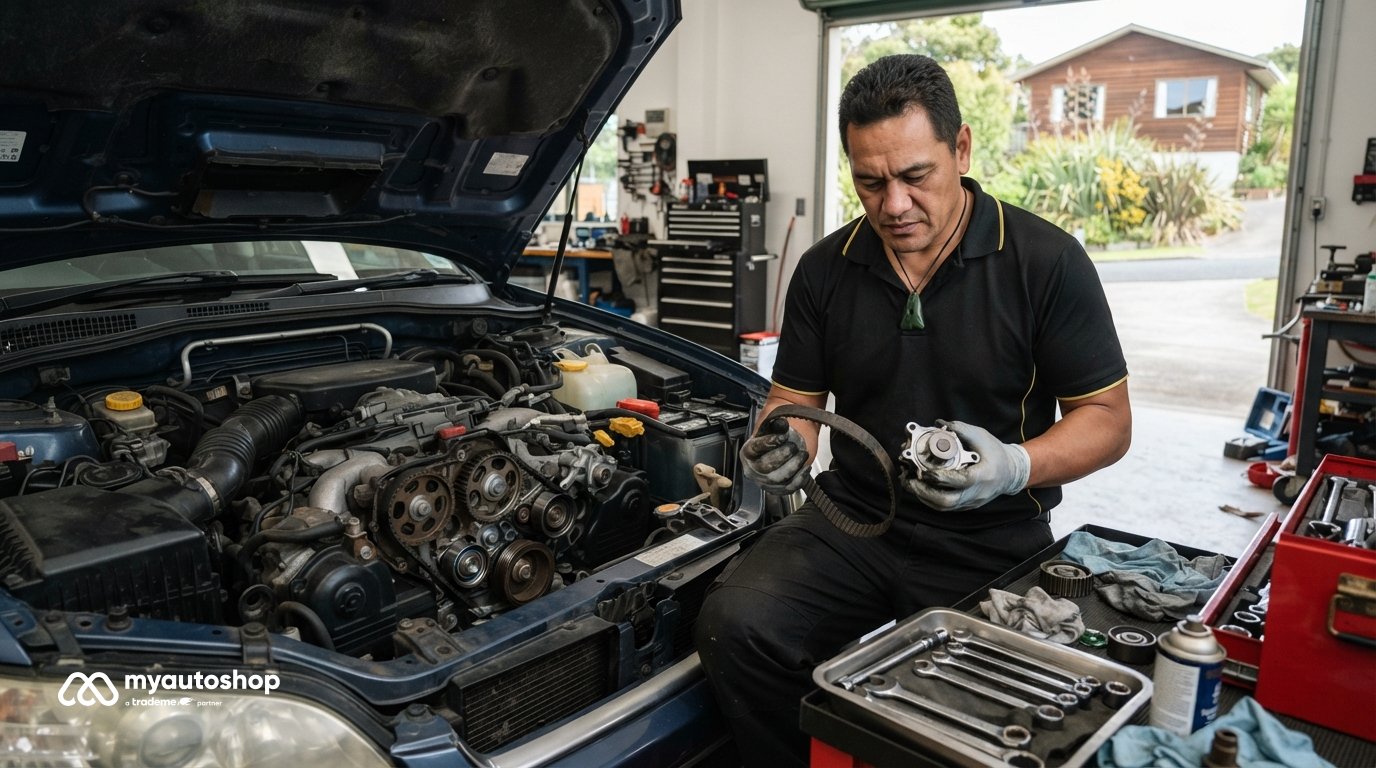
Paying for a part you didn’t think you needed might actually be the smartest financial move you make this year. When your mechanic suggests adding a water pump to your service, it’s natural to feel a bit of anxiety. You might worry about being ripped off or wonder why a simple belt change has suddenly become more complex. We understand that unexpected repair bills are the last thing any busy Kiwi needs.
The truth is that the water pump replacement cost when changing cambelt is an investment in what we call a “labour dividend.” Because your mechanic already has the engine stripped down to reach the belt, replacing the pump at the same time avoids paying for the exact same hours of labour twice. It’s the difference between a proactive fix now and a massive mechanical failure later that could cost thousands in engine repairs if your engine’s valves and pistons collide.
In this 2026 guide, we’ll explain why these components are so closely linked and how bundling them ensures your vehicle remains reliable for another 100,000km. You’ll get a clear look at how costs are broken down in New Zealand, helping you make an informed decision that protects both your car and your wallet.
Key Takeaways
- Save significantly on future labour costs by bundling your water pump and cambelt service, as both require the same complex engine disassembly.
- Understand the water pump replacement cost when changing cambelt by focusing on the component price rather than paying for a second full-day workshop job later.
- Protect your engine from catastrophic failure by adhering to the 100,000km or 5-year replacement interval standard for most vehicles in New Zealand.
- Learn how to identify a transparent quote that includes a full cambelt kit with tensioners, idlers, and fresh coolant for total peace of mind.
- Explore how Turners Service & Repairs offers mobile mechanical repairs in selected regions, providing a convenient alternative to traditional workshops.
Understanding the Combined Cost of Cambelt and Water Pump Replacement
Most Kiwi motorists feel a bit of a sting when they see a quote for a cambelt change. It’s rarely a cheap exercise. However, the bulk of that cost isn’t the rubber belt itself; it’s the hours of precision labour required to reach the engine’s core. When you consider the water pump replacement cost when changing cambelt, you’re actually looking at a strategic “labour dividend” that saves you hundreds in the long run. By replacing both components at once, you ensure your engine’s cooling system is as fresh as its timing system.
To better understand how these components interact and why they are replaced together, watch this helpful video:
Labour Overlap: The Secret to Saving Money
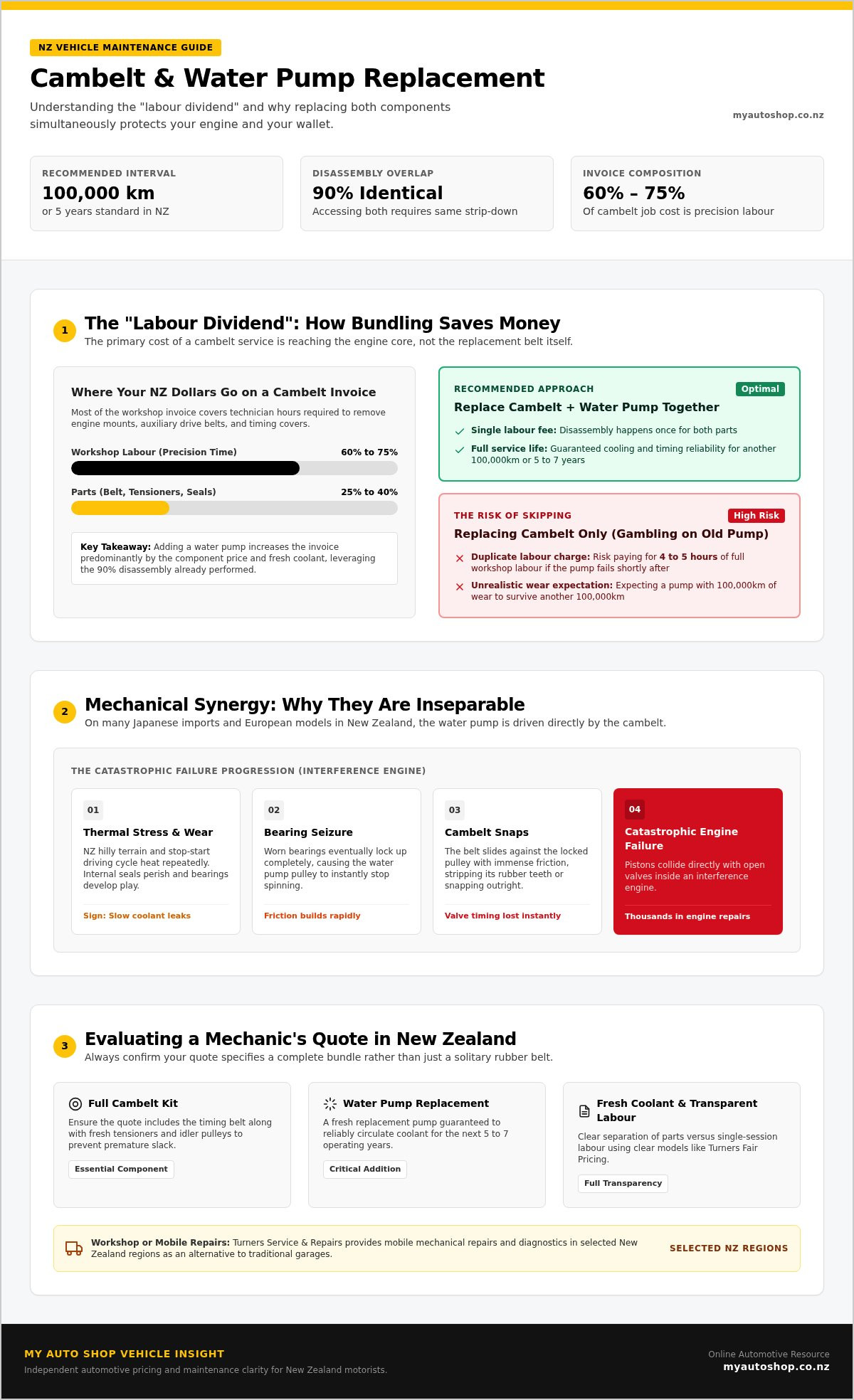
On most modern vehicles, the water pump is tucked away behind the timing covers. To reach it, a technician has to remove the auxiliary drive belts, engine mounts, and the protective covers. This is the exact same process required to change the cambelt. By doing both at once, you’re taking advantage of the fact that 90% of the disassembly is already complete. In New Zealand, where our hilly terrain and stop-start traffic cause engines to work harder, this thermal cycling puts extra stress on the pump’s bearings and seals. Evaluating the water pump replacement cost when changing cambelt involves weighing a small part cost now against the risk of paying for four or five hours of duplicate labour if the pump fails six months later.
Parts vs. Labour: Where Your NZ Dollars Go
In a standard cambelt service, labour typically accounts for 60% to 75% of the total invoice. Adding a water pump usually only increases the bill by the cost of the component and fresh coolant. It’s a small price to pay for another 100,000km of reliability. Understanding the relationship between cambelt and interference engine mechanics is crucial; if that pump seizes, it can take the belt with it, leading to a destroyed engine. Choosing high-quality components is non-negotiable. You want a pump that will reliably circulate coolant through your engine for the next five to seven years. Transparency is key here. We recommend looking for providers who use Turners Fair Pricing to ensure you’re getting a clear breakdown of parts versus labour before the work begins.
Why the Water Pump and Cambelt are Replaced Together
Mechanics often group these two components together because they share a similar service life. In the New Zealand vehicle fleet, many popular Japanese imports and European models have water pumps that are driven directly by the cambelt. If you decide to skip the pump during a belt service, you’re essentially gambling that a component with 100,000km of wear will last another 100,000km. It rarely does. When you consider the total water pump replacement cost when changing cambelt, you’re buying insurance against a much larger bill later.
The Lifecycle of an Engine Water Pump
An engine water pump is a mechanical device that circulates coolant throughout the engine and radiator to regulate operating temperatures and prevent overheating. Over thousands of kilometres, the internal seals can perish and the bearings can develop play. In New Zealand’s varied climate, these components undergo significant thermal stress. When seals fail, you’ll often notice a slow coolant leak, which is a primary warning sign of impending trouble. Replacing the pump proactively prevents these leaks from escalating into a roadside breakdown.
Mechanical Synergy: How They Work in Tandem
Because the cambelt often wraps around the water pump’s pulley, the two parts are mechanically linked. If the water pump bearings seize, the pulley stops turning, creating immense friction against the moving cambelt. This can cause the belt to strip its teeth or snap instantly. A snapped belt on an interference engine usually results in the pistons hitting the valves, transforming a standard maintenance task into a multi-thousand-dollar engine rebuild. Preventative maintenance is always cheaper than a catastrophic failure.
If the pump fails later, you’ll be charged for the full disassembly all over again. Most NZ workshops charge between $400 and $800 in labour just to get back to that pump. To ensure you’re getting a fair deal, check the Consumer Protection NZ guidance on quotes and estimates. This helps you understand your rights when comparing workshop prices and ensures you aren’t surprised by the final invoice. If you’re unsure about your car’s service history, you can compare local mechanic quotes to see how a bundled service fits your maintenance budget.
The Hidden Risks of Skipping the Water Pump
Choosing to skip the pump during a cambelt service is often a gamble with high stakes. While it might seem like a way to keep the initial invoice lower, the reality of the New Zealand used car market means many vehicles are already operating with aged cooling components. A pump that looks fine today can develop a slow drip tomorrow. Understanding the water pump replacement cost when changing cambelt involves looking past the immediate price and considering the risk of being stranded on the side of a busy state highway.
Warning Signs You Shouldn’t Ignore
Many water pumps fail silently, but some give off subtle warnings before they seize. If you notice a high-pitched squealing or a low grinding noise coming from the front of the engine, the pump’s internal bearings are likely on their way out. You should also check your driveway for small puddles of orange, green, or red fluid. Even a minor coolant leak can lead to a “stuck” or seized engine if the fluid level drops too low during a long commute.
Sometimes, other cooling issues can mask a failing pump. For instance, the symptoms of a stuck thermostat might cause your temperature gauge to fluctuate, making it difficult to tell if the pump is actually circulating fluid correctly. Reviewing our symptoms guide can help you identify these red flags early. Taking action now ensures your car remains reliable for those essential Kiwi road trips and daily school runs.
The ‘False Economy’ Trap
Saving a small amount on parts today often leads to a massive bill in the near future. If the pump fails six months after your belt is changed, you’ll face the “double-handling penalty.” This means paying for the exact same labour-intensive strip-down process you just completed. When you factor in the water pump replacement cost when changing cambelt, you’re essentially paying for peace of mind.
There is also a significant benefit to your vehicle’s resale value. In New Zealand, savvy buyers look for a comprehensive service history. Being able to show a receipt for a “Full Cambelt and Water Pump Kit” is a powerful selling point. It proves you haven’t cut corners on maintenance. More importantly, it prevents the stress of an unexpected roadside breakdown, which always seems to happen at the most inconvenient time. Investing in a complete service now is the most logical way to protect your financial interests and your safety on the road.
How to Evaluate Your Mechanic’s Quote in New Zealand
A professional mechanical quote should never be a mystery. When you receive an estimate for a cambelt service, look for a clear breakdown of parts, labour, and GST. A transparent provider will list these items separately so you can see exactly where your money is going. If the quote only provides a single lump sum, don’t be afraid to ask for more detail. Understanding the water pump replacement cost when changing cambelt starts with seeing the specific price of the pump versus the hours of work required to install it.
Decoding the Mechanical Quote
Labour hours are the most important metric to compare between workshops. Most cambelt and water pump jobs on standard passenger vehicles take between three and five hours. If one quote is significantly lower than others, check if they’ve included a “Cambelt Kit.” A proper kit includes the belt, tensioners, and idler pulleys. If the water pump isn’t mentioned on your initial estimate, ask the mechanic if it’s included or if they recommend adding it. It’s much better to have this conversation before the car is already on the hoist. You can use the My Auto Shop marketplace to compare quotes from local MTA-approved garages, ensuring you’re getting a fair market rate for your specific make and model.
NZ-Specific Vehicle Factors
The New Zealand vehicle fleet is unique, dominated by Japanese imports that often feature “interference” engines. In these engines, there is no clearance between the valves and pistons if the timing fails. This makes the water pump and cambelt relationship even more critical for popular models from Subaru, Toyota, and Mazda. If you own a high-kilometre import, the cooling system has already worked hard for years.
Our coastal environment also plays a role. High humidity and salt air can accelerate corrosion in the cooling system if the coolant hasn’t been changed regularly. A new water pump ensures the internal impellers are clean and efficient, providing optimal cooling during those hot Kiwi summers. When reviewing your quote, ask if the mechanic is using genuine parts or high-quality aftermarket options. Both can be excellent, but you want to ensure the components are rated for another 100,000 kilometres of New Zealand driving conditions. If you’re also noticing signs of degraded coolant or a struggling radiator alongside your cambelt service, understanding the difference between a radiator flush vs replacement can help you make a fully informed decision about your cooling system’s health. For total peace of mind and financial clarity, get a fixed-price quote today to see how a combined service fits your maintenance plan.
Booking Your Cambelt and Water Pump Service with Confidence
Deciding where to take your car for a major job like this shouldn’t be a source of stress. You have two reliable paths: the traditional workshop experience or the modern convenience of a mobile mechanic. Both options offer the technical expertise needed to handle complex engine work, but the best choice depends on your schedule and location. Regardless of which you choose, prioritizing an MTA-approved repairer is a vital safeguard. These professionals adhere to high standards of workmanship, giving you an extra layer of security and peace of mind.
The Turners Service & Repairs Mobile Advantage
If you live in a selected region, Turners Service & Repairs brings the workshop directly to you. Our technicians can perform major mechanical repairs right in your driveway or at your workplace. This means you don’t have to worry about coordinating drop-offs, finding a lift, or losing your vehicle for an entire day at a distant garage. You get professional diagnostics and a transparent report on-site, allowing you to understand the work as it happens. It’s a streamlined way to manage the water pump replacement cost when changing cambelt without disrupting your busy life. Our mobile units are fully equipped to handle these heavy-duty tasks with the same precision you’d expect from a stationary workshop.
Using the My Auto Shop Marketplace
If you prefer a physical workshop or live outside our current mobile service areas, the My Auto Shop marketplace is your best tool. We connect you with a vast network of local, MTA-approved garages across New Zealand. You can compare real customer ratings, check live availability, and see fixed prices upfront. This level of transparency removes the guesswork and ensures you’re booking with a repairer who values your time and safety.
When you look at the total water pump replacement cost when changing cambelt through our platform, you know exactly what the final bill will be before you even hand over the keys. This eliminates the anxiety of “hidden extras” that often plague the automotive industry. We’ve designed the process to be as simple as booking a flight or ordering a meal. Take the next step toward a more reliable vehicle and ensure your engine is ready for the next 100,000 kilometres of Kiwi roads. Get a quote for your cambelt and water pump replacement today and see how easy professional car care can be.
Drive with Confidence and Financial Clarity
Managing your car’s maintenance shouldn’t feel like a series of expensive surprises. By choosing to bundle your water pump and cambelt service, you’re securing the “labour dividend” we’ve discussed. This proactive approach ensures your engine remains reliable for the next 100,000 kilometres while protecting you from the double-handling labour costs of a separate repair later. It’s the most logical way to safeguard your vehicle’s health and your own financial peace of mind.
Understanding the water pump replacement cost when changing cambelt is the first step toward transparent car care. Whether you choose the convenience of Turners Service & Repairs for mobile mechanical repairs in selected regions or prefer to visit one of over 300 MTA-approved mechanics in our marketplace, we’re here to help. You’ll get clear, upfront pricing with no hidden costs, allowing you to book with total certainty.
Don’t leave your engine’s safety to chance. Take control of your maintenance schedule today and enjoy the security of a vehicle that’s ready for any Kiwi road trip. Compare Cambelt and Water Pump Replacement Quotes Now and get back on the road with a car you can trust.
Frequently Asked Questions
Is it mandatory to change the water pump with the cambelt?
It isn’t legally mandatory, but it’s the industry standard for a reason. Most NZ mechanics will recommend bundling the services because the water pump is a wear item with a similar 100,000km lifespan as your belt. If you refuse, many workshops won’t offer a warranty on the cambelt job. It’s a preventative measure that protects your engine from catastrophic failure during its next service cycle.
How much extra does a water pump typically add to a cambelt job?
Adding a water pump typically only increases the invoice by the cost of the component and fresh coolant. Since the engine is already disassembled to reach the belt, there is almost no extra labour charge. This makes the water pump replacement cost when changing cambelt much lower than doing the two jobs separately. You’re essentially paying for the part while the labour is already covered by the belt service.
What happens if I don’t change the water pump and it fails later?
If the pump fails later, you’ll face a double handling penalty. You will have to pay for the entire four or five hour disassembly process again. Even worse, if the pump seizes, it can snap your new cambelt instantly. On an interference engine, this often leads to pistons hitting valves, resulting in an engine rebuild that can cost thousands of dollars, often exceeding the total value of the vehicle.
Can a mobile mechanic replace a cambelt and water pump at my house?
Yes, a mobile mechanic can perform this service. Turners Service & Repairs provides mobile mechanical repairs, including cambelt and water pump kits, in selected New Zealand regions. Our technicians come to your home or workplace with all the necessary tools to complete the job on-site. This saves you the hassle of arranging transport to and from a traditional workshop for what is usually a half-day repair.
How long does a cambelt and water pump replacement take?
Most cambelt and water pump replacements take between three and five hours to complete. This timeframe varies depending on your vehicle’s engine layout and how many components need to be removed for access. Transverse engines in small hatchbacks often take less time than complex V6 or boxer engines found in larger sedans and SUVs. Your mechanic can provide a specific time estimate based on your registration details when you book.
Do all cars have a water pump driven by the cambelt?
No, not all vehicles use this setup. While many Japanese and European cars from the 1990s through 2015 have cambelt-driven pumps, many newer models use timing chains or electric water pumps. Some engines also have the pump driven by the external auxiliary belt. Your mechanic can check your specific engine code to confirm if your water pump replacement cost when changing cambelt is a factor for your particular vehicle.
Is the water pump covered under a standard mechanical warranty?
Standard mechanical warranties usually cover the water pump if it suffers a sudden mechanical failure. However, these warranties often require you to follow the manufacturer’s service schedule strictly. If you skip a recommended cambelt and water pump change at the 100,000km mark, the warranty provider may decline a claim if the pump fails later. Always check your specific policy wording for maintenance requirements to ensure you stay covered.
Will my car fail a WoF if the water pump is leaking?
A leaking water pump won’t usually cause a WoF failure on its own. The Warrant of Fitness is a safety check focused on items like tyres, brakes, and lighting. It doesn’t assess the internal mechanical health of your engine. However, if the leak is severe enough to drip significant amounts of fluid onto the road, or if it has damaged other safety-critical components, an inspector might flag it as a safety issue.
Disclaimer
This article provides general information only and should not be relied on as professional mechanical, safety or legal advice. Vehicle requirements and circumstances vary. If you are unsure about your vehicle, have it inspected by a qualified automotive professional.