
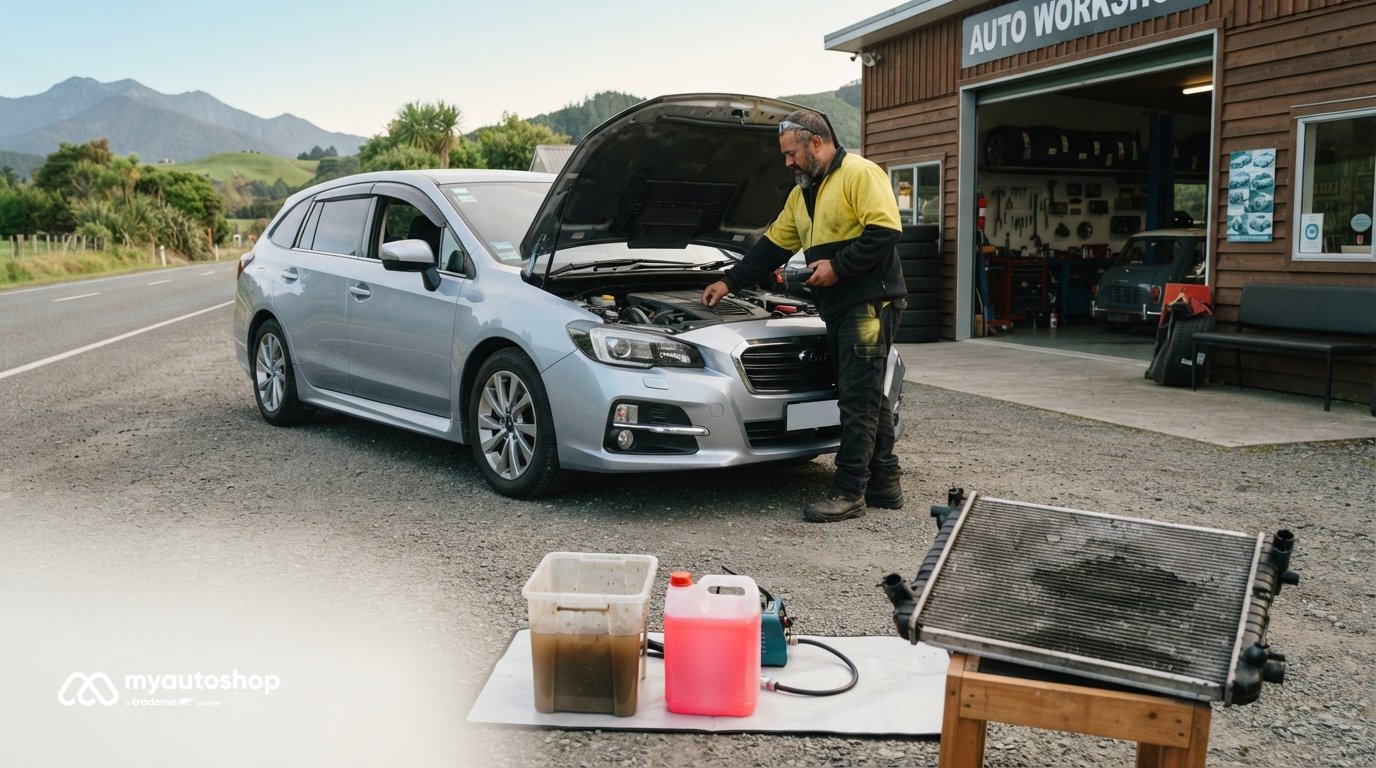
Over 63% of light vehicles on New Zealand roads are older than 10 years, meaning most are driving well past the designed operating lifespan of their factory cooling system. When your temperature gauge starts creeping up on a hot afternoon, weighing a radiator flush vs replacement isn’t just about saving money. It’s about protecting your engine from catastrophic heat damage before you get stranded on the motorway.
Nobody wants to pay for a major repair they don’t actually need, but nobody wants to risk a warped cylinder head either. If you feel uneasy about workshop quotes or confused by mechanics pointing out brown sludge and end-tank weeping, that anxiety is completely understandable. You just want straight answers about what your car requires.
This guide cuts through the confusion to help you match your car’s symptoms to the right fix. We examine the exact differences between degraded coolant and terminal radiator failure, giving you the practical knowledge you need to make the right call for your vehicle.
Key Takeaways
- Understand the critical line in radiator flush vs replacement: a chemical flush clears buildup from a sound system, but physical deterioration demands a full component swap.
- Recognise early warning signs like murky, brown coolant so you can clean the system before internal blockages cause engine temperatures to climb.
- Spot terminal structural faults, including brittle plastic end-tanks and weeping seams, which cannot be cured by chemical flushes or quick-fix sealants.
- Learn why an active Warrant of Fitness provides zero assurance of cooling system health, making dedicated inspections essential for older kiwi vehicles.
- Gain the practical clarity needed to choose the right workshop service, protecting your engine from warped cylinder heads without paying for unnecessary work.
Radiator Flush vs. Replacement: What is the Difference?
Your vehicle’s cooling system manages extreme thermal cycles. Climbing the Kaimai Range or crawling through Auckland motorway traffic on a 28°C February afternoon pushes engine temperatures skyward. Modern engine cooling radiators shed this heat by cycling liquid coolant through narrow internal passageways, venting thermal energy into the passing air before fluid returns to the engine block.
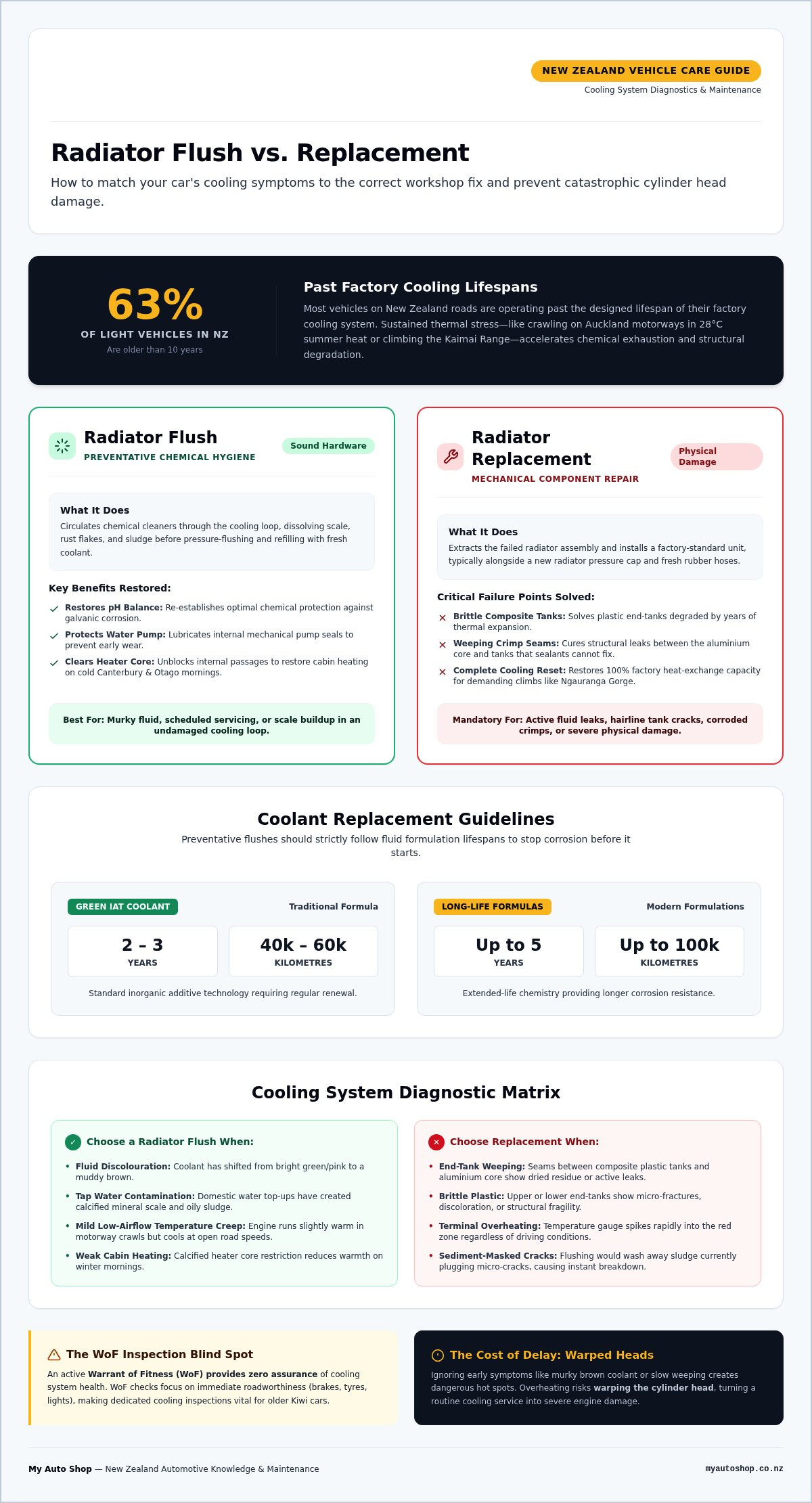
Deciding between a radiator flush vs replacement comes down to whether your cooling system is chemically contaminated or mechanically damaged. A radiator flush is a preventative hygiene service that circulates cleaning chemicals through the entire cooling loop to dissolve scale and flush away exhausted fluid. A radiator replacement is a mechanical repair where a technician extracts a failed unit and installs an entirely new assembly.
One widespread misconception is that a chemical flush can resolve an active leak or cure an overheating car with structural damage. It cannot. Flushing a weakened radiator often washes away the sediment temporarily plugging micro-cracks, turning a minor weep into an immediate breakdown.
The Mechanics of a Radiator Flush
During a professional flush, a technician drains the spent coolant and injects chemical cleaners to dissolve mineral buildup, rust flakes, and gelatinous sludge. After circulating the cleaner, the technician pressure-flushes the loop with treated water before refilling it with fresh, vehicle-specific coolant. This restores the protective pH balance and reintroduces corrosion inhibitors that shield internal aluminium and lubricate the water pump. It acts purely as preventative maintenance to keep a structurally sound cooling system functioning efficiently.
When Replacement is the Only Option
When physical components degrade, mechanical replacement is the only safe path forward. Most modern vehicles feature aluminium cores crimped to composite plastic end-tanks. Over years of driving, constant expansion and contraction turn that plastic brittle, creating hairline fractures or leaking seams that no fluid flush can mend.
A full replacement swaps the damaged core for a factory-standard unit, typically alongside a new radiator cap and fresh rubber hoses. This gives your vehicle an absolute cooling reset. It restores factory heat-exchange capacity, ensuring your engine remains safely within its operating temperature range across rugged New Zealand terrain.
When to Choose a Radiator Flush: Preventative Care
A radiator flush is the right move when your cooling system is structurally sound but chemically exhausted. If your coolant looks murky or has shifted from bright green or pink to a muddy brown, it has lost its protective properties. Crawling along Auckland’s Southern Motorway or climbing the Ngauranga Gorge in Wellington puts sustained thermal stress on your engine. In these conditions, old fluid struggles to transfer heat, creating dangerous hot spots in the cylinder head.
Catching these symptoms early keeps you off the breakdown truck. If your car runs warm during slow crawls, reading about car overheating in traffic helps explain why degraded fluid fails under low airflow. When evaluating a radiator flush vs replacement, an affordable flush protects your wallet as long as the radiator core remains physically intact. Following standard coolant system flush guidelines, green IAT coolants need replacing every 2 to 3 years or 40,000 to 60,000 km, while modern long-life formulas last up to 5 years or 100,000 km.
Clearing Sludge and Mineral Deposits
Drivers often top up low reservoirs with ordinary tap water, but that habit causes serious trouble. Mineral-heavy domestic water forms calcified scale across the radiator’s internal passages, blocking heat transfer and leaving an oily brown sludge behind. A chemical flush dissolves this sediment and clears choked heater cores, which also restores proper cabin warmth for frosty winter mornings in Canterbury and Otago.
The Role of Coolant Additives
Simply topping off a fluid reservoir does nothing to clear out old grit. A full flush replaces spent rust inhibitors with fresh fluid engineered to stop galvanic corrosion across internal aluminium and iron surfaces. A professional flush acts as a chemical refresh that extends the life of the water pump by lubricating its internal mechanical seals. If your vehicle is due for routine cooling maintenance, you can easily compare local workshops through My Auto Shop to keep your engine protected.
When Replacement is Mandatory: Signs of Radiator Failure
There is a definite threshold where preventative care stops working. If your vehicle suffers from cracked end-tanks, split seams, or crushed metal cooling fins, no chemical treatment can restore factory operation. When examining radiator flush vs replacement options under these conditions, continuing to run the car risks catastrophic head gasket failure or a completely seized engine block.
Some drivers attempt to dodge component swaps by pouring chemical “stop leak” bottles into the expansion tank. This is almost always an expensive misstep. These sealants react to air exposure to plug holes, but they cannot tell the difference between an external puncture and the tiny passages inside your heater core. The viscous material gums up passages, creates severe blockages, and coats the temperature sensors. This turns an isolated radiator issue into an extensive repair bill covering water pumps, hoses, and replacement thermostats. If your temperature gauge swings erratically, check the symptoms guide to see if your thermostat or radiator has failed.
Corrosion and Electrolysis
Neglected coolant naturally turns acidic over time, generating a mild electrical charge between dissimilar metals like iron engine blocks and delicate aluminium cooling tubes. This electrolysis quietly eats through the radiator walls from the inside out. Look for flaky white crusting or dull greenish crystallisation around the crimped outer seams. Second-hand Japanese domestic market imports, which make up a huge portion of New Zealand’s fleet, are particularly vulnerable because factory plastic headers turn from shiny black to a dull, brittle olive green before cracking open.
Failed Seals and Pressure Leaks
Modern engines run hot under high pressure to raise the coolant’s boiling point above 100°C. If crimped rubber gaskets dry out or internal pressure caps fail, the system loses the ability to stay pressurised. Once pressure drops, coolant boils instantly into steam, leaving your cylinder head exposed to extreme friction and heat warp.
A small weep at 50 km/h in suburban traffic can turn into a sudden, explosive tank rupture when cruising down the expressway. Knowing the mechanical risks outlined in our guide on understanding cooling system symptoms will help you spot these issues early. If your radiator displays structural cracking, internal scale blockages, or weeping side seams, a mechanical replacement is the only safe solution.
Comparing Costs, Value, and Engine Safety
Viewing a radiator flush vs replacement through the lens of long-term value clarifies the decision. A flush represents preventative maintenance, keeping an already sound system clean and balanced. A replacement acts as insurance against catastrophic engine failure. Workshop labour for a flush is minimal because technicians connect flushing equipment directly to the existing cooling loop. Installing a new radiator demands anywhere from 1.5 to 4 hours of billable labour, as modern vehicle packaging requires removing front bumpers, disconnecting transmission oil coolers, and bleeding trapped air pockets.
Skipping necessary mechanical repairs to cut corners carries massive financial risks. Overheating quickly warps aluminium cylinder heads and breaches head gaskets, leading to engine rebuild bills running into thousands of dollars. To eliminate guesswork around workshop estimates, motorists can review Turners Fair Pricing guidelines to understand typical repair scopes and transparent labour rates before booking.
The Risk of “Just One More Flush”
Requesting a chemical flush on a badly corroded radiator often backfires. The detergents strip away internal scale and calcium deposits, which sounds beneficial until you realise that calcified crust was the only thing plugging pinhole corrosion spots. When that scale dissolves under system pressure, new leaks appear instantly across the core.
For vehicles showing heavy mileage over 180,000 kilometres, weigh the investment against the car’s general condition. If the engine, transmission, and suspension remain sound, installing a fresh radiator is a smart way to guarantee reliable transport for years to come.
Mobile Convenience with Turners Service & Repairs
Driving a vehicle with an active cooling fault to a workshop puts your engine at extreme risk within minutes. Calling a flatbed tow truck also adds needless expense to your repair budget. Turners Service & Repairs removes this headache by bringing fully equipped mobile mechanics directly to your home or office driveway across selected New Zealand regions.
A qualified mobile technician performs on-site pressure tests and chemical diagnostics, confirming whether you genuinely need new hardware or simply a fluid service before you commit to parts. If you want straight answers and transparent quotes without the hassle of workshop drop-offs, book through My Auto Shop to find the right repair solution for your car today.
The Final Verdict: How to Decide for Your Car
The core rule of thumb is straightforward: flush for system health, replace for physical damage. If your cooling fluid is old, cloudy, or running past its recommended service interval, a chemical flush restores heat protection without wasting money on fresh hardware. If you see physical weeping, cracked plastic, bent fins, or chronic overheating under normal driving, a replacement is essential.
For drivers shopping the used car market, remember that a Warrant of Fitness (WoF) is strictly a roadworthiness safety check. Under NZTA regulations, a WoF inspector inspects brakes, tyres, and structural rust, but never checks cooling system pressure or radiator degradation. Booking an independent My Auto Shop Pre Purchase Inspection ensures a professional assesses the radiator and cooling loop thoroughly before you hand over your hard-earned money. If you are already troubleshooting mysterious noises or rising engine temperatures at home, use our online symptoms guide to narrow down the underlying cause before booking workshop time.
Diagnostic Tests a Mechanic Will Perform
Professional workshops use targeted diagnostic tools rather than guessing. First, a technician uses a hand pump to pressure-test the cooling loop cold, exposing hidden leaks in radiator crimps and heater hoses without scalding steam risks. Next, a chemical block tester, known in the trade as a “TK test”, checks the cooling fluid for combustion gases. This instantly confirms whether high operating heat stems from a clogged radiator or a blown head gasket. Finally, the technician tests the electric thermo-fans and thermostat opening response to verify complete system balance.
Booking Your Cooling System Service
Once you understand your car’s symptoms, choosing a repair path is simple. If you prefer dropping off your vehicle at a trusted local garage, the My Auto Shop marketplace lets you compare vetted workshops and secure upfront pricing across New Zealand. Marketplace workshops operate independently, giving you transparent choices across regional service providers.
If your car is already running hot or you are short on time, Turners Service & Repairs provides dedicated mobile mechanics in selected New Zealand regions. A mobile technician drives straight to your driveway to run diagnostic checks and carry out cooling system servicing right on site. Take the guesswork out of engine care and book a cooling system check today to keep your vehicle reliable on the open road.
Protect Your Engine Before the Heat Sets In
Weighing a radiator flush vs replacement comes down to one clear distinction. A chemical flush clears out degraded fluid and prevents mineral sludge in a sound system. A mechanical replacement removes cracked tanks and split seams before rising temperatures cause catastrophic head gasket failure. Addressing cooling issues early keeps your vehicle dependable and prevents massive repair bills down the line.
You don’t need to gamble with engine health or risk driving an overheating car across town to a workshop. Turners Service & Repairs provides experienced mobile mechanics across selected regions, delivering on-site diagnostics and cooling repairs directly to your doorstep. Backed by transparent estimates through Turners Fair Pricing, you get upfront clarity without unexpected fees. If your vehicle shows early warning signs from our 2026 symptoms guide, take action before your next long drive. Book a cooling system assessment with Turners Service & Repairs today to keep your engine running cool wherever Kiwi roads take you.
Frequently Asked Questions
Can a radiator flush fix a small leak?
No, a radiator flush cannot fix a physical leak. Flushing removes internal deposits, scale, and rust, but it has no structural sealing capabilities. In fact, washing away calcified sediment often exposes pinhole leaks that were previously blocked, making a minor leak more noticeable. If you notice fluid pooling under your car, you need a mechanical inspection and physical repair or replacement rather than a fluid flush.
How much does a radiator flush cost in New Zealand?
Coolant flush pricing in New Zealand varies depending on your vehicle’s make, engine displacement, and required fluid chemistry. Modern Japanese and European vehicles often require specialised long-life coolants that cost more than traditional formulas, while larger engines need higher fluid volumes. Rather than guessing workshop rates, you can check transparent, upfront pricing online through My Auto Shop to see exact costs for your specific vehicle before booking.
Is it better to flush or replace a 10-year-old radiator?
Replacing a 10-year-old radiator is usually the safer, more cost-effective choice. Most modern vehicles feature aluminium cores crimped to plastic end-tanks, which reach the end of their engineered lifespan around 8 to 10 years. In the radiator flush vs replacement debate, flushing aged plastic risks cracking brittle tanks under system pressure. A fresh radiator provides reliable peace of mind against sudden highway breakdowns.
How often should I flush my car radiator?
You should flush your radiator based on your vehicle’s coolant specification and manufacturer intervals. Traditional green coolants generally require replacement every 2 to 3 years or 40,000 to 60,000 kilometres. Modern long-life formulas found in newer Japanese and European models can last up to 5 years or 100,000 kilometres. Regular fluid testing during routine vehicle servicing helps confirm whether your protective anti-corrosion additives remain active.
What happens if I never flush my radiator?
Neglecting cooling flushes causes coolant to turn acidic, allowing rust, scale, and sludgy sediment to settle throughout the engine loop. This buildup chokes narrow core passages, leading to engine hot spots and premature water pump seal failure. Over time, internal corrosion attacks aluminium cylinder heads and breaches head gaskets, transforming a simple routine maintenance task into an expensive, multi-thousand-dollar engine rebuild.
Can I drive my car if the radiator is leaking?
No, you should avoid driving a vehicle with an active radiator leak. Even a small drip compromises system pressurisation, causing coolant to boil at a much lower temperature and evaporating rapidly. Once fluid levels fall, cylinder head temperatures spike within minutes, causing head gasket failure or engine seizure. If your radiator leaks, arrange mobile diagnostics or transport rather than attempting to drive.
Will a flush help if my car is already overheating?
A flush rarely fixes an active overheating condition. Overheating usually points to mechanical failure, such as a stuck thermostat, failed cooling fan, leaking hose, or cracked radiator tank. When deciding between a radiator flush vs replacement while your car runs hot, you need an on-site diagnostic pressure test first. Flushing an actively failing cooling system wastes money and risks worsening existing structural leaks.
Does a new radiator come with fresh coolant?
A new radiator is supplied as an empty physical part, but a professional replacement service always includes fresh coolant. When a workshop or mobile technician replaces the core, they drain the old fluid, install the hardware, and refill the system with clean, vehicle-specific coolant. They will also bleed trapped air pockets from the cooling passages to ensure proper heat transfer and prevent overheating.
Disclaimer
This article provides general information only and should not be relied on as professional mechanical, safety or legal advice. Vehicle requirements and circumstances vary. If you are unsure about your vehicle, have it inspected by a qualified automotive professional.