
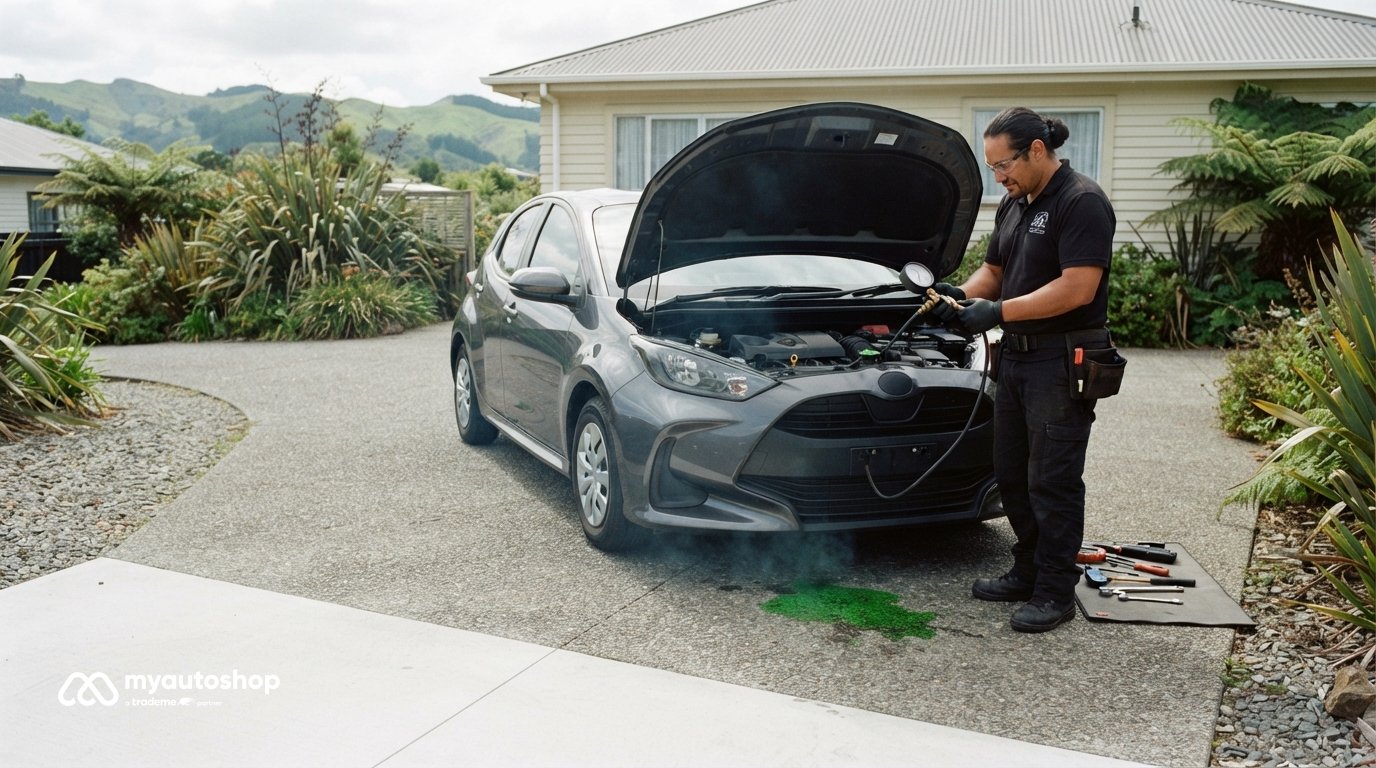
Is that small puddle of pink or green fluid on your driveway a minor nuisance or the first sign of a $5,000 engine rebuild? It’s a question that creates instant anxiety, especially when you have a busy day ahead and a commute to tackle. We understand the temptation to just top up the reservoir and hope for the best; however, ignoring the issue can lead to disaster within just a few kilometres. If you are wondering what happens if you drive with a coolant leak, the short answer is that you are risking a total engine seizure that could leave you stranded on the side of a busy State Highway.
We know how frustrating it is to deal with mechanical uncertainty and the fear of a massive repair bill. This article will give you the clarity you need to decide whether your car is safe to drive or if it requires immediate professional attention. You will learn the specific criteria for when to pull over, the potential damage costs involved, and how a mobile cooling system pressure test can save your engine. We will guide you through the process of identifying the source of the drip and provide a reliable way to get it fixed without leaving your home.
Key Takeaways
- Understand why driving with any cooling system leak is a high-risk gamble that can lead to catastrophic engine failure within minutes.
- Learn exactly what happens if you drive with a coolant leak, including how temperatures exceeding 100°C can warp aluminium cylinder heads.
- Discover why using tap water as a temporary top-up causes internal corrosion and why NZ-spec coolant is essential for your car’s health.
- Identify the warning signs of a leak, from the specific colour of the fluid on your driveway to the distinct sweet smell of vapours after a trip.
- Find out how Turners Service & Repairs can perform an on-site pressure test at your home to fix the leak before it becomes a major mechanical bill.
The Short Answer: Can You Drive With a Coolant Leak?
The short answer is a firm no. It’s never recommended to drive with a known cooling system leak. While it might seem like a small drip you can manage, the cooling system is a highly pressurised environment. A tiny pinhole in a rubber hose can quickly turn into a high-pressure spray once the engine reaches its full operating temperature. If you’re wondering what happens if you drive with a coolant leak, the reality is that your engine loses its ability to regulate temperature almost instantly. The “5-minute rule” is a common industry benchmark; once the engine coolant drops below a critical level, it can take less than five minutes of driving for your engine to reach temperatures that cause permanent structural damage.
Distinguishing between a minor weep and a major failure is difficult without a professional eye. A small damp patch on a hose might hold for a day, or it might burst the moment you accelerate onto a busy highway. You shouldn’t rely on your dashboard temperature gauge to tell you when things are going wrong. Gauges are often trailing indicators; they measure the temperature of the fluid itself. If the fluid has already leaked out, the sensor might be measuring air temperature instead, showing a “normal” reading while the metal components of the engine are actually beginning to melt. Understanding what happens if you drive with a coolant leak is the difference between a simple hose replacement and a total engine swap.
The Immediate Safety Risks for NZ Drivers
Driving with a leak poses significant safety risks on New Zealand roads. If a hose fails completely, a massive cloud of steam can erupt from under the bonnet, instantly obscuring your vision. This is incredibly dangerous when merging onto a busy motorway or navigating steep, winding hills. An engine seizure in high-speed traffic doesn’t just mean a big repair bill; it means a sudden loss of power and power steering, which can lead to a serious accident. Choosing to “limp home” usually ends up costing far more than a tow truck once you factor in the price of a warped cylinder head or a seized block.
When is it Absolutely Unsafe to Move the Car?
There are clear signals that your car must stay parked to avoid a total mechanical failure. If any of these apply, do not start the engine:
- The temperature gauge sits above the midpoint or is climbing toward the red zone.
- You see visible steam or white smoke coming from the front of the car.
- There is a strong, sweet, syrupy odour, which indicates burning coolant.
- The “Low Coolant” or “Engine Overheating” warning light is glowing on your dash.
If you’re unsure about the state of your cooling system, checking a symptoms guide can help you identify the severity of the issue before you make a costly mistake. Staying put is always the safer, cheaper option for your vehicle’s longevity.
What Happens Inside Your Engine When Coolant Runs Low?
Your engine is essentially a series of controlled explosions. The heat generated by combustion is immense; without fluid to absorb and transport this energy to the radiator, your engine block would melt. When you understand what happens if you drive with a coolant leak, you realise that the fluid is the only thing standing between a smooth commute and a seized motor. It acts as a thermal buffer, keeping internal components within a narrow, safe temperature range.
Modern New Zealand vehicles often use aluminium cylinder heads. While lightweight and fuel-efficient, aluminium is incredibly sensitive to heat. Once the metal exceeds 100°C, it begins to expand at a rate the engine’s design cannot accommodate. This thermal expansion puts massive pressure on the head gasket, which is the critical seal between the engine block and the cylinder head. Knowing what happens if you drive with a coolant leak helps you avoid the “head gasket nightmare,” where the seal fails and allows fluid to enter the combustion chambers or the oiling system.
The Sequence of Engine Failure
Engine damage from overheating usually follows a predictable, destructive path. It starts with localised hotspots forming inside the cylinder head where coolant has been replaced by air pockets. These hotspots cause the metal to expand unevenly. Next, the head gasket typically gives way. You might notice white smoke from the exhaust or a milky substance on the oil dipstick, which indicates oil contamination. In the final stage, the cylinder head itself warps or develops microscopic cracks. At this point, a simple repair is no longer an option; you are looking at expensive machining or a complete replacement of the cylinder head.
Secondary Damage to Cooling Components
It isn’t just the engine block that suffers during a leak. Low fluid levels introduce air into the system, which causes the water pump to cavitate. This means the pump’s internal blades spin in air rather than fluid, leading to rapid wear and eventual failure. If your vehicle is due for a cambelt service, it’s worth understanding the water pump replacement cost when changing cambelt, as replacing both at the same time can save significant labour costs compared to addressing them separately. Additionally, the extreme pressure created by boiling coolant can cause the plastic end-tanks on your radiator to crack or burst. If you’ve noticed your car acting up, check out our symptoms guide to help diagnose the issue before the damage spreads. For a professional diagnosis at your driveway, you can book a mobile mechanic through Turners Service & Repairs to catch these issues early.
Myth-Busting: Why “Just Topping It Up” Is Not a Fix
Many drivers believe they can manage a leak by simply keeping a bottle of water in the boot and topping up the reservoir every few days. This approach is a gamble with your engine’s life. When you consider what happens if you drive with a coolant leak, you have to account for the fact that you aren’t just losing fluid; you are losing the chemical protection your engine relies on. Tap water is a poor substitute for NZ-spec coolant. It lacks the corrosion inhibitors needed to protect the internal metal surfaces of your engine and radiator. Even worse, water boils at 100°C, whereas proper coolant is designed to remain liquid at much higher temperatures. Using straight water significantly increases the risk of steam pockets forming inside the block, which leads to the exact overheating scenarios we’ve already discussed.
Another common misconception is that a small leak won’t affect the system’s pressure. In reality, your car’s cooling system is designed to operate as a sealed, pressurised environment, usually between 10 to 15 psi. This pressure is what allows the fluid to absorb massive amounts of heat without boiling. Even a pinhole leak prevents the system from holding this pressure. As your engine warms up and the metal expands, that tiny hole can suddenly stretch or tear, turning a minor drip into a catastrophic failure while you’re mid-commute. Relying on “just topping it up” ignores the physical reality that a compromised system cannot do its job safely.
The Danger of Adding Cold Water to a Hot Engine
If you find yourself stuck on the side of the road, the instinct to pour water into a steaming radiator is strong. However, adding cold water to a hot engine can cause “thermal shock.” This sudden temperature change can cause the metal components, like the cylinder head or even the engine block, to crack instantly. Always wait at least 30 minutes for the engine to cool down and the pressure to subside before attempting to open the cap. If you find your car struggling when you come to a standstill, our car overheating in traffic guide offers more specific steps to manage the situation safely.
Why “Stop-Leak” Products Often Do More Harm Than Good
Chemical “stop-leak” additives are often marketed as a quick fix, but they are frequently a costly mistake. These sealants don’t know the difference between a hole in a hose and the narrow passages of your heater core or radiator. They can easily clog these vital components, leading to a loss of cabin heating and further engine overheating. A mechanical repair is the only way to ensure your car remains reliable. The technicians at Turners Service & Repairs prioritise a professional pressure test to find the root cause of the leak. This on-site diagnostic approach ensures the fix is permanent and prevents the need for a total radiator replacement later on.

How to Spot a Coolant Leak Before the Steam Appears
You don’t need to wait for a cloud of steam to know your car is in trouble. Early detection is your best defence against a massive repair bill. Start by checking the ground where you park. Engine coolant is typically dyed bright green, pink, or orange to make it easy to distinguish from clear air-conditioning condensation or dark engine oil. If you see a colourful puddle on your driveway, your cooling system has been breached. Understanding what happens if you drive with a coolant leak should be enough motivation to investigate these spots immediately rather than waiting for a warning light.
Use your senses after a drive. Coolant contains ethylene glycol, which has a distinct, sickly-sweet smell often compared to maple syrup. If you catch this scent around the front of your car after a commute, fluid is likely leaking onto a hot engine component and evaporating. You should also perform a visual inspection under the bonnet once the engine is cold. Look for white, crusty residue or “scaling” around hose clamps, the edges of the radiator, or the water pump. This residue is dried coolant and serves as a clear map to a slow leak that could soon become a major failure.
Finally, monitor your expansion tank levels over a week. If you find yourself needing to add fluid more than once a month, you have a leak. Even if you don’t see a puddle, the system could be losing fluid internally or through a pinhole that only opens under pressure. Tracking these levels helps you stay ahead of the curve. Once you’ve confirmed a leak, understanding your options for radiator flush vs replacement can help you make the most cost-effective decision for your vehicle’s cooling system.
Common NZ Failure Points
New Zealand’s variable climate and road conditions put unique stress on cooling systems. Rubber hoses often perish and become brittle due to age and the constant cycle of heating and cooling in our coastal air. We also see many plastic thermostat housings crack under thermal stress, a common issue in European models popular in the NZ fleet. Additionally, our unsealed backroads are a major factor. Flying stones can easily puncture the delicate aluminium fins of a radiator, leading to a slow but certain loss of pressure. If you’ve been driving on gravel recently, a quick visual check of the radiator face is a smart move.
Coolant Leaks and the Warrant of Fitness (WoF)
While a minor coolant leak isn’t a specific fail item in the NZTA vehicle inspection portal, it can still cause a WoF rejection if the inspector deems it a safety risk. For example, if a leak is spraying fluid onto tyres or creating a slip hazard on the road, your car won’t pass. More importantly, a leak is often a sign of broader cooling system neglect that could lead to other failures. To ensure your vehicle stays roadworthy and safe, check out our WOF NZ ultimate guide. If you suspect a leak, the best way to get it sorted is to book a mobile diagnostic test with Turners Service & Repairs to identify the exact source before your next inspection.
Fixing Coolant Leaks with Turners Service & Repairs
The biggest risk when you discover a drip is the journey to the workshop. By choosing a mobile solution, you eliminate the fear of what happens if you drive with a coolant leak and the car fails mid-trip. Turners Service & Repairs provides a practical alternative by sending expert technicians directly to your driveway or workplace. This service is currently available in selected regions across New Zealand, allowing you to get a professional diagnosis without putting your engine at further risk. Our technicians arrive equipped with the specific tools needed to identify cooling system failures on-site, saving you the stress of a breakdown on a busy motorway.
Transparency is at the heart of how we work. Instead of guessing the potential cost of a repair, you can use the Turners Fair Pricing tool to get a clear understanding of the investment required. We believe that professional mechanical help should be accessible and honest, stripping away the jargon so you feel empowered to make the right decision for your vehicle. Our technicians perform a cooling system pressure test, which involves applying controlled pressure to the radiator to reveal exactly where the fluid is escaping, whether it’s a hidden crack in a plastic housing or a perished rubber hose.
What to Expect from a Mobile Cooling Repair
When our technician arrives, the first priority is a thorough diagnostic. We use a step-by-step logic to find the leak without unnecessary dismantling. Many cooling issues can be resolved on the spot, including the replacement of radiator hoses, thermostats, or even water pumps in many vehicle models. If the pressure test reveals that your radiator itself is the source of the problem, our technicians can walk you through the decision between a radiator flush vs replacement to ensure you only pay for what your car actually needs. If you’ve noticed your car behaving strangely, checking the Turners Symptoms Guide can help you describe the issue to our team before they arrive. This preparation ensures the technician has the right parts on hand to get you back on the road quickly.
Booking Your Repair
Scheduling a repair shouldn’t be a chore. You can use the My Auto Shop platform to find local experts and book a Turners Service & Repairs technician for a time that fits your busy life. This logistical convenience is our signature promise; we value your time and your safety equally. Don’t wait for a minor drip to turn into a multi-thousand dollar engine replacement. Book a diagnostic with Turners Service & Repairs today and let our mobile team bring the workshop to you.
Protect Your Engine and Your Wallet
Ignoring a coolant leak is a gamble that rarely pays off. The cooling system is the only thing preventing your engine from reaching destructive temperatures; once it fails, the damage is often irreversible. Now that you understand what happens if you drive with a coolant leak, you can make a choice that protects your vehicle from a catastrophic seizure. Whether it’s a perished hose or a cracked radiator, catching the issue early is the key to avoiding a multi-thousand dollar repair bill.
You don’t need to risk a trip to the workshop and potentially strand yourself on a State Highway. Turners Service & Repairs offers expert mobile diagnostics at your home or workplace, ensuring you stay off the road until your car is safe. You can access fair, transparent pricing through the My Auto Shop marketplace, or even book an independent pre-purchase inspection if you’re looking at a used car with a suspicious drip. Taking action now ensures your car remains reliable for your busy life. Book a Cooling System Inspection with Turners Service & Repairs today and drive with confidence again.
Frequently Asked Questions
Can I drive 10km with a coolant leak?
It’s a high-risk move that we don’t recommend. While 10km sounds short, it’s plenty of time for an engine to reach operating temperature and overheat if the system can’t hold pressure. If the leak is more than a tiny weep, you could face total engine seizure before you arrive. Instead of risking a massive repair bill, have a technician from Turners Service & Repairs come to you to diagnose the fault safely at your home.
Will a coolant leak show up on the dashboard?
Dashboard warnings are helpful but they aren’t always immediate. You might see a red thermometer light or a ‘Low Coolant’ message, but these often trigger only after the level is dangerously low. If a leak is severe, the temperature sensor might end up surrounded by air rather than fluid, giving you a false ‘normal’ reading while the engine actually melts. Regularly checking your expansion tank level is a much more reliable habit for every driver.
What colour is engine coolant in New Zealand cars?
Most cars in New Zealand use coolant dyed in bright shades like pink, green, or orange. These vibrant colours make it easy to spot a leak against the grey of your driveway or the dark stains of engine oil. It’s important not to mix different types of coolant, as they contain different chemical inhibitors. If you’re unsure which one your vehicle needs, a mobile technician can identify the correct specification for your specific make and model.
Is a coolant leak expensive to fix?
The repair cost varies based on whether it’s a simple hose or a complex water pump. A minor leak is generally manageable, but what happens if you drive with a coolant leak is that the costs escalate quickly. Ignoring a $200 hose replacement can lead to a $3,000 head gasket failure or a $6,000 engine replacement. Using the My Auto Shop marketplace to find fair pricing for repairs is the best way to keep costs down.
Can I use water instead of coolant in an emergency?
You should only use water in an absolute emergency to move the car to a safe spot. Tap water contains minerals that cause internal corrosion and it boils at 100°C, which is lower than the operating temperature of many modern engines. This increases the risk of steam pockets and overheating. If you do use water, ensure you book a professional flush and refill with the correct NZ-spec coolant to protect your engine’s internal components.
How do I know if my head gasket is blown from a leak?
A blown head gasket often presents as white, sweet-smelling smoke from the exhaust or a ‘strawberry milkshake’ appearance to the oil on your dipstick. You might also notice bubbles in the coolant reservoir while the engine is running, which indicates combustion gases are leaking into the cooling system. If you see these signs, stop driving immediately. A mobile diagnostic visit from Turners Service & Repairs can confirm the damage using a specialised chemical block test.
Does a coolant leak affect my car’s heater?
Yes, your heater is often the first thing to fail when coolant is low. The cabin heater relies on hot fluid passing through a small radiator called a heater core. If there isn’t enough fluid in the system, the core stays empty and your vents will blow cold air. If your heater suddenly stops working while you’re driving, it’s a major warning sign that you have a significant leak and should pull over safely.
Will my car fail its WoF if it has a coolant leak?
A coolant leak isn’t a specific fail item in the NZTA inspection guidelines, but it can still lead to a rejection. If the inspector believes the leak is severe enough to spray onto the tyres or create a slip hazard on the road, they will fail the vehicle. Beyond the Warrant of Fitness, a leak is a sign of cooling system neglect that often leads to more expensive mechanical issues if left ignored.
Disclaimer
This article provides general information only and should not be relied on as professional mechanical, safety or legal advice. Vehicle requirements and circumstances vary. If you are unsure about your vehicle, have it inspected by a qualified automotive professional.