
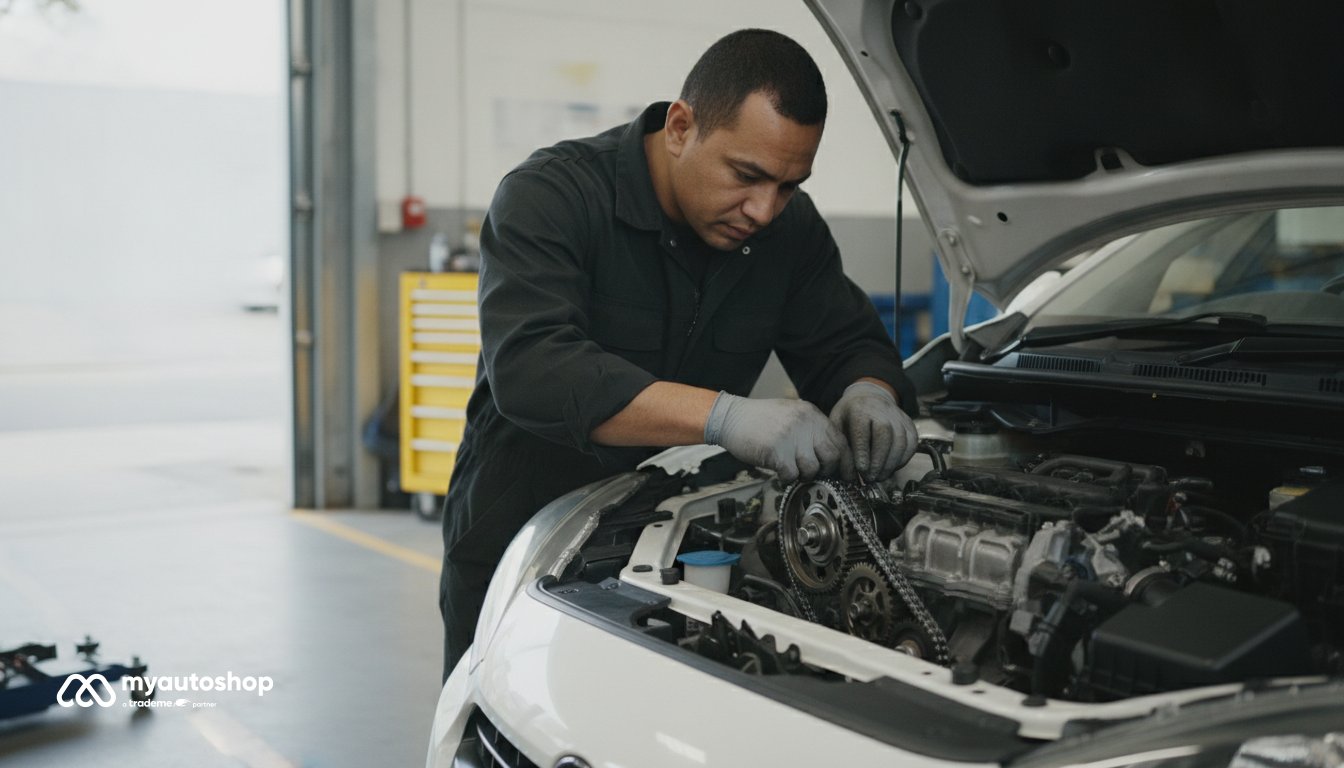
You turn the key on a cold morning and hear a sharp, metallic rattle that lasts just long enough to make you worry. It’s a sound no New Zealand driver wants to hear, especially when you’ve been told your engine has a chain that should last for its entire life. The fear of a snapped chain causing total engine failure is real, and trying to pinpoint the timing chain replacement cost nz motorists are facing in 2026 can feel like a mission when labour rates are rising across the country.
We know you need clear answers without the mechanical jargon or hidden fees. It’s frustrating to face a complex repair when you aren’t even sure if the chain is the culprit or if it’s just a minor sensor fault. This guide promises to strip away that confusion by detailing the factors that drive repair bills and providing a checklist of failure signs to watch for. You’ll learn how to verify a failing chain, understand the difference between a belt and a chain, and find the best way to compare quotes from trusted local mechanics to keep your vehicle on the road.
Key Takeaways
- Identify the “death rattle” and other early warning signs to prevent catastrophic engine failure before it happens.
- Understand why labour intensity is the primary driver of the timing chain replacement cost nz, with complex jobs often requiring up to 12 hours of work.
- Learn why consistent oil changes with the correct manufacturer-specified grade are your best defence against premature chain stretching.
- Discover how to use the My Auto Shop marketplace to compare quotes from MTA-approved workshops or book mobile diagnostics with Turners Service & Repairs in supported regions.
What is a Timing Chain and Why is it Critical?
Think of the timing chain as the metronome of your engine. It keeps everything in perfect time by connecting the crankshaft at the bottom of the engine to the camshaft at the top. This synchronisation ensures that your engine valves open and close at the exact microsecond they should relative to the position of the pistons. For many New Zealanders driving popular Japanese imports like a Toyota Corolla or Nissan X-Trail, this metal chain is a standard feature designed to be much more durable than a rubber belt.
Most modern car engines are “interference” designs. This means the valves and pistons occupy the same space inside the cylinder, just at different times. If the chain snaps or jumps a tooth, those parts collide at high speed. The result isn’t just a simple stall; it’s often catastrophic engine destruction. This risk is why understanding the potential timing chain replacement cost nz is better than facing a $5,000 engine swap later.
To better understand how these components work and what happens when they fail, watch this helpful video:
The Difference Between a Timing Chain and a Timing Belt
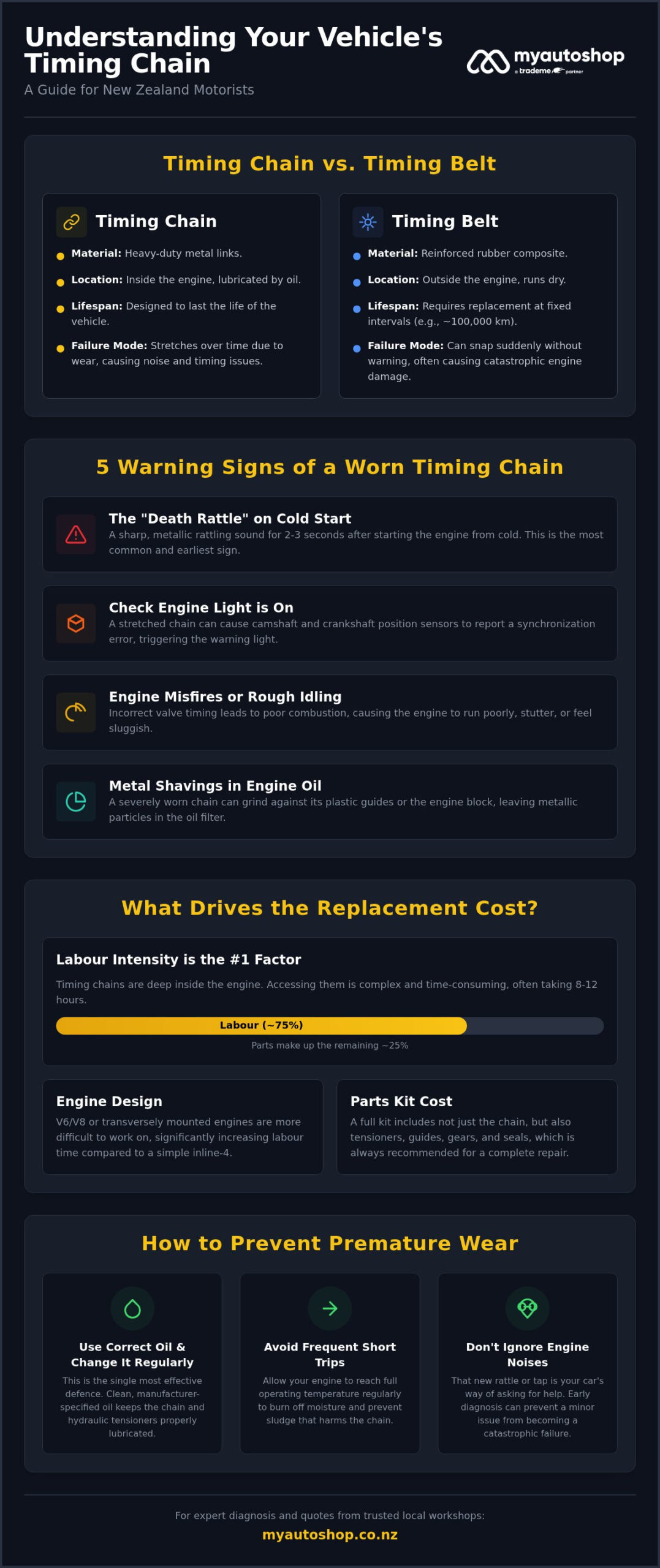
The main distinction lies in durability and location. A timing belt is made of reinforced rubber and sits outside the engine block, kept dry. In contrast, a timing chain is made of heavy-duty metal links and lives inside the engine, where it’s constantly bathed in oil. While a belt usually needs replacing every 100,000 kilometres, a chain is theoretically built for the life of the vehicle. However, local driving conditions often change that expectation. For a deeper look at the history of these designs, you can read more about the Timing Chain vs. Timing Belt distinction.
Why Timing Chains Fail in New Zealand Cars
Chains don’t just snap; they stretch. This “stretch” is actually wear on the individual links caused by friction. In New Zealand, heavy city driving means many cars spend a lot of time idling or making short trips. This prevents the engine oil from reaching its optimal temperature, leading to moisture buildup and sludge. Since the timing chain relies on clean oil to stay lubricated and for the hydraulic tensioners to function, poor oil quality is the number one killer. Once the tensioners or plastic guides wear down, the chain loses its grip, leading to a rattle. Heavy stop-start city driving also places additional strain on your cooling system, and if you’ve ever noticed your car overheating in traffic but fine on motorway stretches, it’s a sign that the same urban driving conditions stressing your timing chain are also taxing other critical engine systems.
When you’re trying to budget for a timing chain replacement cost nz, remember that the oil you choose today dictates the bill you pay tomorrow. If you hear a strange noise, booking a diagnostic with Turners Service & Repairs in supported regions can help catch the issue before the chain jumps. You can also check our symptoms guide to see if that rattle matches common failure patterns.
Timing Chain vs. Timing Belt: Reliability and Failure Signs
There’s a common belief among Kiwi car owners that a timing chain is a “set and forget” part. While it’s true they don’t have a fixed replacement schedule like a rubber belt, they certainly aren’t immortal. Over time, the metal links and the plastic guides they slide against wear down. This leads to what mechanics call “chain stretch,” which is essentially the chain becoming just long enough that the tensioner can no longer keep it tight.
The most iconic warning sign is the “death rattle.” You’ll usually hear this for a few seconds immediately after a cold start. As oil pressure builds and reaches the tensioner, the noise might fade, but the damage is already happening. If you ignore this, you’ll eventually see a Check Engine Light on your dash. This often happens because the camshaft and crankshaft sensors notice they aren’t perfectly synced anymore. You might also notice your car feels sluggish when pulling away from traffic lights or has a rough idle that wasn’t there before.
Common Symptoms of a Worn Timing Chain
Beyond the noise, there are several physical clues that your chain is reaching the end of its life. If you’re worried about the timing chain replacement cost nz, catching these early is vital. Watch for these signs:
- Metal shavings in oil: During a standard car service, a technician might find tiny silver flakes in the old oil or filter. This is a sign the chain is eating into the engine casing or guides.
- Engine misfires: If the timing is out by even a fraction, the spark plugs won’t fire at the right moment, leading to a stuttering engine.
- Persistent tapping: Unlike the cold start rattle, this is a consistent sound that gets faster as you rev the engine.
Comparison Table: Timing Chain vs. Timing Belt
Understanding the differences helps you manage your maintenance budget effectively. Here is how they stack up in the New Zealand market:
| Feature | Timing Chain | Timing Belt (Cambelt) |
|---|---|---|
| Maintenance Interval | None (Inspect only) | Usually every 100,000km |
| NZ Replacement Cost | Higher (Labour intensive) | Moderate |
| Failure Warning | Audible rattle or CEL | Often no warning (Sudden snap) |
If you’re looking at a used car and hear that tell-tale rattle, don’t take the risk. You can book an independent pre-purchase inspection to get a professional’s opinion before you sign the papers.
Factors Driving Timing Chain Replacement Cost in NZ
Understanding your timing chain replacement cost nz starts with accepting that the parts are often the cheapest portion of the bill. The real driver is the sheer number of hours a technician spends under the bonnet. Accessing the chain is a major operation. It requires removing the valve cover, the front timing cover, and usually several accessories like the alternator or power steering pump. This process typically takes between 6 and 12 hours depending on how your engine is designed.
A proper repair doesn’t just replace the chain itself. It involves a full kit containing hydraulic tensioners, plastic guides, and sometimes new sprockets. If your vehicle features Variable Valve Timing (VVT), the solenoids or cam phasers might also need attention. We always recommend the “while you’re in there” approach. Replacing a water pump or front oil seals while the engine is already apart saves you from paying the same massive labour bill again six months later for a separate leak. While you have your vehicle in for major engine work, it’s also a good time to ask your mechanic to inspect other drive belt components, as understanding the serpentine belt replacement cost nz motorists face can help you bundle repairs and save on labour.
Why Some Engines are More Expensive to Fix
Engine layout dictates the difficulty of the job. Transverse engines, found in most front-wheel-drive Japanese hatchbacks, have very little room between the engine and the car’s frame. This tight squeeze makes the work slower and more technical. Luxury European models can be even more complex. Some designs place the timing chain at the back of the engine, which requires a complete “engine out” service. This can easily double the time required compared to a standard longitudinal layout found in many utes and rear-wheel-drive cars.
How NZ Labour Rates Impact the Total Bill
Regional differences across the country play a huge role in your final invoice. Workshops in major urban centres often face higher rent and overheads, resulting in higher hourly rates compared to smaller towns or rural regions. Modern timing systems also require precision locking tools specific to your engine’s make and model. If a workshop has invested in these specialised tools to ensure a perfect fit, that expertise is reflected in their pricing. For a better idea of how these costs are calculated, you can view our guide on Turners Fair Pricing to see how we maintain transparency for complex repairs.
How to Prevent Premature Timing Chain Wear
While the timing chain replacement cost nz is a significant investment, the daily habits that prevent failure are relatively cheap. Most timing chain issues don’t happen overnight. They’re the result of years of cumulative wear that could have been avoided with better maintenance. Because the chain is a metal component operating under high tension and heat, its health is entirely dependent on the environment inside your engine block.
Avoiding a massive timing chain replacement cost nz often comes down to one simple habit: clean oil. High-quality oil filters are also essential. They ensure that the hydraulic tensioners, which rely on oil pressure to keep the chain tight, don’t become clogged with debris. If a tensioner loses pressure because of a cheap filter or dirty oil, the chain will slacken and begin to wear down the plastic guides. It’s also worth noting that a failing belt tensioner elsewhere in the engine bay can produce similar chirping or rattling noises — understanding the symptoms of a bad belt tensioner can help you accurately distinguish between different engine noises before booking a repair.
The Role of Clean Engine Oil
Sludge is the primary enemy of your timing system. When oil isn’t changed often enough, it breaks down into a thick, tar-like substance that blocks the narrow oil galleries leading to the chain tensioners. This is particularly dangerous for New Zealand cars used for short city commutes. These “stop-start” trips often mean the engine never reaches the ideal temperature to burn off moisture, leading to faster oil degradation. Many manufacturers suggest “extended” service intervals of 15,000 kilometres or more, but for most Kiwi drivers, sticking to a 10,000 kilometre or 12-month limit is much safer.
Oil viscosity refers to how easily the fluid flows at specific temperatures, ensuring the metal links of the chain are coated and protected against friction. Using the wrong grade of oil can prevent the tensioner from extending correctly, leading to that dreaded startup rattle.
Early Detection and Professional Diagnostics
If you notice a sudden drop in fuel economy or a rough idle, don’t wait for the engine to fail completely. A professional diagnostic scan can detect “timing correlation” codes before the chain actually jumps. If the rattle becomes constant rather than just a few seconds at startup, you should stop driving immediately. Continuing to run an engine with a loose chain is a gamble that usually ends in a broken valve and a scrap-metal engine block. You can check the Turners Symptoms Guide to help identify if the noises you’re hearing are cause for alarm.
For those looking at buying a used vehicle, especially a common import like a Nissan or Volkswagen, never take the seller’s word that the engine is “perfect.” Investing in a pre-purchase inspection is the only way to get a professional assessment of the engine’s health before you commit. If you suspect your current car has a timing issue, book a diagnostic check with Turners Service & Repairs to get an expert’s eyes on it before a small rattle turns into a big bill.
Finding the Best Timing Chain Replacement Service in NZ
Facing a major engine repair can feel like a daunting task, especially when you’re trying to pin down a firm timing chain replacement cost nz. This isn’t a job for a backyard tinkerer. It requires precision, specialised tools, and a deep understanding of engine timing. Instead of driving around your local industrial area for quotes, you can use modern tools to find a specialist who knows your specific vehicle make and model inside out.
Transparency is the key to a stress-free repair. A professional workshop should always provide a detailed quote that separates the cost of the timing kit from the intensive labour required. They should also be clear about any “while you’re in there” items we discussed earlier, such as water pumps or oil seals. This level of detail ensures you aren’t hit with unexpected “add-ons” halfway through the job.
Comparing Marketplace Mechanics
The My Auto Shop marketplace allows you to browse and compare MTA-approved mechanics across New Zealand. This is particularly useful for complex work like timing chain replacement. You can review ratings from other local motorists and check workshop availability in real time. Choosing an MTA-approved provider gives you peace of mind that the workshop follows a strict code of ethics and maintains high standards of technical competence. If you’re driving a European luxury car or a specific Japanese import with a known chain issue, look for a garage that highlights expertise in those brands.
Booking Your Repair with Confidence
If you’re still at the stage where you’re unsure if that rattle is a failing chain or something minor, start with a professional diagnostic. In supported regions, Turners Service & Repairs provides mobile mechanical repairs and diagnostics. A mobile technician can come to your home or office to scan your car’s computer and listen to the engine. This is a great way to confirm the issue before you commit to a full workshop repair.
Once the problem is confirmed, you can use the platform to secure a competitive estimate for the workshop-based portion of the work. This streamlined process moves you from a worrying noise to a scheduled solution without the typical industry guesswork. You can compare timing chain replacement quotes from NZ mechanics today to see which local experts offer the best balance of experience and value for your vehicle.
Protect Your Vehicle and Your Budget
Catching a timing chain issue early is the difference between a planned repair and a permanent engine failure. By listening for the startup rattle and sticking to a 10,000 kilometre oil change schedule, you’ve already done the hard work of preventing major damage. Modern engines are complex, but managing the timing chain replacement cost nz doesn’t have to be a guessing game when you have the right data and experts on your side.
My Auto Shop is NZ’s #1 automotive repair booking site, giving you instant access to over 300 MTA-approved mechanics nationwide. Whether you need a mobile diagnostic check from Turners Service & Repairs or a full workshop replacement, we ensure you get transparent pricing and expert service every time. Don’t let a small noise turn into a big bill. Get an estimate for your timing chain replacement today and drive with the confidence that your engine is in top shape.
Frequently Asked Questions
Is it worth replacing a timing chain on an older car?
The decision depends on the vehicle’s market value compared to the repair bill. If your car is worth $3,000 and the timing chain replacement cost nz is $2,000, it might be more economical to sell it for parts. For those looking at how to handle a total mechanical loss, Cash For Junk Cars Michigan offers a clear example of how specialized buyers can help owners recoup value from damaged vehicles. However, if the car is otherwise reliable and in good condition, the repair is usually cheaper than buying a replacement vehicle with an unknown maintenance history.
In cases where a vehicle is beyond saving due to high repair costs, specialized buyers like Oriental Car Removal offer an efficient way to sell unwanted or damaged cars, ensuring that even a total mechanical failure can return some value to the owner.
You should avoid driving the vehicle immediately if you hear a rattle. A noise indicates the chain is loose and could jump a tooth on the gears at any moment. This leads to catastrophic engine failure where pistons collide with valves. If you’re concerned, book a diagnostic check with Turners Service & Repairs in supported regions to confirm the issue before the engine is destroyed.
How long does a timing chain replacement take in a typical NZ workshop?
Most timing chain replacements take between 6 and 12 hours of intensive labour. The technician must partially dismantle the engine to reach the internal components. For complex European models or vehicles with very tight engine bays, the job can become a multi-day project. Most workshops will need your vehicle for at least two full working days to ensure the timing is set perfectly.
Does a timing chain replacement include the water pump?
It depends on your engine’s design, but replacing the water pump at the same time is highly recommended. In many vehicles, the pump is driven by the timing system or located behind the timing cover. Since the labour to access these parts is so high, installing a new pump while the engine is already apart prevents you from paying for the same labour again if it fails later.
Why is a timing chain more expensive to replace than a cambelt?
The primary driver is the amount of labour required. A cambelt sits outside the engine block and is relatively accessible. A timing chain lives inside the engine and is constantly bathed in oil, requiring the removal of heavy covers, gaskets, and various engine accessories. The timing chain replacement cost nz is higher because the work takes significantly longer and involves more complex sealing procedures.
Will a worn timing chain cause a failed Warrant of Fitness (WoF)?
A worn chain won’t cause a failure directly since a WoF is a safety inspection rather than a mechanical health check. However, if the chain causes a Check Engine Light to stay on, or if the engine is leaking oil excessively onto the ground, your vehicle will fail. A rattling chain also poses a safety risk, as a sudden engine failure while driving can be dangerous. While a failing timing chain produces a metallic rattle from the engine, it’s equally important not to confuse this with a clunking noise from front suspension over bumps, which is a separate safety concern that can also contribute to a WoF failure. If your vehicle develops a high-pitched squeal from the engine bay rather than a metallic rattle, it may point to a different issue entirely — you can learn more about what to expect with serpentine belt replacement cost nz drivers typically encounter in 2026.
Are timing chains covered under mechanical breakdown insurance in NZ?
Most NZ insurance providers cover timing chains if you have a current policy and have followed the manufacturer’s recommended service schedule. You’ll likely need to provide proof of regular oil changes to approve a claim. If the failure is deemed “gradual wear and tear” rather than a sudden breakdown, some policies may have exclusions. It’s best to check your specific policy wording with your insurer.
How often should I change my oil to protect the timing chain?
You should change your oil every 10,000 kilometres or 12 months, whichever comes first. Even if your car’s manual suggests 15,000 kilometres, New Zealand’s stop-start city driving leads to faster oil degradation. Clean oil is essential for keeping the chain lubricated and the hydraulic tensioners functioning correctly. Skipping these services is the most common cause of premature chain stretch and failure for Kiwi motorists.
Disclaimer
This article provides general information only and should not be relied on as professional mechanical, safety or legal advice. Vehicle requirements and circumstances vary. If you are unsure about your vehicle, have it inspected by a qualified automotive professional.